
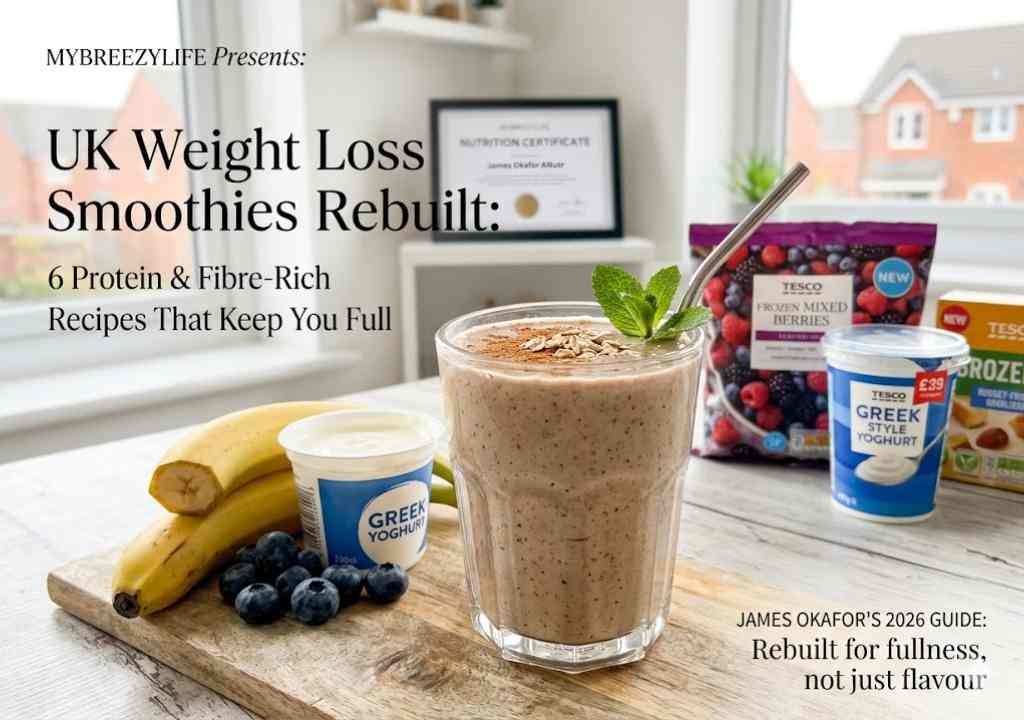
Weight loss smoothies are one of the most searched recipe topics in the UK, and most of the versions you will find online are quietly working against you. No drink can melt anything away. What a well built smoothie can do is keep you properly full until your next meal, and that is where its real value sits. I am James Okafor ANutr, Registered Associate Nutritionist and Nutrition editor at MyBreezyLife, and I have rebuilt this guide from scratch for 2026 with six recipes I tested in my own Birmingham kitchen through May and early June.
A quick confession first. Many of the weight loss smoothie recipes still doing the rounds online add sugar, fruit juice and oversized portions without anyone noticing, and I wanted this guide to put that right. Everything below reflects current evidence, current NHS guidance and current UK supermarket prices.
Why Most Weight Loss Smoothies Fail
Here is the uncomfortable truth: smoothies are one of the easiest ways to gain weight without noticing. That sounds backwards in an article about weight loss smoothies, but bear with me on this one.
Liquid calories are less filling than solid food. When we drink our calories, appetite barely registers them, so we tend to eat just as much at the next meal anyway. A 400 calorie smoothie on top of your normal breakfast is not a health upgrade. It is simply 400 extra calories.
The second trap is the base. Blending with fruit juice turns a smoothie into a sugar delivery system and throws away the main advantage of whole fruit, which is the fibre that slows sugar absorption and keeps you satisfied.
Portion creep is the third. Two bananas, a mango, honey and a splash of juice is a dessert, however green you make it.
What Actually Helps: Protein, Fibre and Patience
There is no special ingredient. Weight loss happens through a sustained calorie deficit, which simply means consuming a little less energy than your body uses over time. According to the NHS Eatwell Guide, the foundation is balanced meals built around fruit and vegetables, higher fibre starchy carbohydrates, lean protein and small amounts of healthy fat.
Protein and fibre are your two allies in a glass because both increase satiety. In my four years as a dietetic support worker with Birmingham Community Healthcare NHS Trust, the most common pattern I saw was people sipping a thin fruit smoothie at 7am and raiding the biscuit tin by half ten. Add Greek yoghurt and a spoon of milled flaxseed and that mid morning crash largely disappears.
One NHS point surprises almost everyone: however much you drink, a smoothie counts for a maximum of one of your five a day, because blending releases the sugars locked inside the fruit cells.
Sleep belongs in this conversation too. Short nights measurably increase appetite the next day, which is why I often point readers to our guide on how to improve sleep quality alongside any change in eating habits.
How to Build Weight Loss Smoothies That Keep You Full
Use this formula and you can improvise endlessly:
- One protein source: 150g fat free Greek yoghurt, skyr, or a scoop of halal certified whey
- One portion of fruit: around 80g, and frozen is both cheaper and colder
- One vegetable handful: spinach or kale disappear behind fruit flavours
- One tablespoon of healthy fat: milled flaxseed, almond butter or peanut butter
- Liquid: milk or cold water. Never juice.
If the smoothie replaces breakfast, aim for 300 to 400 calories. If it is a snack, keep it under 250. Readers managing their blood sugar can use exactly the same structure, and our guide to healthy food options for diabetic patients covers the wider principles.
6 Smoothie Recipes Tested in My Own Kitchen
All recipes serve one. Nutritional values are approximate. Use a nutrition calculator for precise values based on your specific ingredients and brands.
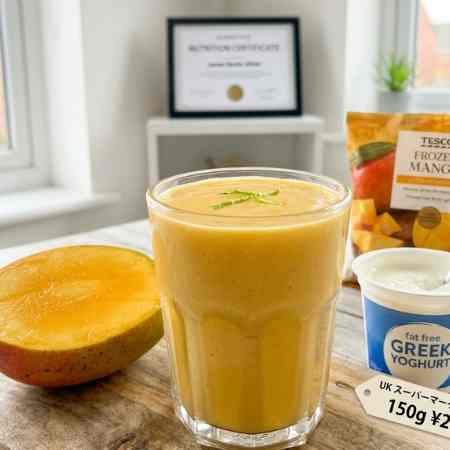
1. Mango and Greek Yoghurt Smoothie
Many mango smoothie recipes add sugar and a splash of mango juice. This version gets all its sweetness from the fruit instead.
Ingredients: 150g frozen mango (around £2.25 a bag at Tesco), 150g fat free Greek yoghurt, 200ml semi skimmed milk, juice of half a lime.
Method: Blend everything until smooth, adding a splash more milk if it is too thick.
Nutrition per serving: Calories: 290 kcal, Protein: 21g, Carbohydrates: 40g, Fat: 3g, Fibre: 4g. Nutritional values are approximate.
Why this works: at 290 kcal with 21g of protein, this is a steady energy option that avoids the sugar spike of the original recipe and keeps you full for longer.
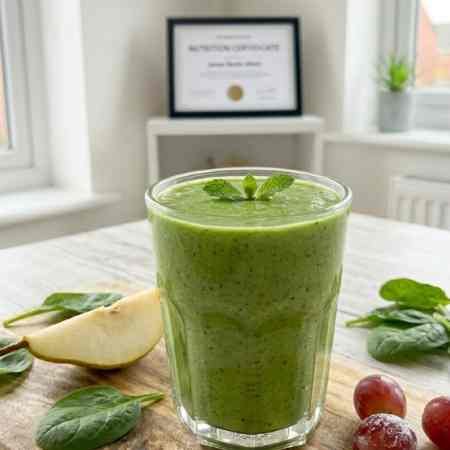
2. Spinach, Pear and Grape Smoothie
Spinach will not target your stomach, whatever the old version of this article claimed, but it adds fibre, folate and volume for almost no calories.
Ingredients: 60g spinach, 1 ripe pear (peeled and chopped), 10 red grapes, 100g natural yoghurt, 2 tbsp chopped avocado, juice of half a lime, 100ml cold water.
Method: Blend until completely smooth. Kale stalks and grape skins need a full minute.
Nutrition per serving: Calories: 240 kcal, Protein: 8g, Carbohydrates: 40g, Fat: 6g, Fibre: 7g. Nutritional values are approximate.
Why this works: at 240 kcal, this is the lightest of the six and the 7g of fibre helps slow digestion, which is useful if you are keeping an eye on portion sizes.
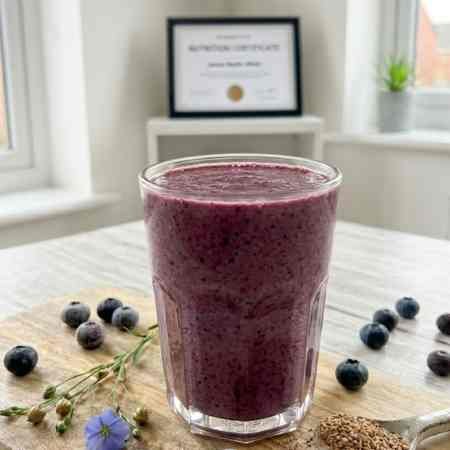
3. Blueberry and Flaxseed Smoothie
Worth a moment of honesty here. The original recipe called for a full cup of flaxseed oil, which is nearly 1,900 calories. One tablespoon of milled flaxseed delivers the fibre and omega 3 for about 55.
Ingredients: 150g blueberries (frozen, around £2 at Aldi), 1 tbsp milled flaxseed, 100g skyr, 200ml semi skimmed milk.
Method: Blend for 45 seconds. Let it stand for two minutes and the flaxseed thickens it beautifully.
Nutrition per serving: Calories: 280 kcal, Protein: 17g, Carbohydrates: 33g, Fat: 7g, Fibre: 7g. Nutritional values are approximate.
Why this works: at 280 kcal, the combination of blueberry antioxidants and flaxseed omega 3 makes this the best all rounder for a mid morning snack.
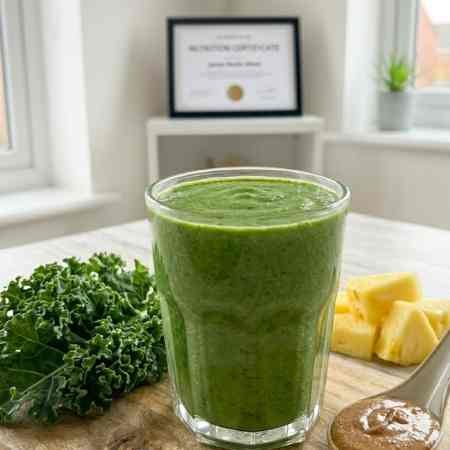
4. Kale, Pineapple and Almond Butter Smoothie
Formerly known here as the flat belly smoothie. No smoothie targets your belly, but this one is properly balanced and tastes far better than it sounds.
Ingredients: 30g kale (tough stalks removed), 100g pineapple chunks, 1 tbsp almond butter, 100g natural Greek yoghurt, quarter tsp vanilla bean paste, 150ml cold water.
Method: Blend the kale and water first, then add everything else and blend again.
Nutrition per serving: Calories: 260 kcal, Protein: 12g, Carbohydrates: 26g, Fat: 12g, Fibre: 5g. Nutritional values are approximate.
Why this works: at 260 kcal, the almond butter slows down digestion, so this one keeps hunger away for longer than the calorie count alone suggests.
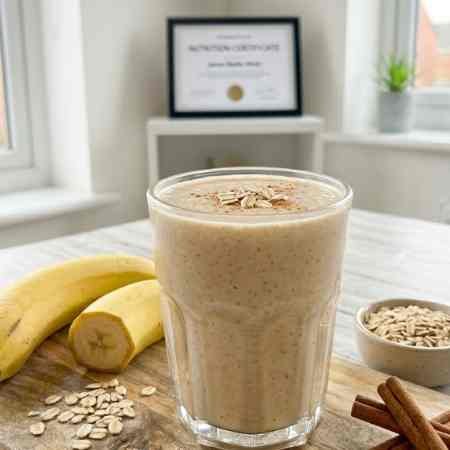
5. Oat and Banana Breakfast Smoothie
This is the one I make for my own two children most school mornings, and the one I drink myself after early gym sessions. Oats release glucose slowly, which makes it the best full breakfast replacement of the six.
Ingredients: 30g porridge oats, 1 small banana, 150g fat free Greek yoghurt, 200ml semi skimmed milk, pinch of cinnamon.
Method: Blend the oats to a powder first for a smoother texture, then add the rest.
Nutrition per serving: Calories: 390 kcal, Protein: 25g, Carbohydrates: 58g, Fat: 5g, Fibre: 6g. Nutritional values are approximate.
Why this works: at 390 kcal with 25g of protein, this is the most filling option here and the one I rely on before a busy school run.
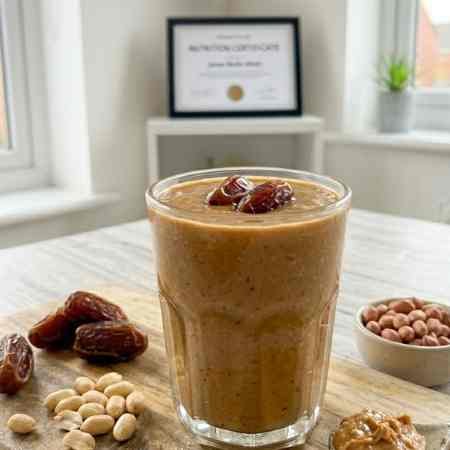
6. Date and Peanut Butter Smoothie
Built with Suhoor in mind for readers who fast: slow release energy, protein and fluid in one glass before dawn. It works just as well as a pre work breakfast in December.
Ingredients: 2 Medjool dates (stones removed), 1 tbsp peanut butter, 100g Greek yoghurt, 200ml whole milk, pinch of cinnamon, a few ice cubes.
Method: Soak the dates in the milk for five minutes if your blender is basic, then blend everything until smooth.
Nutrition per serving: Calories: 410 kcal, Protein: 18g, Carbohydrates: 50g, Fat: 15g, Fibre: 5g. Nutritional values are approximate.
Why this works: at 410 kcal, this is the highest energy smoothie of the six, which is exactly the point for a pre dawn Suhoor meal that needs to last all day.
UK Shopping List and Budget Tips
Frozen fruit is the single biggest saving. A 500g bag of frozen berries from Aldi or Lidl costs around £2 and replaces fresh punnets at three times the price, with no waste. Supermarket own brand skyr and fat free Greek yoghurt sit around £1.10 to £1.50 a tub, and milled flaxseed is stocked by Holland & Barrett and larger Tesco stores.
For UK women juggling work, family and everything in between, the practical tip that matters most is this: freeze ripe bananas in halves. They blend like ice cream and never go to waste.
A basic blender is genuinely fine. Mine cost under £50 and has survived three years of daily school morning duty.


For the protein side of your main meals, our rotisserie chicken recipe and our salmon pie remain two of the most cooked dishes on the site.
Halal and Ramadan Notes
Every recipe above is halal as written. The one place to stay alert is protein powder: some whey products use flavourings with alcohol based carriers, so choose a halal certified whey if you add one, and use vanilla bean paste rather than vanilla essence for the same reason.
During Ramadan, the date and peanut butter smoothie was designed for Suhoor, where slow release carbohydrates and protein genuinely earn their place. I would not chase a strict calorie deficit while fasting. Maintain through Ramadan, then return to a gentle deficit afterwards. For more on this, our guide to how to improve sleep quality is also useful during Ramadan, since short nights affect appetite the next day.
Frequently Asked Questions
Can smoothies really help you lose weight?
Yes, but only when a smoothie replaces a meal or snack rather than adding to your day. A high protein, high fibre smoothie of 300 to 400 calories makes a controlled, filling breakfast. The weight loss smoothie itself has no special properties; the calorie balance does the work.
Are fruit smoothies too high in sugar?
Whole fruit blended with milk or yoghurt keeps its fibre, so the sugar arrives slowly. The problems are fruit juice bases and added sugar or honey. The NHS still counts any smoothie as a maximum of one of your five a day.
When is the best time to drink a weight loss smoothie?
Whenever it replaces your least nutritious meal. For most people that is breakfast, where it beats skipping food entirely and then overeating at lunch.
Can I make smoothies the night before?
Yes. Store in an airtight jar in the fridge for up to 24 hours and shake well before drinking. Flaxseed versions thicken overnight, so add a splash of milk in the morning.
Do I need protein powder for these recipes?
No. Greek yoghurt and skyr provide plenty of protein for less money. If you do use a powder, pick a halal certified one and count its calories like any other ingredient.
Pick one recipe, make it your default breakfast for a fortnight, and judge it on a single question: are you still full at 11am? That is the only test a smoothie ever needs to pass.
This article contains affiliate links. We only recommend products we genuinely rate.
Nutrition content at MyBreezyLife is reviewed by James Okafor ANutr, Registered Associate Nutritionist. This is general guidance only. Always consult your GP or a registered dietitian for personal dietary advice.

















Comments are closed.