Zone zero training is the fitness idea I have been quietly recommending to burnt-out clients for a couple of years, and in 2026 it finally has a name and a moment. The premise is refreshingly simple. Instead of grinding through another punishing session, you move gently, often, and at an intensity so low it barely registers as exercise. For a lot of the women I work with, that shift has done more for their consistency than any bootcamp ever did.
I am Yasmin Demir, Health and Fitness Editor at MyBreezyLife, and as someone with a BSc in Sport Science from Brunel University and a REPs Level 3 personal trainer certification, I want to explain what this trend actually is, the science behind why it works, and exactly how to start without overthinking it.
What is zone zero training?
Zone zero training is ultra-low-intensity movement that keeps your heart rate below roughly 50 percent of its maximum. That is the level where breathing stays easy and you could hold a full conversation without pausing for breath. Think slow walking, gentle stretching, restorative yoga, light housework, gardening, or simply standing and moving more through your day.
The name plays on the traditional heart-rate training zones, which usually start at zone one and climb to zone five. Zone zero sits underneath all of them. It is not meant to replace strength work or cardio, but to sit alongside them as the easy, restorative layer most of us skip.
Here is the part that surprises people. This gentle movement is not a lesser version of a workout. It is a category of its own, and it does a specific job that hard sessions cannot.
The science, explained simply
When you train hard, your muscles produce by-products like lactate and you accumulate fatigue. Very light movement helps clear those by-products and eases muscle tension without adding more stress to the body. In plain English, a slow walk the day after a tough session helps you recover faster than lying on the sofa does. That is active recovery, and zone zero is built on it.
Low-intensity movement also supports your general health in ways that have nothing to do with pushing yourself. The NHS recommends adults aim for at least 150 minutes of moderate activity a week plus regular movement to break up long sitting, and its physical activity guidelines make clear that any movement counts and sitting less matters. Zone zero is one of the easiest ways to hit that “move more, sit less” target on the days you have nothing left in the tank.
The counterintuitive truth I have watched play out with client after client: the person who walks gently every day usually outperforms the person who trains brutally twice a week and then crashes. Consistency beats intensity, and gentle movement is the most consistent thing you can do.
How to know you are in the zone zero range
You do not need a fancy tracker to find this intensity, though one can help. The simplest gauge is the talk test. If you can speak in full, relaxed sentences without pausing for breath, you are in the right place. The moment you start snatching breaths between words, you have climbed into zone one or above.
Numbers people can use heart rate instead. Aim to keep yours below roughly 50 percent of your maximum. A rough way to estimate your maximum is 220 minus your age, so for a 40-year-old that is about 180 beats per minute, which puts the zone zero ceiling near 90. Treat that as a guide rather than a strict rule, because everyone is a little different.
Another measure trainers rely on is rate of perceived exertion, or RPE, scored from one to ten. Zone zero sits at about two or three out of ten: noticeable movement, but nowhere near hard work. As a personal trainer, I find RPE the most reliable tool for beginners because it teaches you to listen to your body rather than a screen.
The wider benefits of gentle movement
Recovery is the headline, but the benefits stretch further than that. Regular low-intensity movement supports healthy blood sugar and circulation, keeps your joints mobile, and uses energy without the appetite spike that hard training can trigger. That last point matters for anyone who finds intense workouts leave them ravenous and worn out by the evening.
Gentle movement is also kind to bodies going through change. New mothers rebuilding strength after birth, women navigating perimenopause, and anyone managing a long-term health condition can often do zone zero on days when a proper workout feels out of reach. Please check with your GP first if you are postnatal or managing a medical condition.
There is a mental wellbeing payoff too. Walking outdoors in particular lifts mood and helps lower the stress hormone cortisol, which is why I send frazzled clients out for a stroll before I ever hand them a training plan.

What zone zero training looks like in real life
You do not need a plan or a gym for this. You need to move a little more, a little more often. Here is what a realistic zone zero day looks like for a busy woman in the UK.
Morning
Five to ten minutes of gentle stretching or mobility when you wake up. Nothing strenuous, just easing the body open. If you already follow a morning routine, this slots straight in.
Through the day
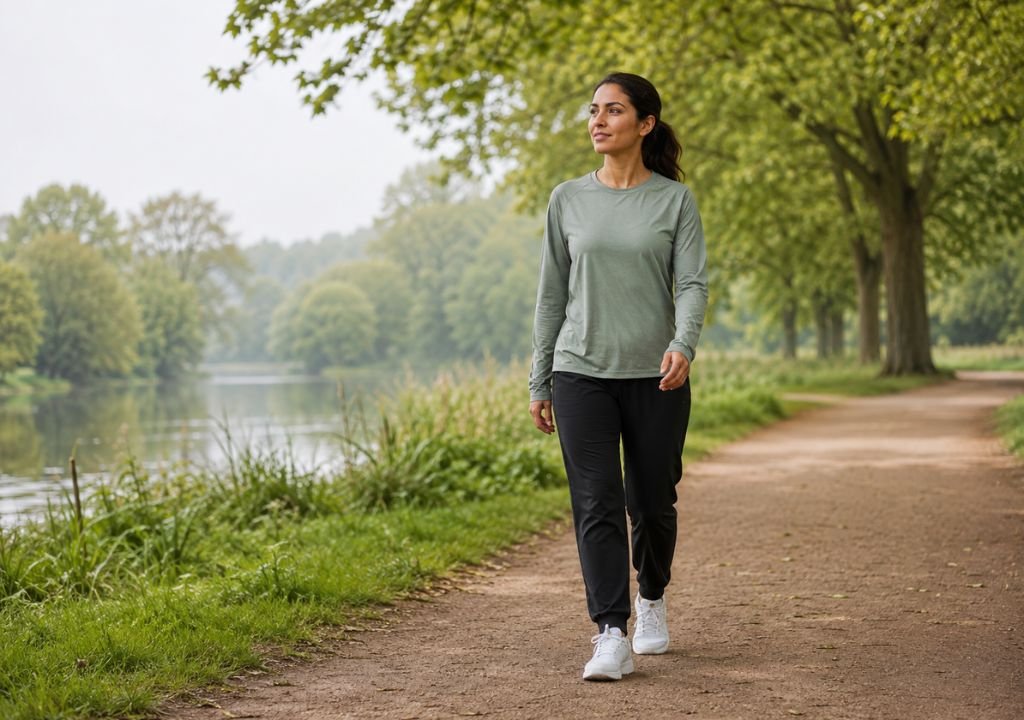
Take the stairs slowly, walk to the shop instead of driving, stand and move for a few minutes every hour, and take a proper walk at lunch if you can. A 20-minute stroll around your local park counts beautifully.
Evening
Ten to fifteen minutes of restorative yoga or slow stretching while the kettle boils or after the children are down. This also helps you wind down, which supports better sleep, and our guide on how to improve sleep quality pairs well with it.
Zone zero is not a substitute for strength training, and I would never want you to think it is. If you want a fuller picture of how gentle work fits with harder efforts, read our explainer on the difference between HIIT and cardio. Zone zero is the calm foundation the harder stuff stands on.
A simple seven-day zone zero starter plan
If you like a little structure, here is a gentle week to ease in. Nothing here should leave you out of breath, and you can move the days around to suit your life.
- Monday: a 15-minute walk after dinner at a comfortable, chatty pace.
- Tuesday: 10 minutes of gentle stretching or mobility in the morning.
- Wednesday: a 20-minute walk, ideally somewhere green.
- Thursday: 15 minutes of restorative yoga from a free online video.
- Friday: a lighter day, just stand and move for a few minutes each hour.
- Saturday: a longer 30-minute stroll with family or a friend.
- Sunday: 10 minutes of stretching and an early night to support recovery.
By the end of the week you will have moved gently every single day without a single hard session. That, in a nutshell, is the whole philosophy: little and often, forever.
Modifications for every level
Easier version: start with a single 10-minute gentle walk a day and nothing else. Add a few minutes of stretching only when the walk feels like an easy habit. Complete beginners and anyone returning after illness or a long break can build from here without any pressure.
Harder version: if you already train, use zone zero as active recovery on your rest days. A 30 to 40 minute easy walk, gentle mobility, or a restorative yoga flow keeps you moving while your muscles repair from your home workouts.
Ramadan-safe version: during Ramadan, keep all movement in the gentle zone. A slow walk after Iftar, once your food has settled, or light stretching before Suhoor is ideal. Avoid anything strenuous while fasting, hydrate well between Iftar and Suhoor, and consult your GP if you experience dizziness or weakness while fasting.
Zone zero for women who train modestly
One of the quiet joys of this approach is how well it suits modest and home-based training. Gentle movement needs no special space, no gym audience, and no tight kit. You can do all of it at home in loose, comfortable clothing, and you can fit walking around prayer times without any clash.
For outdoor walks, a breathable long-sleeve top and comfortable, supportive trainers are all you need. If you prefer specialist modest activewear, UK brands like Covered Active and Veil Garments make loose, breathable pieces designed for exactly this kind of movement.


Because zone zero is deliberately anti-burnout, it also has real benefits for mental wellbeing. If you have been running on empty, gentle movement and time outdoors can genuinely help, and our guide on how to reduce stress naturally covers more. If burnout is tipping into something heavier, please reach out to Mind UK at mind.org.uk or the Samaritans on 116 123.
Common mistakes to avoid
The biggest error I see is people quietly turning zone zero into a workout. A brisk, breathless power walk is lovely in its own right, but it is not zone zero, and it will not give you the same recovery benefit. Keep it genuinely easy, even if your ego protests.
Another trap is treating gentle movement as your only exercise forever. It is a wonderful foundation and a brilliant place to begin, yet most of us also need some strength work to keep muscles and bones strong as we age. Build the calm base first, then add the harder layers when you feel ready.
Frequently asked questions
What is zone zero training?
Zone zero training is very low-intensity movement that keeps your heart rate below about 50 percent of maximum, the level where you can chat easily throughout. It includes slow walking, gentle stretching, restorative yoga and simply moving more through the day. It works as active recovery and as an easy way to stay consistent.
Is zone zero training enough on its own?
For general health and recovery it is a brilliant foundation, and for a true beginner it is a safe place to start. For balanced fitness, though, most people also benefit from adding some strength work and moderate cardio over time. Think of zone zero as the base layer, not the whole programme.
How is zone zero different from a normal workout?
A normal workout raises your heart rate and creates fatigue you recover from. Zone zero stays gentle enough that it aids recovery instead of adding to the load. You finish feeling refreshed rather than worn out.
Can zone zero training help with burnout?
Yes, that is much of its appeal. Swapping punishing sessions for gentle, regular movement removes the all-or-nothing pressure that drives many people to quit. As a personal trainer, I have seen consistency improve dramatically once clients stop feeling they have to suffer to count.
How often should I do zone zero movement?
Ideally a little every day. Even 10 to 20 minutes of gentle walking or stretching daily adds up and helps you sit less, which the NHS highlights as important for health.
Start with one gentle walk tomorrow and let it become a habit before you add anything else. Doing less, more often, is not a shortcut, it is the sustainable way to move for life.
Health & Fitness content at MyBreezyLife is created by our editorial team and reviewed by founder Noreen Fahad. This is general guidance only. Always consult a qualified professional for personal health advice. For mental health support, contact Mind UK at mind.org.uk or Samaritans on 116 123.