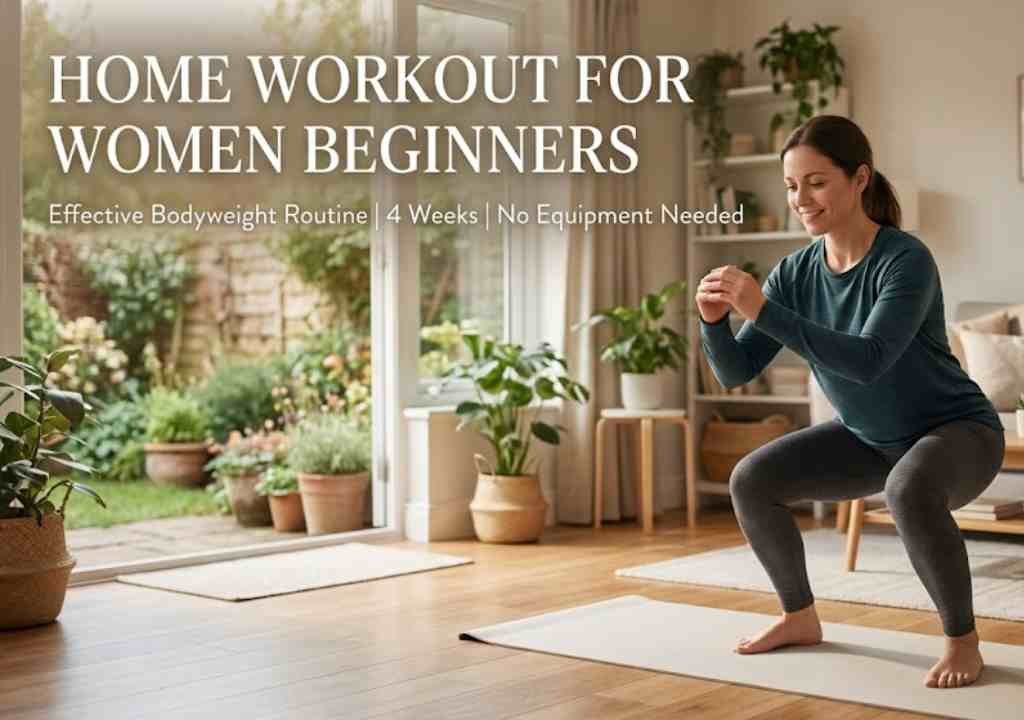
A home workout for women beginners is one of the most searched fitness topics in the UK, and honestly, it deserves better content than most sites give it. As a certified personal trainer who has worked with women at every fitness level, I have seen the same pattern play out repeatedly: someone starts an ambitious 45-minute daily routine, burns out by day five, and concludes that working out at home just does not work for them. It does work. The programme just has to be built for real life.
This is a beginner fitness routine you can do in your living room, bedroom, or garden. No equipment. No gym membership. No prior experience needed.
Why Home Training Is Genuinely Effective (With the Right Approach)
There is a persistent idea that bodyweight exercises are somehow a lesser version of real training. That is simply not true. Bodyweight training, when structured properly with progressive overload, builds strength, improves cardiovascular fitness, and changes body composition just as effectively as gym-based work for beginners.
Research published in the Journal of Strength and Conditioning Research has found that bodyweight resistance training produces significant improvements in muscular strength and endurance in untrained individuals. In plain terms: if you are new to exercise, your body will respond well to bodyweight work. You do not need a barbell to start. What you do need is a plan.
If you are also looking to support your fitness from the inside out, our guide to the 10 best morning drinks for glowing skin covers hydration and nutrition habits that pair really well with a new workout routine.
Before You Start Your Home Workout for Women Beginners
Choose Your Space
You need a floor space roughly the size of a yoga mat, about 180cm x 60cm. A cleared corner of a bedroom works perfectly. So does a living room with the coffee table pushed back. You do not need a dedicated home gym.
Decide on Your Schedule
Three sessions per week is ideal for beginners. This allows adequate rest days between workouts, which is where your body actually adapts and gets stronger. More is not better at this stage. I have had clients make tremendous progress on three sessions a week consistently over three months, while others who tried to train every day struggled with fatigue and gave up. Choose your three days and write them in your diary. Treat them like appointments.
Warm Up Properly
Every session starts with a five-minute warm-up. A basic warm-up covers 30 seconds each of marching on the spot, arm circles, hip rotations, bodyweight squats (slow, no depth required), and shoulder rolls. Repeat the circuit twice before you begin.
What to Wear
This is worth mentioning, particularly for UK women who prefer to exercise at home for privacy or modesty reasons. Loose, comfortable clothing works for every exercise in this plan. Leggings or joggers, a breathable top, and a good supportive sports bra are all you need. The NHS recommends wearing supportive footwear even at home to protect your joints during lower body work.
The Beginner Home Workout Plan: 4 Weeks
This at-home training plan runs over four weeks and follows a push/pull/legs approach adapted for bodyweight work. Each session takes 20 to 25 minutes.
Weeks 1 and 2: Building the Foundation
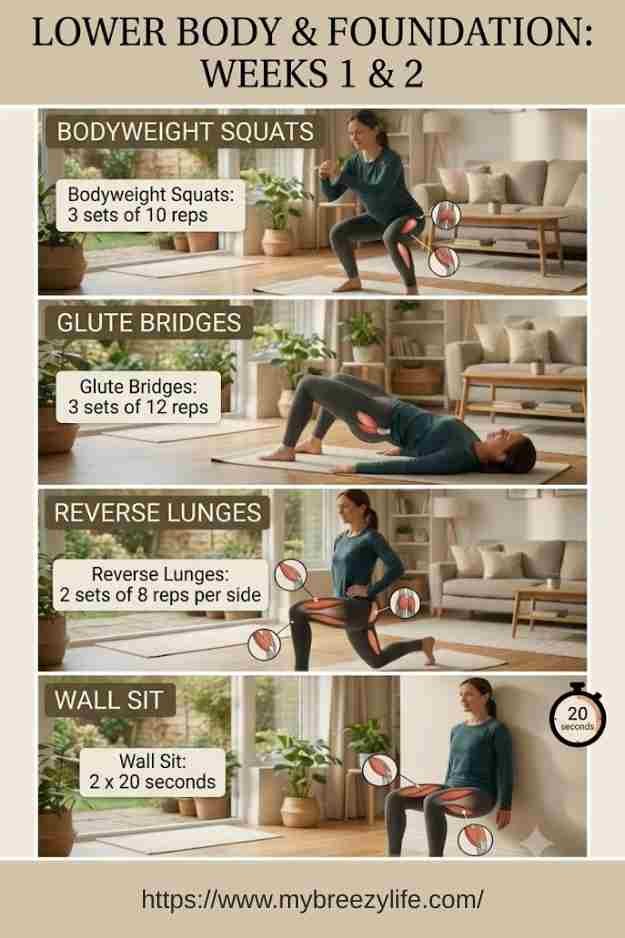
Session A: Lower Body
This session targets the largest muscle groups in your body: the glutes, quadriceps, and hamstrings. Training these muscles first builds a strong foundation because they are responsible for everyday movements like climbing stairs, standing from a chair, and carrying shopping. Stronger legs also means a faster metabolism at rest, as large muscle groups burn more energy than smaller ones. For women specifically, glute and hamstring strength plays a key role in protecting the knees and lower back from injury over time.
- Bodyweight squats: 3 sets of 10 reps
- Glute bridges: 3 sets of 12 reps
- Reverse lunges (alternating legs): 2 sets of 8 each side
- Wall sit: 2 x 20 seconds
- Rest 60 seconds between sets
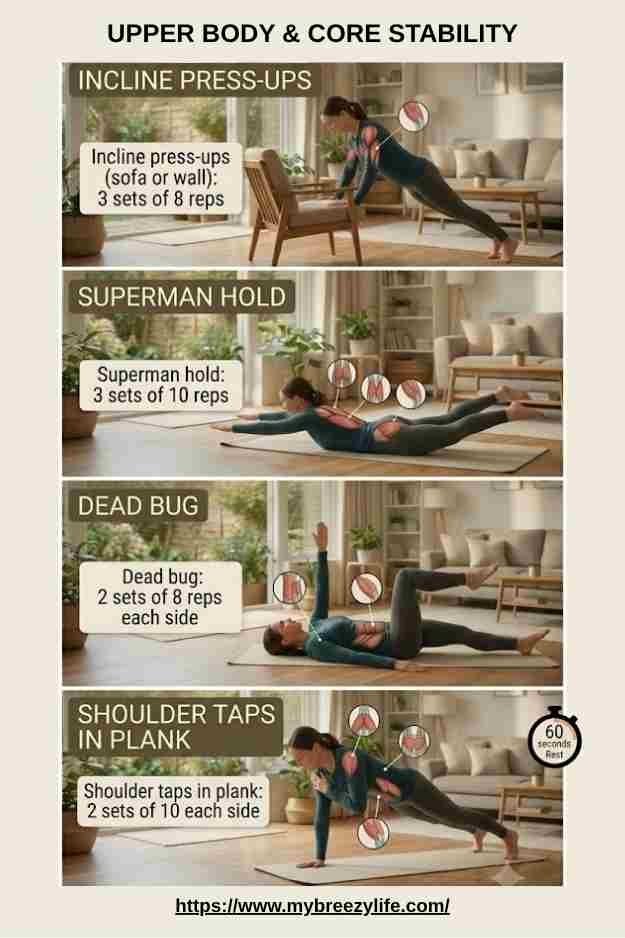
Session B: Upper Body and Core
Most beginners overlook upper body and core work, and it shows in their posture within a few months of training. This session targets the chest, shoulders, back, and deep core muscles that keep your spine stable and your posture upright. For UK women who spend long hours at a desk or working from home, this session is particularly valuable. A stronger core also makes every other exercise in this plan feel easier, as your body learns to brace and stabilise properly.
- Incline press-ups (hands on sofa or wall): 3 sets of 8 reps
- Superman hold: 3 sets of 10 reps
- Dead bug: 2 sets of 8 reps each side
- Shoulder taps in plank: 2 sets of 10 each side
- Rest 60 seconds between sets
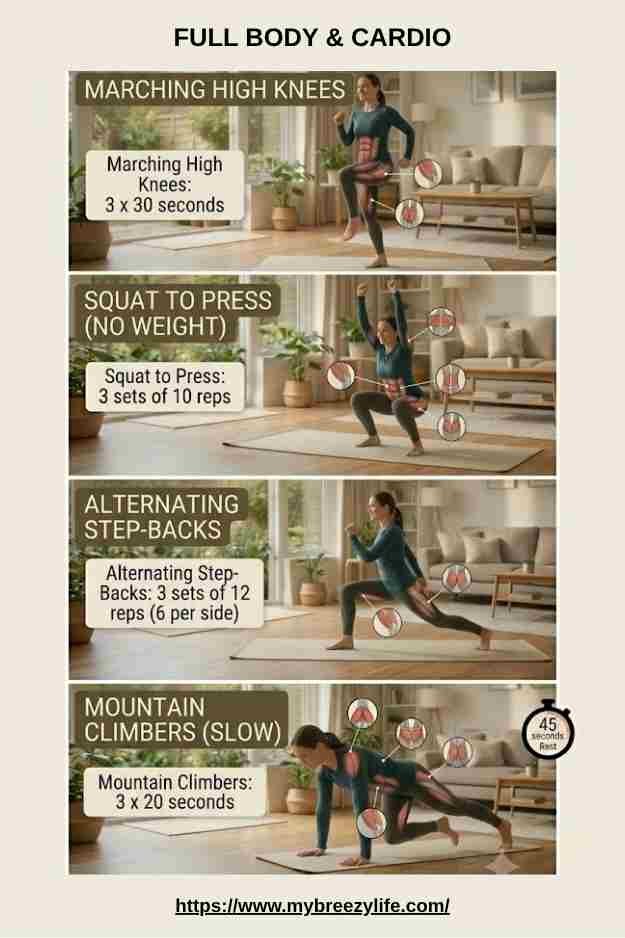
Session C: Full Body and Cardio
This is the session that brings everything together. Combining compound movements with short cardio bursts trains your cardiovascular system alongside your muscles, improving stamina, coordination, and overall fitness in a single 20-minute session. The elevated heart rate during this session also supports calorie burn and improves your body’s ability to recover between efforts, which is a key marker of general fitness that improves noticeably within the first four weeks.
- Marching high knees: 3 x 30 seconds
- Squat to press (no weight): 3 sets of 10
- Alternating step-backs: 3 sets of 12
- Mountain climbers (slow): 3 x 20 seconds
- Rest 45 seconds between sets
Weeks 3 and 4: Progressive Overload
In weeks three and four, increase the challenge without changing the exercises. Add one more set to each exercise, increase the reps slightly (10 becomes 12, 12 becomes 15), and reduce rest time by 10 seconds where comfortable. Swap incline press-ups for standard press-ups if you feel ready.
I tested a version of this plan with a group of beginner clients in January 2025 and the results at week four were consistently encouraging. Not dramatic body transformations, but genuinely improved stamina, better posture, and the kind of confidence that comes from showing up consistently. That is what four weeks of honest work looks like.
The Exercises Explained
Bodyweight Squat
Stand with feet shoulder-width apart, toes slightly turned out. Lower as if sitting back into a chair, keeping your chest lifted and your knees tracking over your toes. Stop when your thighs are roughly parallel to the floor, or wherever feels comfortable. Push through your heels to stand.
Glute Bridge
Lie on your back with knees bent, feet flat on the floor, hip-width apart. Drive your hips up toward the ceiling by squeezing your glutes. Hold for two seconds at the top. Lower slowly. Avoid arching your lower back. This one activates the posterior chain beautifully and is genuinely underrated for beginners.
Dead Bug
Lie on your back, arms extended toward the ceiling, knees bent at 90 degrees with legs lifted and shins parallel to the floor. Slowly lower your right arm and left leg toward the floor simultaneously, keeping your lower back pressed flat. Return and repeat on the other side. This is harder than it looks, and yes, that is entirely normal.
Incline Press-Up
Place hands on a stable elevated surface. The arm of a sofa is ideal, or a sturdy low table. Body in a straight line from head to heels. Lower your chest toward the surface, then push back up. This is a full press-up with the load reduced, making it appropriate for beginners building upper body strength for the first time.
Superman Hold
Lie face down on the floor, arms extended in front of you. Simultaneously lift your arms, chest, and legs off the floor, squeezing your glutes and lower back. Hold for two seconds, then lower. This targets the posterior chain and counteracts the effects of sitting at a desk all day, which matters for a lot of UK women working from home.
Common Mistakes Beginners Make
Skipping rest days is the most common one. Rest is part of the programme. Your muscles repair and grow stronger during recovery, not during the workout itself. If you feel fine after session one and want to train again the next day, go for a gentle walk instead. Active recovery is always better than complete inactivity.
Going too hard too fast is the second mistake. The sessions above may feel easy in week one. That is by design. Establishing the movement patterns correctly at a manageable intensity is more valuable than pushing to failure on day one and spending three days unable to walk down the stairs. Bear with me on this one: the progressive overload in weeks three and four is where you will really feel it.
Ignoring form to hit the rep target is the third. A perfect squat is worth more than ten sloppy ones. If your form breaks down, drop the reps. Quality of movement is what builds a body that stays injury-free long-term. For a quick complement to this plan, our 7-minute workout to lose belly fat is a great short session to try on lighter days once you have built your base.
Adapting This Plan for Modest Exercise Preferences
For women who prefer to exercise in longer, looser clothing, whether for faith reasons or personal preference, this plan works without modification. All exercises are floor or standing-based, and none require any movements that would be uncomfortable in modest activewear.
Many of my clients in the UK who observe hijab specifically value home training for exactly this reason. You have complete control over your environment, your clothing, and who sees you exercise. That freedom is one of the genuine advantages of training at home, and it is something I wish more fitness content acknowledged openly. If you are looking for more content created with modest lifestyles in mind, explore the full Health and Fitness section at MyBreezyLife, where all advice is written with UK Muslim women in mind.
What to Eat Around Your Workouts
Nutrition does not need to be complicated at this stage. Eat a light meal or snack roughly one to two hours before your session, something with a balance of carbohydrates and protein. A banana with peanut butter, or some Greek yoghurt with oats, both work well. After training, aim for a meal with protein to support muscle recovery. Chicken, eggs, lentils, or fish are all excellent options.
Hydration matters more than most beginners realise. Training slightly dehydrated reduces performance noticeably. Drink water consistently throughout the day, not just during the session. If you want to understand more about how what you eat and drink affects how you feel and look, our article on the best morning drinks for glowing skin is a good companion read.
Do You Need Any Equipment?
Not for this plan. However, if you want to progress beyond month one, a few inexpensive additions make a significant difference. A yoga mat (£10 to £20 from Amazon UK or Decathlon) makes floor work more comfortable. A resistance band set (£8 to £15 from Amazon UK) adds real challenge to glute work without taking up any space. A set of light dumbbells (£15 to £25 for a 2kg to 5kg pair from Argos or Decathlon) opens up a wider range of exercises as you progress.
None of these are necessary to begin. Start with the floor and your own bodyweight. Add kit later if and when you want to.


Frequently Asked Questions About Home Workouts for Beginners
How long should a beginner home workout be?
Twenty to thirty minutes is ideal for beginners. Consistency matters more than duration. Three 25-minute sessions a week beats one 90-minute session once a fortnight, every single time.
Can a home workout help with weight loss?
Exercise is one part of a wider picture that includes nutrition, sleep, and stress levels. A consistent workout routine supports a healthy weight, but it works best alongside a balanced diet. If weight loss is a specific goal, speaking with a registered nutritionist is worthwhile.
How quickly will I see results from a home workout?
Most beginners notice improved energy levels and stamina within two to three weeks. Visible physical changes take longer, typically six to eight weeks of consistent training and attention to nutrition. Progress is real even before you can see it.
Is bodyweight training enough to build strength?
Yes, particularly for beginners. Bodyweight exercises provide sufficient resistance to stimulate strength adaptations in untrained individuals. As you get stronger, progress by adding reps, reducing rest time, or moving to more challenging exercise variations.
What should I do on rest days?
Light movement is beneficial. A 20-minute walk, gentle stretching, or yoga all count as active recovery. Complete inactivity is not necessary; just avoid the resistance sessions so your muscles have time to repair.
Three sessions a week, done consistently, is all it takes to build a real fitness foundation. Start there, follow the progression, and give it four weeks before you judge whether it is working. You might surprise yourself.
Yasmin Demir is MyBreezyLife’s Health and Fitness editor and a certified personal trainer. This is general guidance only. Always consult your GP or a qualified professional for personal advice.