
This Fitbit Air review has been a long time coming, because I have been genuinely curious about a fitness tracker with no screen at all. Google released the Fitbit Air in May 2026 at £84.99, and it does something no mainstream tracker has done in years: it asks you to stop staring at your wrist. As a REPs Level 3 personal trainer with a BSc in Sport Science from Brunel University, I have tested a lot of wearables on myself and my clients, and this one made me rethink what most of us actually need from a tracker.
I have worn it every day for the past few weeks, through home workouts, school runs, and one very hot week in North London. Here is my honest take, including how it stacks up against the trackers you are probably comparing it with.
What the Fitbit Air actually is
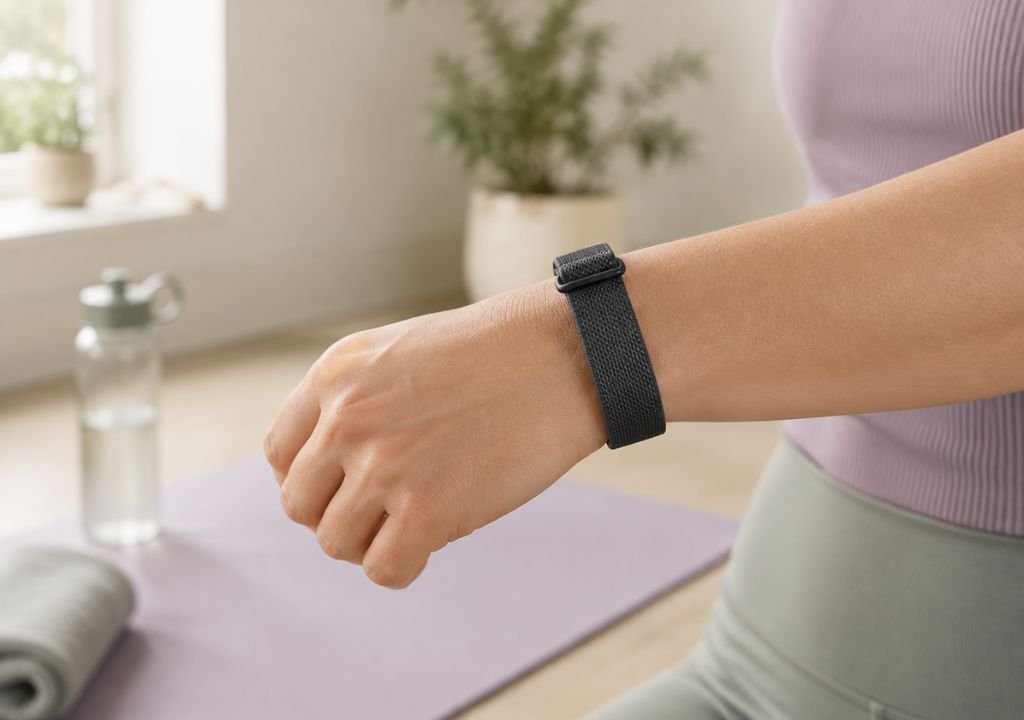
The Fitbit Air is a screenless activity tracker. Instead of a display on your wrist, all your stats live in the Google Health app on your phone. It weighs just 12 grams with the band, lasts up to seven days on a charge, and comes in Obsidian, Berry and Lavender. There is no monthly subscription required to use the core features, and it ships with a three-month Google Health Premium trial so you can decide if the extras are worth it.
What makes it different is the software. This is the first Fitbit built around Google’s Gemini AI, which powers a new Google Health Coach. In plain English, the app looks at your activity, sleep and heart data and gives you tailored nudges rather than just raw numbers. Whether you find that helpful or a bit much will depend on you, and I will come back to that.
My honest Fitbit Air review after weeks of testing
The first thing I noticed was relief. Without a screen lighting up every few minutes, I stopped checking my wrist mid-set and mid-conversation. For habit building, that matters more than people realise, and I say this as someone who has recommended trackers to clients for years while quietly worrying they were making everyone a little obsessive.
Comfort is excellent. At 12 grams it genuinely disappears on your wrist, which is a real plus if you sleep with it on for the sleep tracking. Battery life held close to the claimed seven days in my testing, so I charged it once a week and forgot about it. The silicone band is sweatproof and wetproof, so I kept it on for washing up and a rainy walk without a second thought.
The catch is obvious: you have to reach for your phone to see anything. If you like glancing at your pace or heart rate during a workout, this is not the tracker for you. If, like me, you want the data collected quietly and reviewed later, it is close to ideal.
What the Fitbit Air tracks, and how accurate it is
For the essentials, it covers steps, distance, active minutes, heart rate, heart rate variability, sleep stages and an estimate of daily readiness. It also offers atrial fibrillation notifications, which can flag an irregular heart rhythm.
On accuracy, the step count and heart rate lined up well with my chest strap during moderate workouts, though like most wrist trackers it drifted a little during very high intensity intervals. That is normal and not a fault specific to this device.
One important point as a health writer. The AFib feature is a helpful heads-up, not a diagnosis. If you ever get a notification, or you feel unwell, please see your GP rather than relying on any wearable. The NHS has clear guidance on how much physical activity adults need, and a tracker is only useful if it gets you closer to that, not if it replaces medical advice.
The screenless design: clever or annoying?
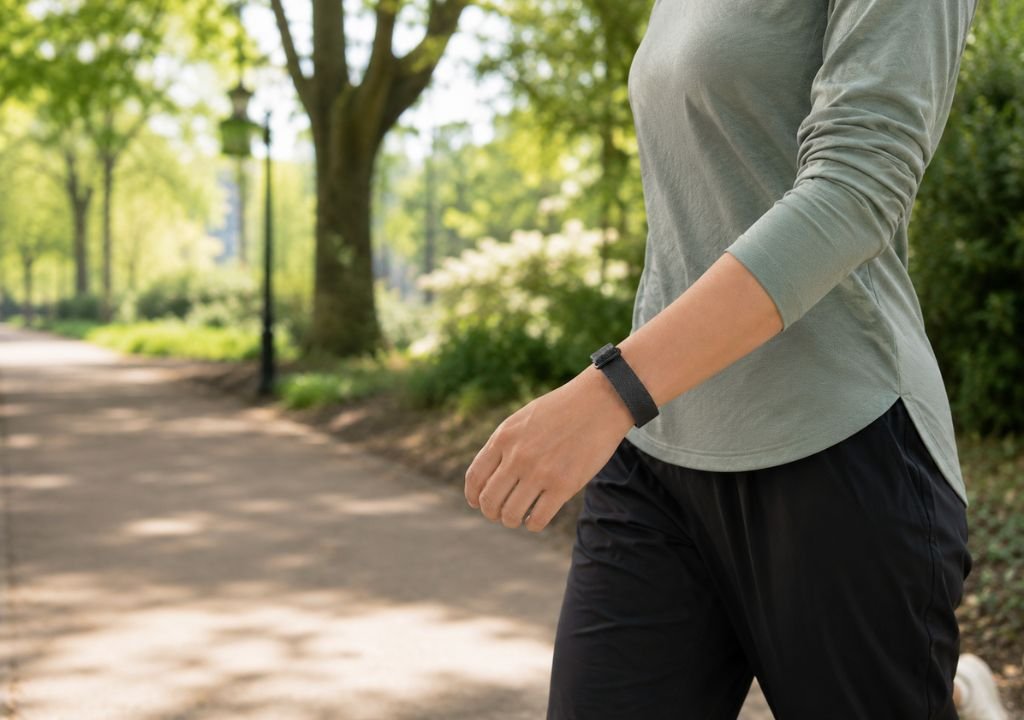
Here is the counterintuitive bit, and bear with me on this one. A tracker with no screen made me move more, not less. Because I could not check my step count on a whim, I stopped chasing a number all day and simply went for a longer walk when I felt like it. The obsessive glancing that a lot of my clients describe just was not possible.
That said, the screenless approach ties you firmly to the Google Health app and a Google account. If you would rather not add another app to your phone, factor that in. The design is a genuine philosophy, not a cost-cutting exercise, and it will either suit you completely or frustrate you within a day.
How to build real habits with the Fitbit Air
A tracker only works if it changes your behaviour, so here is how I would use it depending on where you are starting from.
New to movement: ignore every metric except steps for the first fortnight. Set one small daily target, and let the weekly summary show your progress. This is the approach I set out in our home workout for beginners plan, and the Air pairs with it beautifully.
Already consistent: use the readiness and sleep data to decide when to push and when to rest. A poor sleep score means a gentler session, and that is not laziness, it is smart training.
Training during Ramadan: shift your main activity to after Iftar, wait at least two hours after eating, and use the Air to keep sessions moderate rather than checking numbers while fasting. Consult your GP if you experience dizziness or weakness while fasting. Reviewing your data the next morning, rather than obsessing over it in the moment, fits the rhythm of a fasting day far better.
A note on modest fitness
For women who train modestly, the Fitbit Air has quiet advantages. It sits neatly under a long sleeve and does not light up during prayer or in a quiet room, which the screen-based trackers always seem to do at the worst moment. Its light weight means it will not dig in under layered activewear.
If you are pairing it with modest kit, breathable long-sleeve tops from Decathlon UK or a specialist brand like Covered Active work well for summer training. I keep a longline top on for outdoor sessions and the tracker never once got in the way.
How the Fitbit Air compares to other UK trackers
Price alone does not tell the story here, so this is where a proper Fitbit Air review has to look sideways at the competition. The Air sits in a crowded £30 to £150 band of the market, and the right choice depends entirely on whether you want a screen, built-in GPS, or the lowest possible price. Here is how it measures up against the trackers UK shoppers most often put beside it.
Fitbit Air vs Fitbit Inspire 3
This is the comparison that matters most, because the Inspire 3 is the Air’s closest sibling and often sits at a similar price, dropping to around £59 in sales from its £84.99 launch. The key difference is simple: the Inspire 3 has a slim colour touchscreen, the Air has none. If you want to see the time and your steps on your wrist, the Inspire 3 wins, and its battery stretches to around ten days. If you specifically want to break the screen-checking habit, the Air is the more interesting choice. I would send screen-lovers to the Inspire 3 without hesitation.
Fitbit Air vs Fitbit Charge 6
The Charge 6 is a genuine step up and priced like one, from around £104. You get a bright AMOLED screen, built-in GPS, and Google apps like Maps and Wallet on your wrist. The Air, by contrast, relies on your phone’s GPS through a connected signal, so it is less suited to runners who leave their phone at home. If you run or cycle seriously and want accurate routes without carrying a phone, pay the extra for the Charge 6. If you mostly walk, do home workouts and want simplicity, the Air does the job for a lot less money.
Fitbit Air vs Xiaomi Smart Band 9
For pure value, the Xiaomi Smart Band 9 at around £29.99 is hard to argue with. It has a lovely AMOLED screen, tracks the basics well, and its battery can run for up to three weeks. What you do not get is Fitbit’s mature app, its readiness scoring or the AFib notifications. As a personal trainer, I think the Xiaomi is the smarter buy if budget is your first concern, while the Air justifies its higher price through the coaching software and the calmer, screenless experience.
Fitbit Air vs Whoop and the Oura Ring 4
The Air is not the only screenless option, and this is where it looks like brilliant value. Whoop is also screen-free but locks its features behind an ongoing membership, so the true cost climbs steeply over a year. The Oura Ring 4, from around £349 plus a membership, is a beautiful, discreet recovery tracker worn on the finger rather than the wrist, and it suits sleep-focused users who want nothing on show. Next to both, the Fitbit Air offers screenless simplicity with no compulsory subscription, which for most UK women is the more sensible spend.
Quick comparison at a glance
| Tracker | UK price | Screen | Battery | Best for |
|---|---|---|---|---|
| Fitbit Air | £84.99 | None, app only | Up to 7 days | Habit building without distraction |
| Fitbit Inspire 3 | around £59 to £84.99 | Small AMOLED | Up to 10 days | A screen on a tight budget |
| Fitbit Charge 6 | from around £104 | AMOLED, built-in GPS | Up to 7 days | Runners who want GPS and maps |
| Xiaomi Smart Band 9 | around £29.99 | AMOLED | Up to 21 days | Lowest price with a display |
| Oura Ring 4 | from around £349 plus membership | None, ring and app | Up to 8 days | Discreet sleep and recovery |
Prices move around constantly, especially in Fitbit sales, so treat these as a guide and check the retailer before you buy.
Is the Fitbit Air worth £84.99?
For a beginner or anyone who wants their health data collected without the pressure of a screen, yes. At £84.99 it undercuts most smartwatches, the battery is excellent, and the habit-friendly design is genuinely refreshing. For data obsessives who love a live readout mid-run, look at a screened Fitbit or a smartwatch instead.
It is also stocked at Argos and the Google Store, though colours have been selling out, so check availability before you set your heart on Lavender.
If building steadier routines is your real goal, the tracker is only one piece. Our guides on improving sleep quality, a realistic morning routine for women, and reducing stress naturally do more of the heavy lifting than any device.
Frequently asked questions
Does the Fitbit Air have a screen?
No. It is a screenless tracker by design. All your stats appear in the Google Health app on your phone, which helps reduce constant wrist checking.
How long does the Fitbit Air battery last?
Up to seven days on a charge. In my testing it comfortably lasted a week with all-day and overnight wear, so I charged it once a week.
Do you need a subscription for the Fitbit Air?
No subscription is required for the core features. It includes a three-month Google Health Premium trial, and the AI coaching extras are optional after that.
Is the Fitbit Air better than the Fitbit Inspire 3?
It depends on what you want. The Inspire 3 has a screen and slightly longer battery, while the Air is screenless and built around newer coaching software. For distraction-free habit building, choose the Air. For a visible display on a budget, the Inspire 3 makes more sense.
Does the Fitbit Air have built-in GPS?
No, it uses connected GPS through your phone rather than a built-in chip. If you want to track outdoor runs without carrying a phone, the Fitbit Charge 6 with built-in GPS is the better fit.
Is the Fitbit Air good for beginners?
Yes. Its simplicity is its strength. Without a screen to fixate on, beginners can focus on one small daily habit rather than being overwhelmed by numbers.
Can you wear the Fitbit Air in the shower?
The band is sweatproof and wetproof, so light water exposure is fine. As with any wearable, dry it afterwards and check the manufacturer guidance for swimming.
My honest verdict is simple: the Fitbit Air is the first tracker I have tested that helped me think less about tracking and more about moving, and for most UK women that is exactly the point.
Health & Fitness content at MyBreezyLife is created by our editorial team and reviewed by founder Noreen Fahad. This is general guidance only. Always consult a qualified professional for personal health advice. For mental health support, contact Mind UK at mind.org.uk or Samaritans on 116 123.