Wall pilates for beginners is the home workout I have recommended more than any other this year, and the reason is simple: a wall is something every single person reading this already owns. No gym, no reformer machine, no equipment beyond a flat bit of wall and enough floor space to lie down. I have taught versions of this to clients in tiny North London flats, and it works.
As a REPs Level 3 personal trainer with a BSc in Sport Science from Brunel University, I spend a lot of my time talking nervous beginners out of the idea that they need a studio membership to start. You do not. The wall does three useful jobs at once, and once you understand them, the whole thing clicks.
What wall pilates actually is and why it works
Wall pilates is classic mat pilates done using a wall for feedback, support or resistance. That is the whole concept. You press into the wall, balance against it, or use it to check your alignment, and in doing so your deep core muscles switch on more reliably than they do on the mat alone.
Here is the science in plain English. Pilates trains what we call the deep stabilising muscles, the transverse abdominis and the pelvic floor, the ones that hold your spine steady. Beginners often can’t feel these muscles working, so they compensate with the big showy ones and wonder why their back aches. The wall gives you a point of contact, so your brain gets instant feedback on whether you’re moving from your centre or cheating. That feedback loop is what makes it so good for people starting out.
The counterintuitive part, and the thing I wish more people knew, is that slower is harder. A wall squat held for thirty slow seconds will challenge you far more than twenty fast ones, because the muscle is under tension the entire time. If a move feels too easy, do not speed up. Slow down.
A beginner wall pilates routine you can do today
This is a gentle twenty-minute sequence. Move slowly, breathe out on the effort, and stop if anything sharpens into pain rather than muscular work.
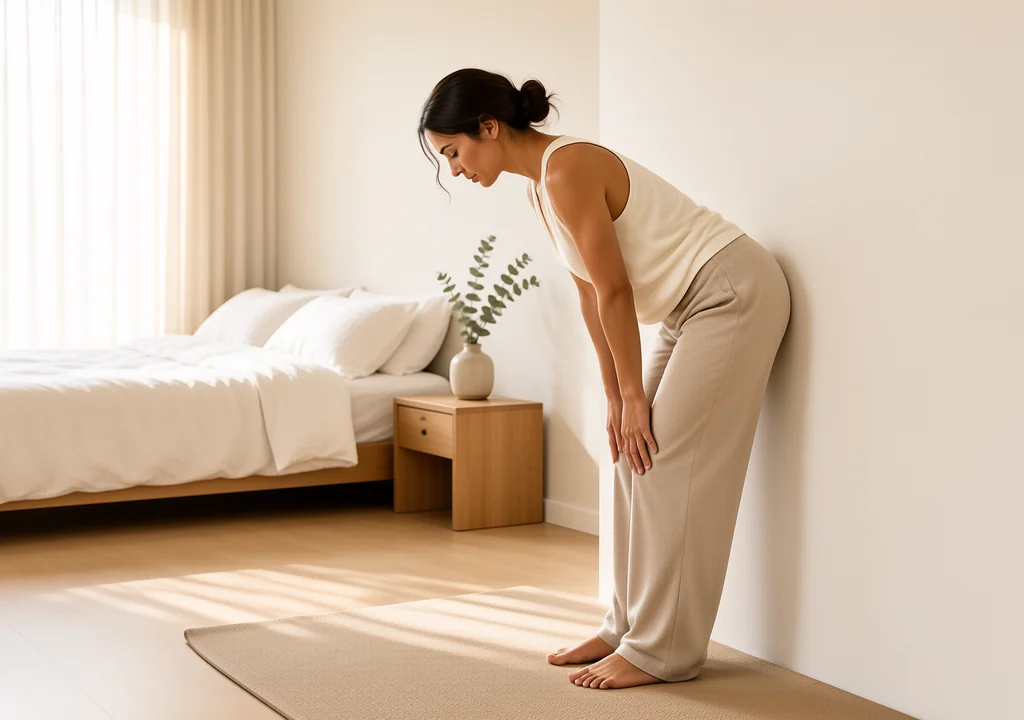
1. Wall roll-down (warm-up)
Stand with your back against the wall, feet a little forward. Peel your spine away from the wall one vertebra at a time, rolling down towards your toes, then roll back up. Four slow rounds. This mobilises the spine and tells your body it is time to move.
2. Wall sit
Slide your back down the wall until your knees are bent, ideally towards ninety degrees but only as far as is comfortable. Hold for twenty to thirty seconds. This builds the thighs and glutes with zero impact on the knees, which is why I use it with clients who find normal squats uncomfortable.
3. Wall press-up
Stand facing the wall, hands flat at shoulder height. Bend your elbows to bring your chest towards the wall, then press back. Ten to twelve reps. All the benefit of a press-up with a fraction of the strain, and a brilliant place to build upper-body strength from scratch.
4. Wall bridge
Lie on your back with your feet flat on the wall, knees bent. Press through your feet and lift your hips into a bridge, squeezing the glutes at the top. Lower slowly. Ten reps. This is my favourite for waking up a backside that has spent all day in a desk chair.
5. Wall leg slides
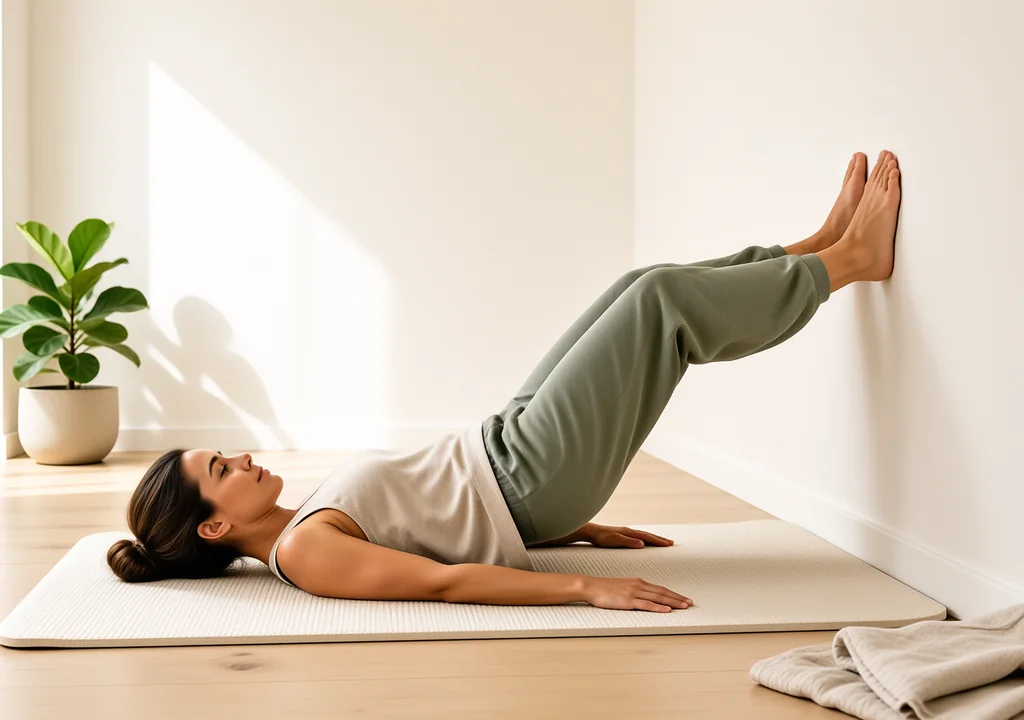
Still on your back, legs up the wall, slowly slide one heel down the wall and back up, keeping your lower back gently anchored. Alternate legs, eight each side. This teaches core control more than it looks like it should.
6. Legs up the wall (cool-down)
Finish by lying with your legs resting straight up the wall for two or three minutes. It’s restful, it eases tired legs, and it’s a lovely calm note to end on.
Modifications for every level
No routine is one-size-fits-all, so here is how to adjust it.
Easier version: Reduce every hold to ten seconds and every set to six reps. Keep your wall sit shallow, barely bending the knees, and skip the leg slides until the rest feels steady. Starting small and consistent beats starting hard and quitting.
Harder version: Extend the wall sit to sixty seconds, add a second round of the whole sequence, and try the wall press-up with your feet further back for more load. Progressive overload simply means asking a little more of the muscle over time, so add a few seconds each week.
Ramadan-safe version: During fasting, save this for after Iftar and wait at least two hours to let food settle. Drop the intensity by about a third in the first week, keep the holds short, and make sure you are drinking two to three litres between Iftar and Suhoor. Before Suhoor, stick to the roll-down and legs-up-the-wall only. Consult your GP if you experience dizziness or weakness while fasting.
Modest fitness and training at home
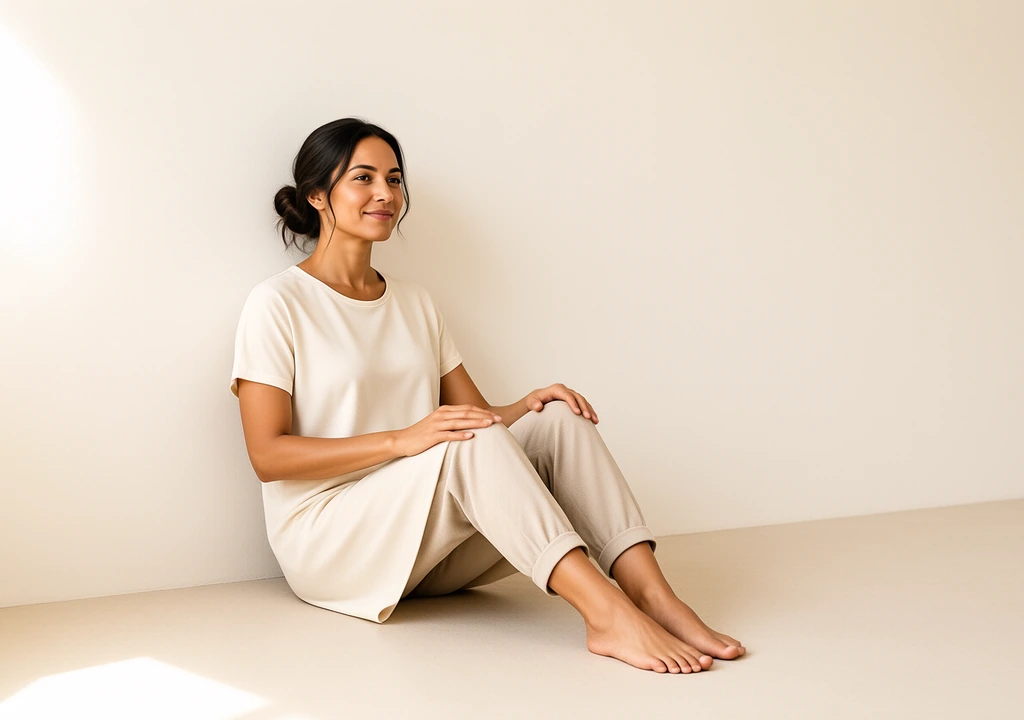
One quiet advantage of wall pilates is that it is entirely private and floor-based, which makes it ideal for women who prefer to train modestly or without an audience. You can do the whole thing in a bedroom with the door shut, in loose clothing, with no mirrors and no one watching.
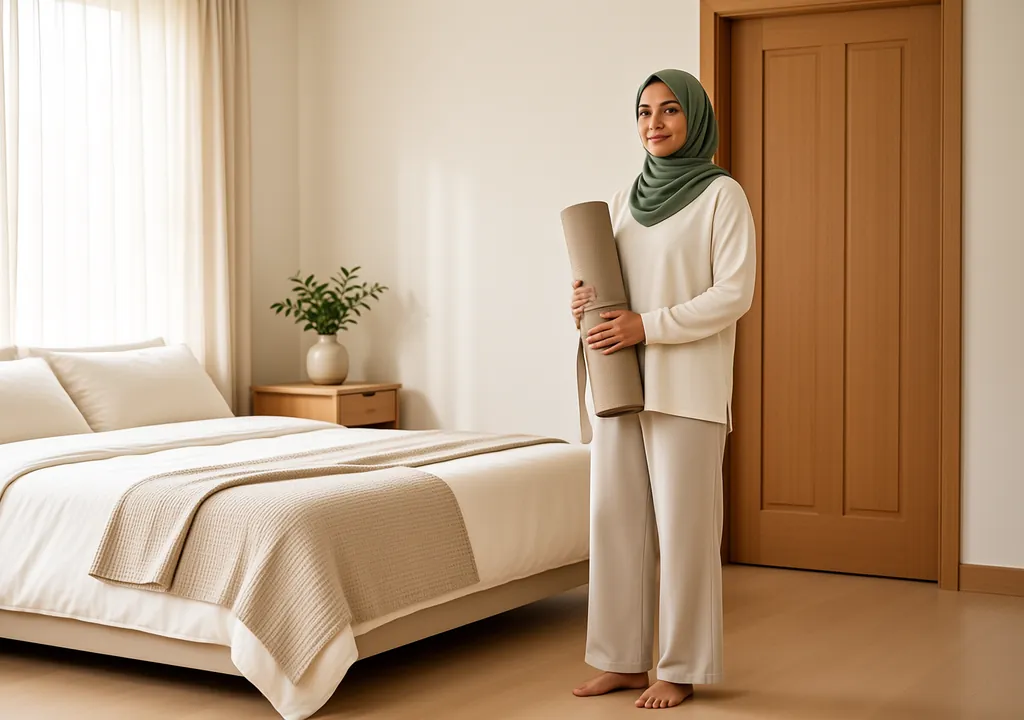
For clothing, loose and breathable works perfectly here, since there is no running or jumping to manage. A longline sports top and relaxed bottoms are plenty. I slot this routine in between Asr and Maghrib on busy days, and it fits neatly around prayer because it leaves you calm rather than wired. If you want to invest in a bit of kit, a decent mat is the only thing worth buying, as the floor moves are kinder on the spine with cushioning.
Pureegg Non-Slip TPE Yoga Mat £19.94 at time of writing
IECCP Women’s Long Sleeve Gym Top £14.99 at time of writing
How to breathe, because most people get it wrong
Breath is half of pilates, and it’s the thing beginners skip. The rule I give clients is to breathe out on the effort. So as you press up in the wall press-up, as you lift in the bridge, as you slide down into the wall sit, that’s your exhale. Breathing out on exertion helps your deep core engage and stops you from holding your breath, which is the instinct almost everyone has when a move gets hard.
Breathe into the back and sides of your ribs rather than puffing your chest up. If you can feel your lower ribs widening as you inhale, you are doing it right. It sounds fiddly, I know, but once it becomes automatic it changes how every move feels.
The mistakes I see beginners make
A few small errors come up again and again, and fixing them matters more than adding reps.
The first is rushing. Wall pilates rewards control, and a slow, deliberate rep with good form beats a dozen hurried ones every time. If you find yourself speeding up, you have usually lost the muscle you were meant to be working.
The second is clenching everywhere. You want your deep core and the target muscle working, not your neck, jaw and shoulders tensing up by your ears. Check in with your shoulders mid-set and consciously drop them.
The third is giving up after a week. Core strength builds slowly, and the first sign is rarely dramatic. It’s usually that you notice you’re standing taller or your back feels easier at the end of a long day. That’s the progress. Trust it and keep going, because the women I have trained who stuck with a gentle routine for three months saw far more than the ones who went hard for ten days and stopped.
How often should you do it
Three sessions a week is a realistic, sustainable starting point, and it sits comfortably inside the NHS recommendation of strengthening activity on at least two days a week alongside your general movement. You can read the full NHS exercise guidance for context on where pilates fits into a weekly routine. Consistency over months matters far more than intensity in any single session, something I remind clients of constantly.
If you want to build a fuller week of gentle movement, our home workout for women beginners guide pairs well with this, and for the mental side our how to reduce stress naturally and yoga and meditation for beginners pieces are natural companions. Doing this in the evening also helps wind you down, which ties into our how to improve sleep quality guide, while a gentler morning version fits the morning routine for women we mapped out earlier this year.
Wall pilates for beginners: frequently asked questions
Does wall pilates really work?
Yes, for building core strength, improving posture and easing into exercise, it works well. It’s not a quick fix, but as a low-impact way to strengthen the deep core and legs at home, it’s one of the most accessible methods there is. Results come from doing it regularly over weeks.
How long until I see results from wall pilates?
Most beginners notice better posture and a steadier core within three to four weeks of training three times a week. Visible changes take longer and depend on many factors, so focus on how you feel and move rather than the mirror.
Is wall pilates good for beginners with back pain?
It can be gentler than mat pilates because the wall supports alignment, but back pain is individual. Always check with your GP or a physiotherapist before starting if you have an existing back condition, and stop any move that causes sharp pain.
Do I need any equipment for wall pilates?
No. A clear bit of wall and floor space is all you need. A cushioned mat makes the floor moves more comfortable, but it is optional rather than essential.
What is the difference between wall pilates and regular pilates?
Regular mat pilates is done entirely on the floor, while wall pilates adds a wall for support, feedback or resistance. The wall makes alignment easier to feel, which is why beginners often find it less intimidating than the mat version on its own. The underlying principles and core focus are the same.
Can I do wall pilates every day?
Gentle sessions can be done daily, but three to four times a week with rest days is plenty for beginners and lets the muscles recover. Listen to your body and do not push through fatigue.
Pick three days this week, clear a bit of wall, and start with the gentle version. Twenty minutes is genuinely enough, and the hardest part is only ever the first session.
Health & Fitness content at MyBreezyLife is created by our editorial team and reviewed by founder Noreen Fahad. This is general guidance only. Always consult a qualified professional for personal health advice. For mental health support, contact Mind UK at mind.org.uk or Samaritans on 116 123.
This article contains affiliate links. If you buy something through one of them we may earn a small commission, at no extra cost to you.