Yoga meditation for beginners is one of the most searched wellbeing topics in the UK right now, and for good reason. People are stressed, sleep-deprived, and increasingly aware that physical fitness alone is not the whole picture. Yoga meditation sits at the intersection of movement and mental stillness, and it is one of the most accessible practices you can build into your life without a gym membership, expensive equipment, or years of experience.
I came to yoga meditation relatively late compared to some. As a personal trainer with a BSc in Sport and Exercise Science from Brunel University and a REPs Level 3 PT certification, my early career was focused almost entirely on physical conditioning. It was not until I started noticing how much my most stressed clients struggled to make progress, regardless of how hard they trained, that I began taking the mental side of fitness seriously. Yoga meditation changed how I work with people. It also changed how I manage my own stress.
This guide covers what yoga meditation actually is, the main types worth knowing about, and how to start a simple practice at home as a complete beginner.
What Is Yoga Meditation and Why Does It Work?
Yoga and meditation are often treated as separate practices, but they share the same roots. The word yoga comes from the Sanskrit word meaning union, specifically the union of your individual consciousness with a broader state of awareness and stillness. Meditation is the tool used to reach that state. In traditional yoga, the physical postures (asanas) were never the destination. They were preparation: a way of settling the body so that the mind could become still enough to meditate.
In modern practice, the two are woven together in different proportions depending on the style. Some forms of yoga are primarily movement-based, with a short meditation at the end. Others are almost entirely meditative, with minimal physical movement. Understanding this helps you choose the right starting point.
From a physiological standpoint, yoga meditation activates the parasympathetic nervous system, the part of your body responsible for rest and recovery. Chronic stress keeps the sympathetic nervous system (your fight-or-flight response) running at a higher baseline than it should. Regular yoga meditation practice interrupts that pattern, lowering cortisol, improving sleep quality, and reducing the physical tension that builds up in the body over time. The NHS acknowledges mindfulness and meditation-based practices as evidence-supported approaches for managing stress and low mood.
The Main Types of Yoga Meditation Worth Knowing
The original article on this site gave a useful overview of yoga types, and it is worth covering these properly for anyone starting out, because choosing the wrong style for your current level and temperament is the most common reason beginners give up.
Hatha Yoga
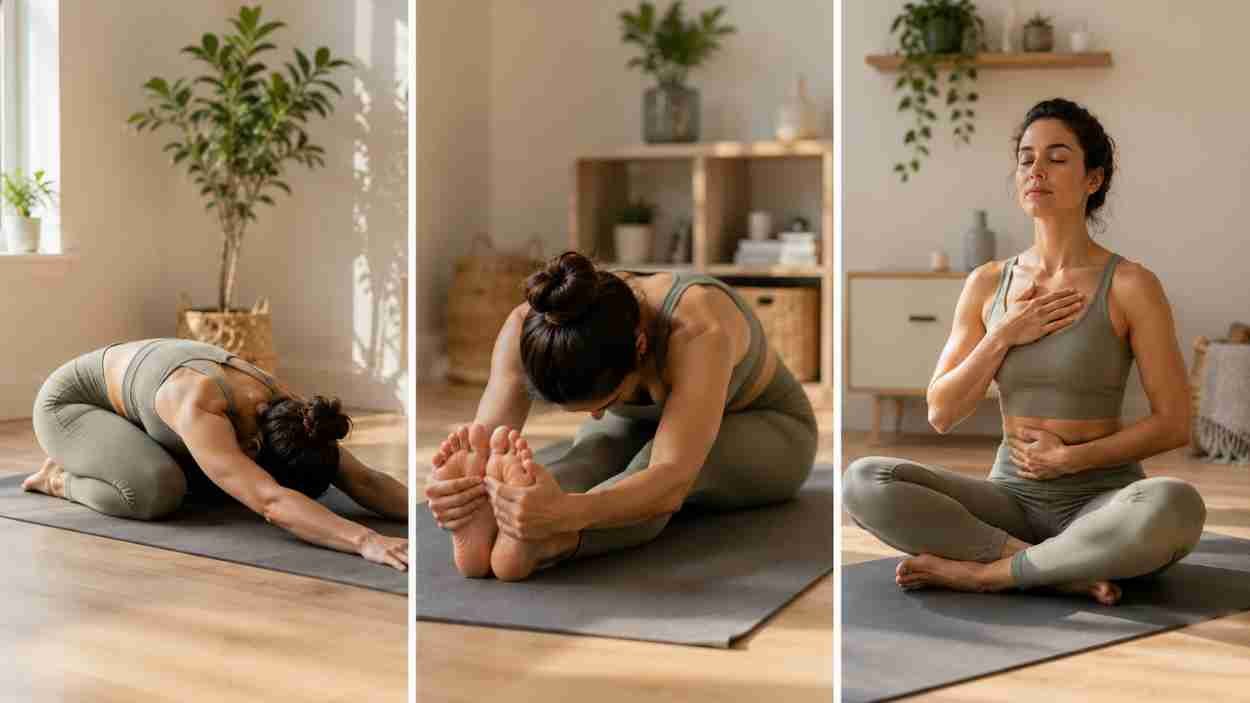
Hatha yoga is the most widely taught form in the UK and the most practical starting point for beginners. It combines physical postures with breath awareness and typically ends with a period of guided relaxation or meditation. The pace is slower than vinyasa or ashtanga, which makes it far more accessible if you have never practised before.
The physical postures in Hatha yoga are not just exercise. Each pose is held long enough for you to focus on the breath and draw your attention inward. That is where the meditative element begins. I recommend Hatha yoga classes or videos to every client who is new to both yoga and meditation, because it builds the body awareness and breath connection that all other forms of yoga meditation rely on.
Raja Yoga
Raja yoga is often described as the royal path and is the most directly meditative form of yoga. It is less about physical posture and more about disciplining the mind through focused attention, breath control (pranayama), and sustained concentration. If you find seated meditation difficult because your mind is too restless, Raja yoga offers a structured system of practices that progressively build the mental habits needed to meditate effectively.
For beginners, Raja yoga is best approached through a structured course or guided programme rather than independently, because the techniques require some explanation to practise correctly.
Mantra Yoga
Mantra yoga uses the repetition of a word, phrase, or sound as the object of focus during meditation. The repetition serves the same function as the breath in mindfulness meditation: it gives the wandering mind something to return to. For many people, particularly those who find breath-focused meditation frustrating, mantra-based practice is significantly easier to sustain.
You do not need a Sanskrit mantra. A simple English word or short phrase works equally well. The point is the rhythm and the focused return to it each time the mind drifts.
Karma Yoga
Karma yoga is the path of action, and it is the most philosophical of the four main paths. Rather than a seated practice, karma yoga is about approaching everyday activities, work, caregiving, household tasks, with full presence and without attachment to outcomes. For women managing heavy mental loads and caregiving responsibilities, the idea that the act of being fully present in ordinary tasks is itself a form of meditation can be genuinely transformative.
It does not replace seated practice, but it complements it in a way that makes the philosophy of yoga relevant beyond the mat.
How to Start Yoga Meditation for Beginners at Home
You do not need a studio, a teacher, or any equipment beyond a yoga mat or a clear space on the floor. Here is a simple framework for getting started.
Week 1 to 2: Establish the Breath
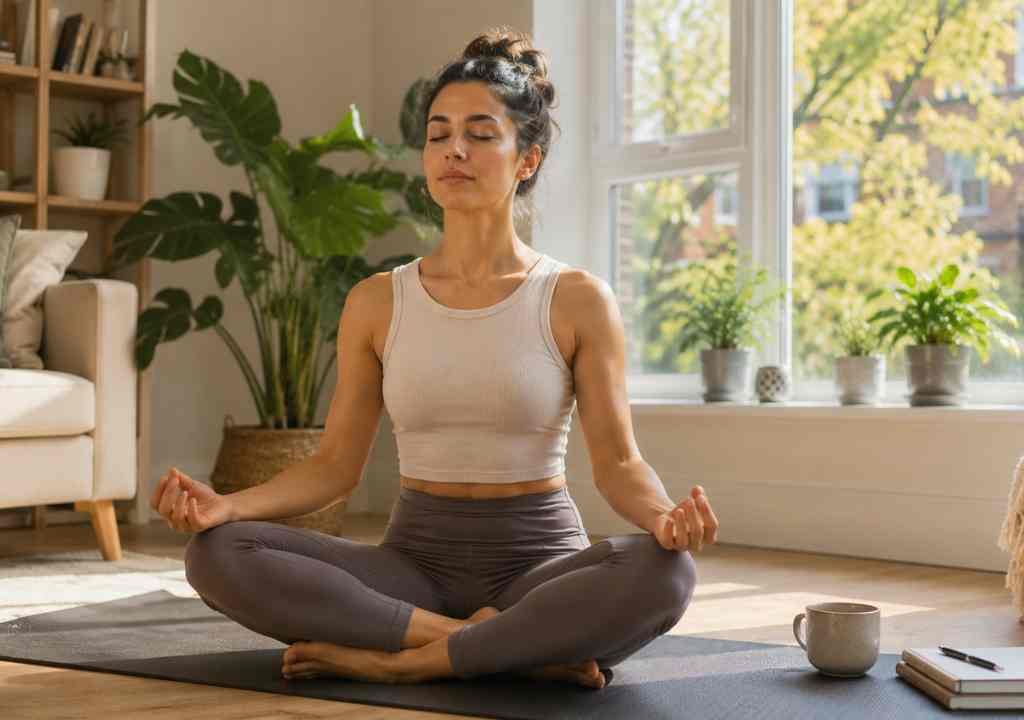
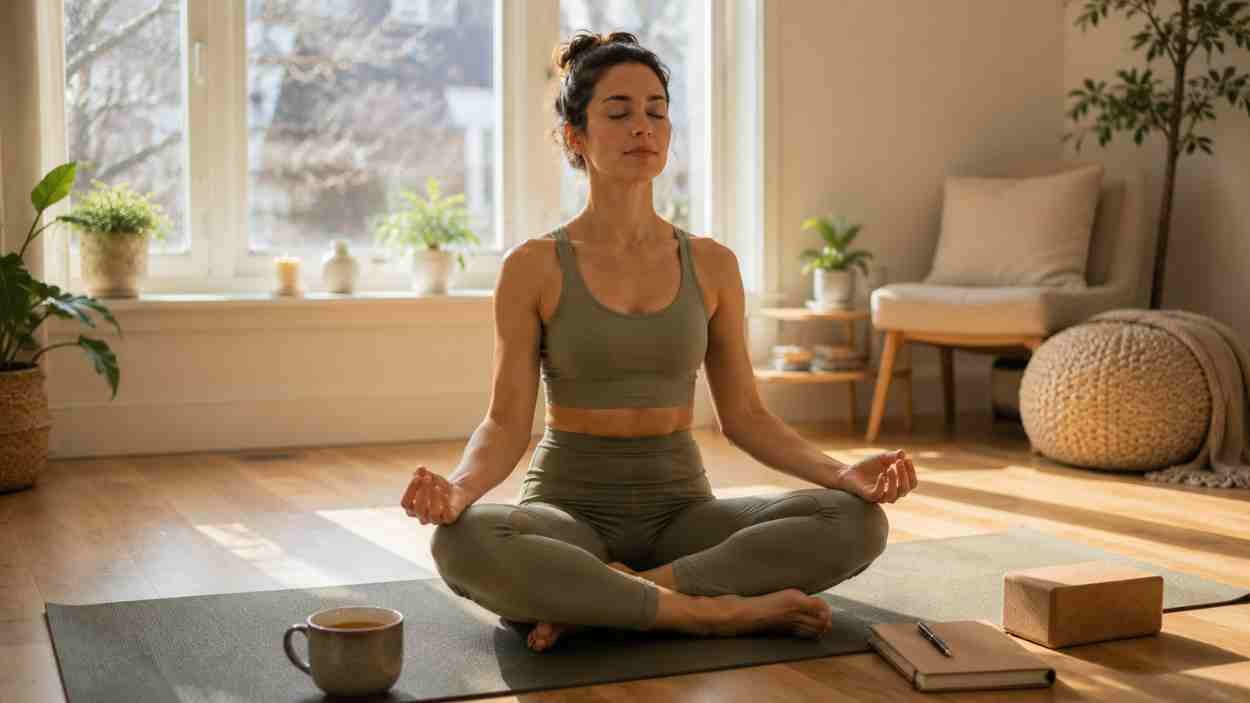
Before you attempt any posture or seated meditation, spend the first two weeks simply practising conscious breathing for ten minutes a day. Sit comfortably, close your eyes, and bring your attention to the physical sensation of breathing. The rise of your chest. The pause at the top of the inhale. The slow release of the exhale.
This single practice, done consistently, begins rewiring your stress response. And yes, it is harder than it sounds. The mind will wander constantly at first. That is normal and expected.
Week 3 to 4: Add Simple Hatha Postures
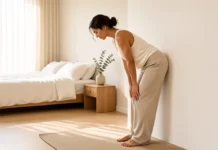
Once breath awareness feels more natural, add five to eight simple Hatha yoga postures before your seated practice. Child’s pose, cat-cow stretching, seated forward fold, and legs up the wall are all accessible to complete beginners and do not require flexibility. Hold each for five to eight slow breaths rather than rushing through.
The physical movement serves a practical purpose: it settles the nervous system before you sit still. Many beginners find seated meditation much easier after ten to fifteen minutes of gentle movement because the body is no longer fighting the instruction to be still.
Week 5 onwards: Build the Seated Practice
By week five, your seated meditation can extend to fifteen to twenty minutes. Use the breath as your anchor, or experiment with a short mantra if breath-only focus feels too slippery. The goal is not emptying the mind. It is noticing when the mind has wandered and returning, calmly, to the anchor. Every return is the practice. For a more detailed breakdown of the meditation side of this, our full guide to how to start mindfulness meditation covers the seated practice step by step.
Modifications for Every Starting Point
Complete beginner version: Start with five minutes of breath awareness only, no postures, no formal meditation. Sit in a comfortable chair rather than on the floor if cross-legged positions are uncomfortable. Build from there over four to six weeks.
More experienced version: Explore pranayama techniques such as alternate nostril breathing (nadi shodhana) before seated meditation. This is one of the most effective tools I have found for settling a busy mind before sitting, and the research on its effect on the nervous system is solid.
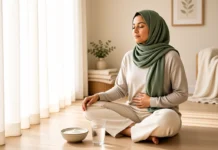
Ramadan-safe version: Yoga meditation is well-suited to Ramadan practice. A short, gentle session after Fajr prayer is particularly grounding before the fast begins. Avoid vigorous physical postures during fasting hours. Seated breath awareness and mantra practice require no physical exertion and are suitable at any point in the day. After Iftar, allow at least thirty minutes before any more active yoga movement. Always consult your GP if you experience dizziness or weakness while fasting.
Yoga Meditation for Muslim Women
For Muslim women, yoga meditation occasionally raises questions about compatibility with Islamic practice. The physical and meditative techniques themselves, breathwork, postural awareness, focused attention, are simply tools for managing the body and mind. Many Muslim women practise yoga as a physical and mental wellness tool while keeping the spiritual dimensions of their faith entirely within their own practice of prayer and dhikr.
The parallels between the focused attention required in Salah and the concentrated awareness cultivated in yoga meditation are not coincidental. Both require you to set aside distraction and be fully present. Using yoga meditation as a complement to prayer rather than a replacement for spiritual practice is a distinction many Muslim practitioners make clearly and comfortably.
UK Resources to Support Your Practice
You do not need to spend money to start. The following are all free or very low cost:
The NHS Strength and Flex app includes beginner movement sessions that complement a yoga practice. The Headspace and Calm apps both have free beginner yoga meditation sessions. YouTube channels including Yoga with Adriene (the most watched yoga channel in the UK) offer hundreds of free Hatha yoga sessions at all levels.
If you want to invest in one thing, a non-slip yoga mat is worth it. Decathlon UK sells a solid beginner mat for around £15 to £20, which is more than adequate for home practice.
For additional reading on the mental wellbeing benefits of meditation, Mind UK has a clear and practical section on mindfulness and relaxation techniques.
Frequently Asked Questions
Is yoga meditation suitable for complete beginners with no experience?
Yes. Hatha yoga and breath awareness meditation require no prior experience, no flexibility, and no equipment beyond a comfortable space. Starting with ten minutes a day is entirely sufficient.
How is yoga meditation different from regular meditation?
Standard seated meditation focuses entirely on the mind and breath. Yoga meditation integrates physical postures as preparation, using movement to settle the body before the mind attempts stillness. For many beginners, this physical lead-in makes the mental practice significantly easier to access.
How long before I notice results from yoga meditation?
Most people notice a subtle improvement in their baseline stress levels and sleep quality within two to three weeks of daily practice. Deeper effects on mental clarity and emotional regulation tend to build over six to eight weeks of consistency.
Can I practise yoga meditation during Ramadan?
Yes. Gentle seated practice and breath awareness are suitable throughout the fasting day. Avoid vigorous physical postures during fasting hours. After Iftar, allow at least thirty minutes before returning to active movement. Consult your GP if you experience any physical symptoms while fasting.
Do I need a teacher to start yoga meditation?
Not for a basic beginner practice. Free video resources from reputable sources are sufficient to start. A teacher becomes valuable when you want to deepen your practice, correct your posture in specific poses, or explore the more advanced pranayama techniques within Raja yoga.
Yoga meditation is one of those practices that genuinely gets easier the more consistently you show up for it. Start with ten minutes, keep it simple, and build slowly. The benefits are cumulative and the barrier to entry is lower than most people assume.
This is general guidance only. Always consult a qualified professional for personal health advice. For mental health support, contact Mind UK at mind.org.uk or Samaritans on 116 123.
Yasmin Demir is MyBreezyLife’s Health and Fitness Editor, holding a BSc in Sport and Exercise Science from Brunel University and a REPs Level 3 personal trainer certification. All recommendations are based on personal experience and independent research. Health and Fitness content at MyBreezyLife is created by our editorial team and reviewed by founder Noreen Fahad.