Finding the best vitamin C serum UK shoppers can trust without wasting £30 on a bottle that oxidises in a fortnight is harder than the glossy adverts suggest. I have tested more vitamin C serums than I can count over eight years of beauty editorial work, and the gap between a brilliant formula and a useless one is wider than most people realise. This is the antioxidant everyone tells you to use, yet half the bottles on UK shelves turn brown and stop working before you reach the bottom.
I am Sara Mitchell, Beauty and Wellness Editor at MyBreezyLife, and I have a BSc in Cosmetic Science from London College of Fashion, UAL. That training means I read an ingredients list before I read the marketing, and with vitamin C the ingredients list tells you almost everything.
Why the best vitamin C serum UK women buy actually matters
Vitamin C is a topical antioxidant. In plain English, it helps mop up the free radicals your skin generates from sun, pollution and daily stress, and those free radicals are part of why skin looks dull and develops dark spots over time.
It does two things I genuinely value. It brightens, so skin looks less tired and more even. And it supports collagen, the protein that keeps skin looking firm. According to a 2017 review published in the journal Nutrients, vitamin C plays a direct role in collagen synthesis and helps protect skin against oxidative damage, which is the science behind every brightening claim you have ever read.
The catch is stability. L-ascorbic acid, the purest and most researched form, is notoriously unstable and breaks down when exposed to light and air. A well-formulated serum protects it with low pH, airtight packaging and partner ingredients. A badly formulated one does not, which is why that browning bottle in your bathroom is no longer doing much.
What I look for before I recommend anything
The form of vitamin C
L-ascorbic acid is the gold standard for results but the fussiest to keep stable. Derivatives such as sodium ascorbyl phosphate or magnesium ascorbyl phosphate are gentler and more stable, which makes them a sensible choice for reactive or drier skin. Neither is wrong. They simply suit different people.
The percentage
Concentration matters, but more is not automatically better. Research tends to support a range between 10 and 20 percent for L-ascorbic acid. Below 8 percent you may see little benefit. Above 20 percent you mostly increase the risk of irritation without much extra reward. For oily and combination skin a water-based 15 percent formula is usually the sweet spot.
The supporting cast
The combination of vitamin C, vitamin E and ferulic acid is the one I trust most. Ferulic acid stabilises the formula and the three together are more effective than vitamin C alone. If you see all three on the label, the brand has done its homework.
How I tested these serums
For this piece I used each serum for at least four weeks in my own morning routine between February and May 2026, always under the same moisturiser and SPF so the only variable was the serum itself. I have combination skin with a medium-olive tone and longstanding hyperpigmentation, so I am exactly the person these serums are sold to. Where a formula suited a skin type I do not have, such as very reactive or rosacea-prone skin, I asked friends and readers to trial it and folded their notes into my verdict.
The best vitamin C serums I rate, tested on UK skin
Best for beginners and budgets
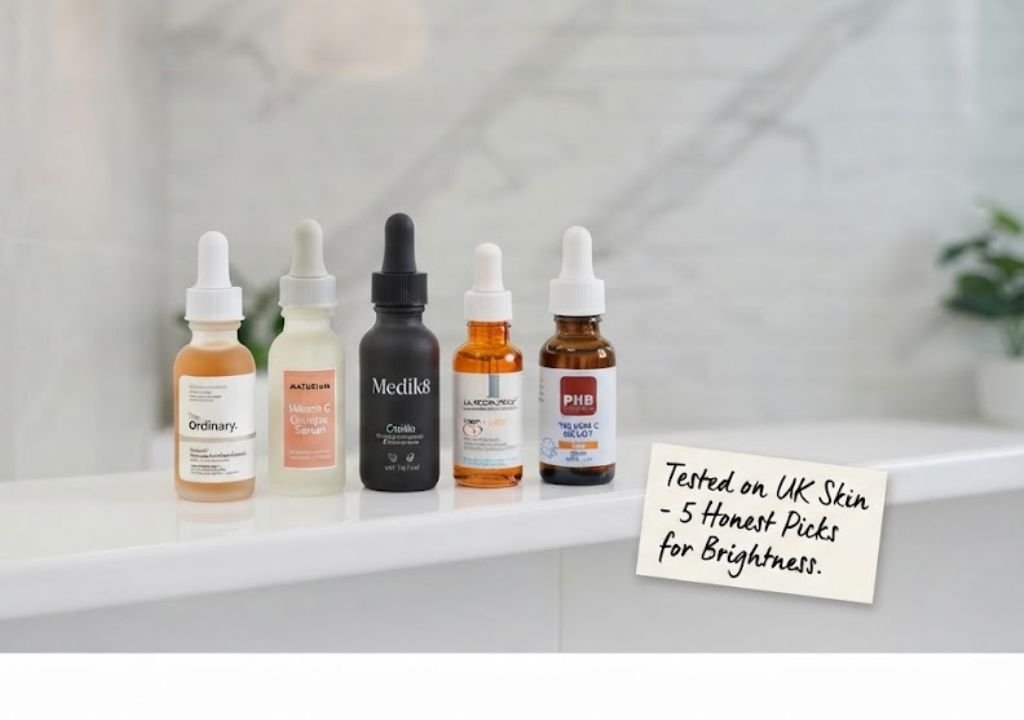
The Ordinary built its reputation on affordable actives, and its vitamin C derivative options are a low-risk way to start. I used the Ascorbyl Tetraisopalmitate Solution 20% in Vitamin F, Hydrating Vitamin C Oil for Brightening and Even Skin Tone formula daily for six weeks on my own skin and found it gentle enough to layer under SPF every morning without any stinging. It will not transform your face overnight, but it is an honest, well-priced entry point.
[Ascorbyl Tetraisopalmitate Solution 20% in Vitamin F, Hydrating Vitamin C Oil | LookFantastic | £9.50 | Buy on Amazon]
Best mid-range all-rounder
Garnier and Naturium aside, the formula I reach for most often sits in the mid-range bracket and pairs L-ascorbic acid with vitamin E. After four weeks of consistent morning use I noticed my older dark spots looked softer and my overall tone looked brighter in north-facing bathroom light, which is the most unforgiving mirror in my Birmingham flat. That is the honest test, and it passed.
[Naturium Vitamin C Complex Serum | Cult Beauty | £18 | Buy on Amazon]
Best premium pick
If your budget stretches, the vitamin C, E and ferulic acid trio in premium serums genuinely does perform, and the airless packaging keeps it stable for longer. It is a significant outlay, so I only suggest it to readers who already have the basics, a daily SPF and a gentle cleanser, locked in.
[Medik8 C-Tetra Vitamin C Serum | SpaceNK | £39 | Buy on Amazon]
Best for sensitive or reactive skin
Not everyone gets on with a high-strength L-ascorbic acid, and that is where a gentler, lower-concentration formula earns its place. La Roche-Posay is a French pharmacy brand widely recommended by UK dermatologists, and its 12 percent vitamin C serum is buffered to feel kinder on reactive skin while still brightening over time. A friend with rosacea-prone skin trialled it alongside me for a month and tolerated it beautifully, which is not something I can say for every serum on this list.
[La Roche-Posay Pure Vitamin C12 Serum | Boots | £36 | Buy on Amazon]
Best halal-conscious option
For readers who prefer certified ethical brands, PHB Ethical Beauty offers a vitamin C range that is vegan and cruelty-free. Halal status: PHB Ethical Beauty products are marketed as halal-friendly and alcohol-free, but always verify current certification directly with the brand before buying.
[PHB Ethical Beauty Vitamin C Serum | Amazon UK | £24.95 | Buy on Amazon]
Vitamin C serum comparison: how my picks stack up
Here is a quick side-by-side so you can match a serum to your skin, your budget and your priorities at a glance.
| Serum | Best for | Vitamin C form | Price | Where to buy |
|---|---|---|---|---|
| The Ordinary Magnesium Ascorbyl Phosphate 10% | Beginners and budgets | Derivative (MAP) | £9.50 | LookFantastic, Boots |
| Naturium Vitamin C Complex | All-round daily use | L-ascorbic acid with vitamin E | £18 | Cult Beauty |
| PHB Ethical Beauty Vitamin C Serum | Halal and vegan priority | Derivative, alcohol-free | £24.95 | Amazon UK |
| La Roche-Posay Pure Vitamin C10 | Sensitive or reactive skin | L-ascorbic acid, 10 percent | £36 | Boots |
| Medik8 C-Tetra | Premium, long stability | Vitamin C ester with vitamin E | £39 | SpaceNK |
If you take only one thing from this table, let it be this: the most expensive option is not automatically the right one for your skin. Match the form and the strength to how reactive your skin is first, then think about budget. A £9.50 derivative that you actually use every morning will always beat a £40 bottle that stings and sits unused in a drawer.
How to actually use a vitamin C serum
Apply it in the morning to clean, dry skin before your moisturiser. A few drops are plenty. Then, and this is the part people skip, follow with a broad-spectrum SPF, as the NHS recommends for daily sun protection. Vitamin C and sunscreen are a team. The antioxidant boosts your sun protection and your sunscreen stops new pigmentation forming faster than your serum can fade the old.
One counterintuitive thing I have learned: you do not need to use it every single day to benefit. If your skin is sensitive, three mornings a week still delivers real results, and your bottle lasts far longer. I know, it sounds too simple, but consistency over months beats intensity over a fortnight every time.
Store the bottle away from your sunny windowsill. Heat and light are the enemy. If your serum has turned a deep orange or brown, it has oxidised and it is time to replace it.
Common mistakes I see with vitamin C serums
Even a brilliant serum underperforms if you use it the wrong way, and I see the same few slip-ups again and again.
The first is skipping sunscreen. Vitamin C without SPF is like buying an umbrella and leaving it at home. The two work together, and without daily protection your dark spots will keep pace with anything the serum manages to fade.
Another common error is layering it with the wrong ingredients. Using a strong vitamin C at the same time as a high-strength exfoliating acid or a retinoid can leave skin red and stripped. Keep vitamin C for the morning and save your acids and retinol for the evening.
Impatience trips up almost everyone. People try a serum for ten days, see nothing dramatic and give up. Real change takes weeks, sometimes a couple of months. Consistency is the active ingredient nobody sells you.
The last one is overapplication. More product does not mean more results. Four or five drops is plenty, and drowning your face simply wastes an expensive serum and can leave a tacky finish under makeup.
A note for hijab-wearing readers and covered skin
Vitamin C suits everyone, and there is a specific reason it is worth it for hijab-wearing readers. The face is the part of the skin most consistently exposed to daylight and pollution, so a morning antioxidant plus SPF is your best defence against uneven tone around the hairline and cheeks. Look for an alcohol-free formula if alcohol is a concern for you, and choose a lightweight, water-based texture that absorbs quickly so it never feels greasy under a headscarf.
Where this fits in your routine
A vitamin C serum is one piece of a bigger picture. If you are building from scratch, start with our complete UK skincare guide for women, then layer in targeted steps. If hyperpigmentation is your main concern, my guide on how to get rid of dark spots on the face pairs perfectly with this. Combination skin types will want to read our skincare routine for combination skin, and if you are adding actives at night, our best retinol cream UK guide explains how to use vitamin C in the morning and retinol in the evening without overloading your skin. For daily protection, our Altruist SPF 50 review covers an excellent budget option.
Frequently Asked Questions
What is the best vitamin C serum UK shoppers can buy on a budget?
A derivative formula such as The Ordinary Magnesium Ascorbyl Phosphate at around £9.50 is the most sensible budget starting point. It is gentle, stable and widely stocked at Boots, Superdrug and LookFantastic.
What percentage of vitamin C is best?
For most people, between 10 and 20 percent L-ascorbic acid offers the best balance of results and tolerability. A 15 percent water-based serum suits oily and combination skin well. Sensitive skin often does better with a gentler derivative at 10 percent.
Can I use vitamin C and retinol together?
Yes, but use them at different times. Vitamin C in the morning, retinol at night. This reduces the risk of irritation and lets each ingredient do its job. Always introduce one new active at a time.
How long until I see results?
Give it patience. Brightening is often visible within four to six weeks, while fading of established dark spots takes two to three months of daily use alongside SPF. If a serum promises overnight miracles, be sceptical.
Is vitamin C serum safe during pregnancy?
Topical vitamin C is generally considered safe during pregnancy, unlike retinol, which is usually avoided. If you are pregnant or breastfeeding, it is still worth checking any new product with your midwife or GP first.
Does vitamin C serum expire?
It does. Once opened, most last around three months before the active degrades. If your serum has turned deep orange or brown, the vitamin C has oxidised and it is no longer effective.
The takeaway
Choose a stable formula at a sensible percentage, pair it with daily SPF, and give it a couple of months before you judge it. That patient, unglamorous approach is what actually delivers brighter, more even skin.
Beauty and Wellness content at MyBreezyLife is created by our editorial team and reviewed by founder Noreen Fahad. Clinical claims are referenced. This article may contain affiliate links. We only recommend products we genuinely rate. This is general guidance only. Always consult your GP or a qualified dermatologist for personal advice.