A good skincare routine for combination skin UK women can follow is harder to pin down than it should be, mostly because the advice out there tends to pull in two directions at once. Treat the oiliness and your dry patches flake. Moisturise the dry patches and your T-zone breaks out. I know, it sounds frustrating. But after years of testing products in my own combination skin routine and working with readers who deal with the same issue, I can tell you there is a method that genuinely works. The trick is balance, not compromise.
Combination skin is actually the most common skin type in the UK, according to the British Association of Dermatologists. Yet most skincare advice is written for either oily or dry skin, leaving combination skin types to muddle through on their own. For a broader look at building a full routine, the complete UK skincare guide for women is worth bookmarking too.
What Is Combination Skin and Why Does It Need a Different Approach?
Combination skin is characterised by an oily T-zone (forehead, nose, and chin) alongside drier or more normal cheeks. The sebaceous glands in your T-zone are simply more active than those on the rest of your face. This means your pores are more visible in that central panel, you may be prone to blackheads on the nose, and your cheeks might feel tight or flaky, particularly in winter.
The reason a standard skincare routine falls short for combination skin is that most products are formulated with one skin type in mind. A rich, occlusive moisturiser that your cheeks love will sit heavily on an already oily nose. A mattifying gel formula that keeps your T-zone shine-free will strip the skin barrier on your drier areas. What you actually need is a routine built around lightweight hydration and ingredients that regulate without drying.
How to Know If You Have Combination Skin
The quickest way to check is the bare-face test, and it takes about an hour. Wash with a gentle cleanser, pat dry, then leave your skin completely bare: no serum, no moisturiser, no SPF. After 60 minutes, look closely in good daylight.
If your forehead, nose and chin look shiny while your cheeks feel tight or slightly flaky, that split is the signature of combination skin. Oily skin tends to shine all over. Dry skin feels tight everywhere, with no oily zone at all.
There are a few other tells I look for. Makeup or SPF slides off the T-zone by midday but clings to the cheeks and looks patchy. Pores are larger down the centre of the face and barely visible on the outer cheeks. You get the odd spot on the chin sitting right next to a dry patch near the jaw.
Your skin also shifts with the seasons. Many readers notice a stronger oily zone in a humid British summer and drier cheeks once the central heating goes on in autumn, so the result of the test in July may not match the result in January.
Why Most Combination Skin Routines Fail
Here is the part nobody tells you: stripping the oily zone with harsh cleansers and strong acids is one of the most common reasons the cheeks end up dry and irritated. The two problems are often the same problem. Calm the whole face down, support the skin barrier, and the contrast between zones usually softens on its own.
I see three mistakes again and again.
Over-cleansing
Foaming washes that leave skin squeaky and tight strip the lipids your barrier depends on. The T-zone responds with more oil and the cheeks respond with more flaking.
Too many actives at once
Retinol, vitamin C, an exfoliating acid and a clay mask in the same week is a fast route to a compromised barrier. Pick one or two actives and give them six weeks before you judge them.
Skipping moisturiser because you feel oily
Going without moisturiser leaves the skin short of water, and oil production often climbs to make up for it. A light gel-cream across the whole face does more for shine than skipping the step ever will.
The Best Morning Skincare Routine for Combination Skin UK
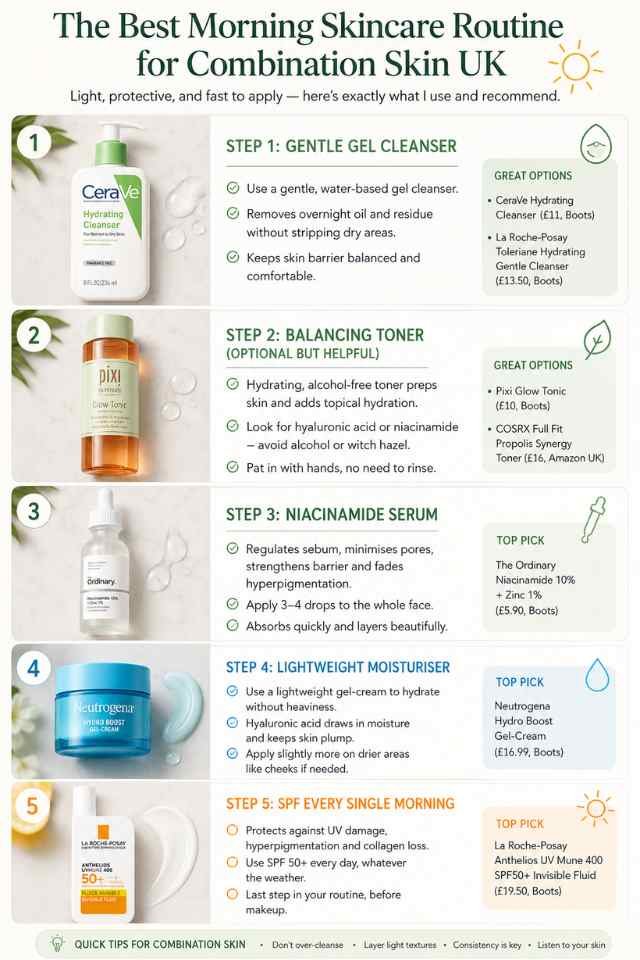
Your morning routine should be light, protective, and fast to apply. Here is exactly what I use and recommend, step by step.
Step 1: Gentle Gel Cleanser
Start with a gentle, water-based gel cleanser rather than a foaming one. Foaming cleansers are almost always too stripping for the dry areas of combination skin. A gel formula removes overnight sebum and residue without disturbing the skin barrier. I have been using the CeraVe Hydrating Cleanser (£11, Boots) daily for the past three months and it has made a noticeable difference to how tight my cheeks feel after washing.
La Roche-Posay Toleriane Hydrating Gentle Cleanser (£13.50, Boots) is another excellent option, particularly if your skin leans sensitive as well as combination.
Step 2: Balancing Toner (Optional but Helpful)
A hydrating, alcohol-free toner helps prep the skin for serums and adds a layer of topical hydration before you reach for anything thicker. Look for toners containing hyaluronic acid or niacinamide rather than witch hazel or alcohol, which will dry out your cheeks. The Pixi Glow Tonic (£10, Boots) works well here, or the COSRX Full Fit Propolis Synergy Toner (£16, Amazon UK) if you want something deeply hydrating.
Step 3: Niacinamide Serum
This is the single most important step in a combination skin routine. Niacinamide (vitamin B3) is genuinely remarkable for this skin type: it regulates sebum production in the T-zone, strengthens the skin barrier across the whole face, minimises the appearance of pores, and addresses any hyperpigmentation, all without drying anything out. I tested The Ordinary Niacinamide 10% + Zinc 1% (£5.90, Boots) for six weeks, and the difference in my pore size and T-zone shine was visible by week three. If you want a deeper breakdown of the best options, our best niacinamide serum UK guide covers them all.
Apply 3-4 drops to the whole face. No need to zone-treat at this step. This water-based serum absorbs within seconds and layers beautifully under moisturiser.
Step 4: Lightweight Moisturiser
Reach for a lightweight moisturiser rather than a rich cream. Gel-cream formulas are ideal because they provide hydration without the heavy, occlusive finish that sits uncomfortably on an oily T-zone. The Neutrogena Hydro Boost Gel-Cream (£16.99, Boots) has been a staple recommendation from me at MyBreezyLife for UK women with this skin type. It contains hyaluronic acid, absorbs quickly, and does not pill under SPF or makeup.
If your cheeks are on the drier side, apply a slightly thicker layer there. This two-second adjustment makes a real difference over time.
Step 5: SPF Every Single Morning
Non-negotiable, whatever the weather. UV exposure accelerates hyperpigmentation and breaks down collagen, both major concerns for combination skin over time. The good news is that lightweight SPF formulas have come a long way. The La Roche-Posay Anthelios UV Mune 400 SPF50+ Invisible Fluid (£19.50, Boots) is consistently the highest-rated option for combination to oily skin in the UK. It leaves no white cast, no greasiness, and does not disrupt your T-zone by midday.
The Best Evening Skincare Routine for Combination Skin UK
Your evening routine can be slightly richer than your morning routine, because you are not layering over SPF and makeup and your skin does most of its repair work overnight.
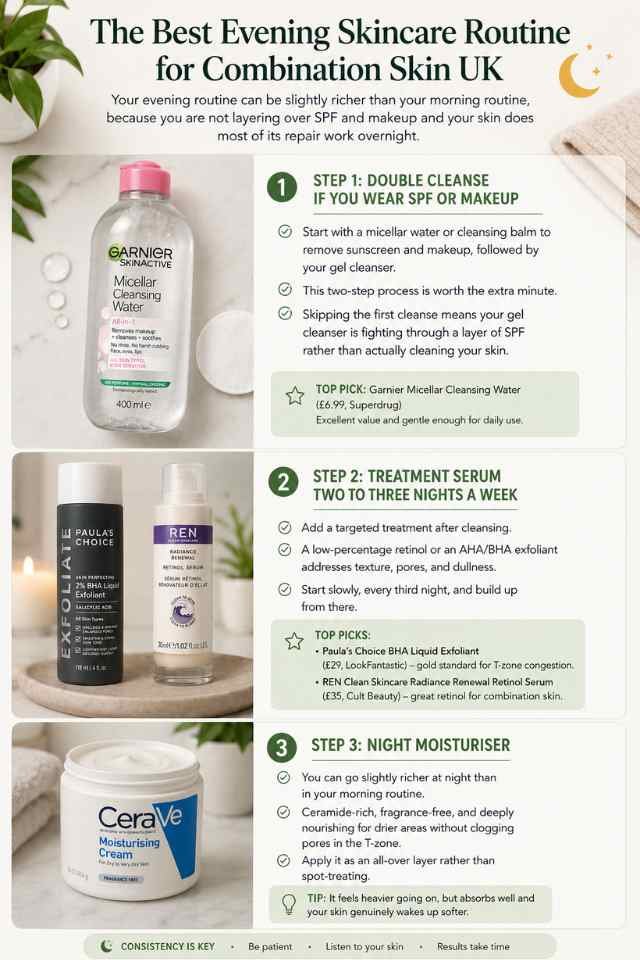
Step 1: Double Cleanse If You Wear SPF or Makeup
Start with a micellar water or cleansing balm to remove sunscreen and makeup, followed by your gel cleanser. This two-step process is worth the extra minute. Skipping the first cleanse means your gel cleanser is fighting through a layer of SPF rather than actually cleaning your skin. The Garnier Micellar Cleansing Water (£6.99, Superdrug) is excellent value and gentle enough for daily use.
Step 2: Treatment Serum Two to Three Nights a Week
Two to three evenings a week, add a targeted treatment after cleansing. For combination skin, a low-percentage retinol or an AHA/BHA exfoliant addresses texture, pores, and dullness without needing separate products for oily and dry zones. The Paula’s Choice BHA Liquid Exfoliant (£29, LookFantastic) is the gold standard for T-zone congestion. On retinol nights, try the REN Clean Skincare Radiance Renewal Retinol Serum (£35, Cult Beauty). Start slowly, every third night, and build up from there.
Step 3: Night Moisturiser
You can go slightly richer at night than in your morning routine. The CeraVe Moisturising Cream (£12, Boots) is a brilliant affordable option: ceramide-rich, fragrance-free, and deeply nourishing for the drier areas of your face without clogging pores in the T-zone. Apply it as an all-over layer rather than spot-treating. Bear with me on this one: it feels heavier than your morning moisturiser going on, but it absorbs well and your skin genuinely wakes up softer.
Skincare Routine for Combination Skin Under a Hijab
For hijab-wearing readers, combination skin can come with an extra layer of complexity. The areas covered by your hijab, including the jawline, neck, and hairline, often experience more warmth and friction throughout the day, which can worsen T-zone oiliness and contribute to breakouts along the jawline. A few adjustments to the routine above will help enormously.
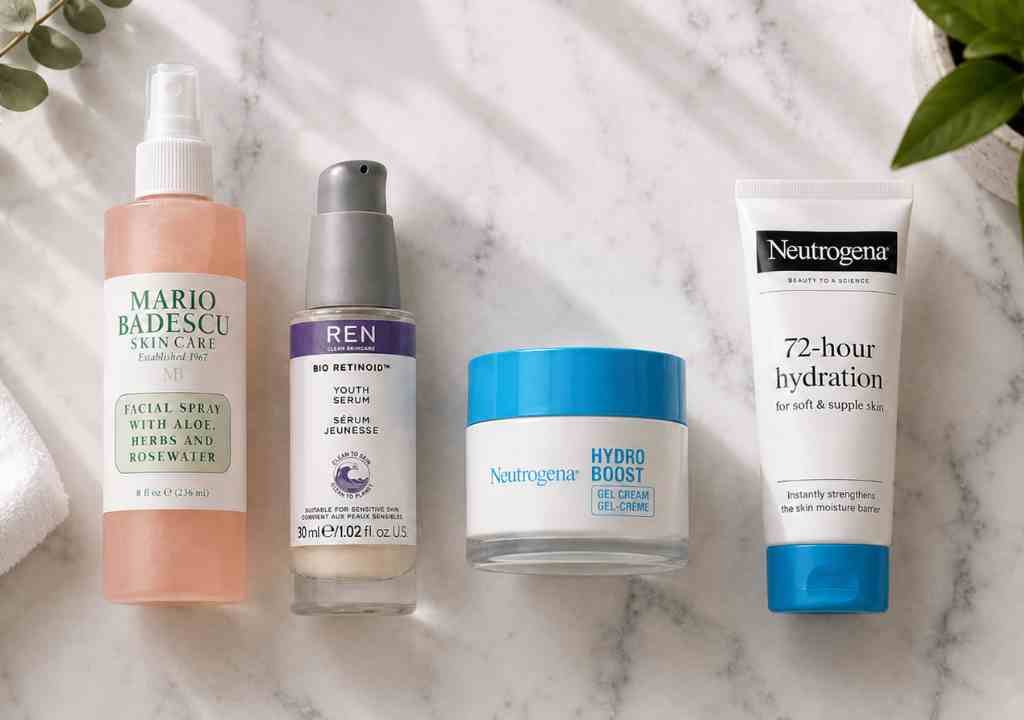
We have covered this topic in much more depth in our dedicated skincare routine for hijabi women guide. First, prioritise non-comedogenic products across the entire routine, not just for your face but for any area your hijab fabric contacts. Second, a very light mist of rose water or a hydrating facial spray mid-afternoon helps reset the skin without disrupting SPF. The Mario Badescu Facial Spray with Rosewater (£9, Boots) is light enough to use over a full face and gives that quick refresh that makes a real difference on long days.
Third, cleanse thoroughly at the end of every day. The combination of heat, sweat, and fabric means residue builds up more quickly. This is not a reason to use a harsher cleanser, so stay gentle, but do not skip the evening cleanse on busy nights.
My Results After Six Weeks on This Routine
I ran this routine for six weeks through a Birmingham winter, which is usually when central heating leaves my cheeks flaking by February. By week three the tightness across my cheeks had eased and my T-zone was visibly less shiny by mid-afternoon.
I expected the niacinamide to help with oil. What surprised me was how much calmer my dry patches became once I stopped over-cleansing. And yes, it does sound too simple, but swapping a foaming cleanser for a gentler one did more for my skin than any single serum I tried that year.
UK Product Recommendations for Combination Skin 2026
Here is a complete list of the products mentioned in this routine, all available from UK retailers right now:
| Product | Retailer | Price |
|---|---|---|
| CeraVe Hydrating Cleanser | Boots | £11 |
| La Roche-Posay Toleriane Hydrating Gentle Cleanser | Boots | £13.50 |
| The Ordinary Niacinamide 10% + Zinc 1% | Boots | £5.90 |
| Neutrogena Hydro Boost Gel-Cream | Boots | £16.99 |
| La Roche-Posay Anthelios UV Mune 400 SPF50+ Invisible Fluid | Boots | £19.50 |
| Garnier Micellar Cleansing Water | Superdrug | £6.99 |
| Paula’s Choice BHA Liquid Exfoliant | LookFantastic | £29 |
| REN Clean Skincare Radiance Renewal Retinol Serum | Cult Beauty | £35 |
| CeraVe Moisturising Cream | Boots | £12 |
| Mario Badescu Facial Spray with Rosewater | Boots | £9 |
Halal and Cruelty-Free Options for Combination Skin
Halal status varies by brand, so always check current certification directly with the manufacturer, because formulations change. The Ordinary is cruelty-free and its water-based serums, including the niacinamide, are free from animal-derived ingredients, although the brand is not halal certified.
If you would rather use certified products, PHB Ethical Beauty and INIKA Organic both make cruelty-free, alcohol-free formulas that suit combination skin and are easy to buy in the UK.
Ingredients to Avoid With Combination Skin
Knowing what not to use is just as important as knowing what to buy. Alcohol-heavy toners and astringents strip the skin barrier indiscriminately. They may reduce shine briefly, but they trigger rebound oiliness as your skin compensates. Heavy oils like coconut oil and olive oil are comedogenic and will congest pores in your T-zone. Overly rich butters and occlusive creams that belong in a dry skin routine are also worth avoiding at the moisturiser step, at least during the daytime.
As someone with a background in cosmetic science, I always remind readers: fragrance is the other ingredient to watch. Fragranced products feel luxurious, but they are a common cause of low-grade irritation that shows up as redness on the dry patches and sensitivity around the cheeks. Fragrance-free formulas are simply kinder to combination skin over the long term.
Frequently Asked Questions: Skincare Routine for Combination Skin UK
Should I use different moisturisers on different parts of my face?
You can, but it is not essential. A lightweight gel-cream applied all over is usually sufficient. If your cheeks feel persistently dry, apply a slightly thicker layer there or add a thin layer of squalane facial oil to the dry areas only, on top of your moisturiser.
How often should I exfoliate combination skin?
Two to three times a week is plenty for most combination skin types. Over-exfoliating strips the skin barrier, which ironically triggers more oil production in your T-zone. Start with once a week if you are new to exfoliation, and build from there.
Is niacinamide good for combination skin?
Yes. Niacinamide (vitamin B3) is arguably the best single ingredient for combination skin. It regulates sebum in the T-zone, strengthens the skin barrier on drier areas, reduces the appearance of pores, and evens out skin tone. A 5-10% niacinamide serum applied daily is a low-cost, high-impact addition to any combination skin routine.
Can I use retinol on combination skin?
Yes, but introduce it slowly. Start with a low-percentage retinol (0.025% to 0.1%) two nights a week and always follow with moisturiser. The NHS advises against using retinol during pregnancy, so always check with your GP if you are unsure. For combination skin, retinol is excellent for addressing T-zone texture, minimising pores, and improving overall skin clarity over time.
What SPF is best for combination skin UK?
Look for SPF50+ formulas described as fluid, invisible, or gel on the packaging. These are typically lighter than standard sunscreen creams and do not sit heavily on an oily T-zone. La Roche-Posay, Altruist, and Bondi Sands all make excellent affordable SPF options available in the UK.
Building a skincare routine for combination skin does take a little more thought than a one-size-fits-all approach, but once you have the right products in place it becomes the most straightforward routine to maintain. Start with the four essentials (cleanser, niacinamide serum, lightweight moisturiser, SPF) and build from there.
Sara Mitchell is MyBreezyLife’s Beauty & Wellness editor. Her recommendations are based on personal testing and independent research. This article may contain affiliate links. We only recommend products we genuinely rate.