The most useful skincare guide for women UK right now is not the one that lists every trending ingredient or tells you to spend a fortune; it is the one that explains what actually works, why it works, and how to build a routine that fits your real life, your skin tone, your budget, and your values.
I have been testing, reviewing, and recommending UK skincare products for eight years. I studied BSc Cosmetic Science at the London College of Fashion, UAL, and I have spent the years since working with UK beauty brands, writing for MyBreezyLife, and testing products on my own combination, medium-olive skin. Hyperpigmentation has been my ongoing concern since my early twenties, so much of what I know about brightening actives and SPF comes from genuine personal experience rather than press releases.
This guide is written for all UK women: every skin type, every skin tone, every budget. Whether you are starting from scratch or refining a routine you have had for years, I have tried to make this as practical and honest as possible.
Understanding Your Skin Type: The Foundation of Every Good Routine
Before you buy a single product, you need to understand your skin type. This sounds obvious, and yet a remarkable number of women I speak to have been using the wrong products for years because they identified their skin type in their teens and never revisited it.
Skin type is not fixed. It shifts with hormones, stress, diet, medication, and age. The classic categories are oily, dry, combination, sensitive, and normal, but most women sit somewhere between two of these at any given point, particularly through their twenties, thirties, and into the perimenopause years.
The way to identify your current skin type is simple. Cleanse your face with a gentle, fragrance-free cleanser in the evening. Do not apply any products. Wait one hour and assess. If your skin feels tight or looks dull, you lean dry. If you are shiny across the entire face, you are oily. If you are shiny on the forehead, nose, and chin (the T-zone) but normal or dry on the cheeks, you have combination skin. If your skin is neither particularly shiny nor tight, and you have no obvious reactions, you are on the normal side.
Oily and Combination Skin
Oily skin produces excess sebum across the whole face. You will notice a shine by mid-morning, enlarged pores (particularly around the nose and chin), and a tendency to break out. Combination skin (my own type) is oilier in the T-zone but drier or balanced on the cheeks.
The biggest mistake oily and combination skin types make is reaching for harsh, stripping cleansers in an attempt to control shine. This is understandable but counterproductive. Over-cleansing and stripping the skin barrier triggers compensatory sebum production: the skin effectively panics and produces more oil in response. I spent years in my early twenties making exactly this mistake before my training helped me understand what was actually happening at a cellular level.
Look for: gentle, low-pH cleansers, non-comedogenic moisturisers, and water-based serums.
Avoid: thick occlusive creams as daytime moisturisers, alcohol-heavy astringent toners, and anything that leaves your face feeling tight or squeaky after cleansing.
Dry and Sensitive Skin
Dry skin lacks sufficient natural oils and moisture. It can feel tight after cleansing, appear dull or flaky, and tends to develop fine lines earlier than oily skin. Sensitive skin is a separate classification: it refers to skin that reacts easily to products, ingredients, or environmental triggers such as wind, cold air, or central heating.
These two types overlap considerably. Dry sensitive skin is one of the more challenging combinations to manage because many of the richer emollient formulas that dry skin needs can trigger reactions in highly sensitised skin. If this is you, the priority is always to rebuild the skin barrier before introducing any active ingredients.
Look for: fragrance-free formulas, ceramide-based moisturisers, squalane oils, and products with minimal, recognisable ingredients lists. Avoid: high-percentage exfoliants, vitamin C above 10% initially, and anything with synthetic fragrance in the first few ingredients.
Normal and Mature Skin
Normal skin sits in that balanced sweet spot of moderate sebum production, few breakouts, and no major sensitivities. Despite what beauty marketing implies, genuinely normal skin is less common than the category suggests. Most adults have at least one specific concern to address.
Mature skin, broadly speaking from the mid-40s onwards, produces less natural oil, shows more visible fine lines and a loss of firmness, and benefits from more targeted active ingredients. For mature skin in particular, consistency matters far more than spending. A simple routine followed daily for six months will outperform a complex expensive routine used irregularly.
The Core Skincare Routine Steps Every UK Woman Needs
The fundamentals of an effective skincare routine have not changed significantly in the years I have been writing about this. Five steps, applied consistently, will always outperform ten steps done haphazardly. Here is exactly what those five steps are and why each one earns its place.
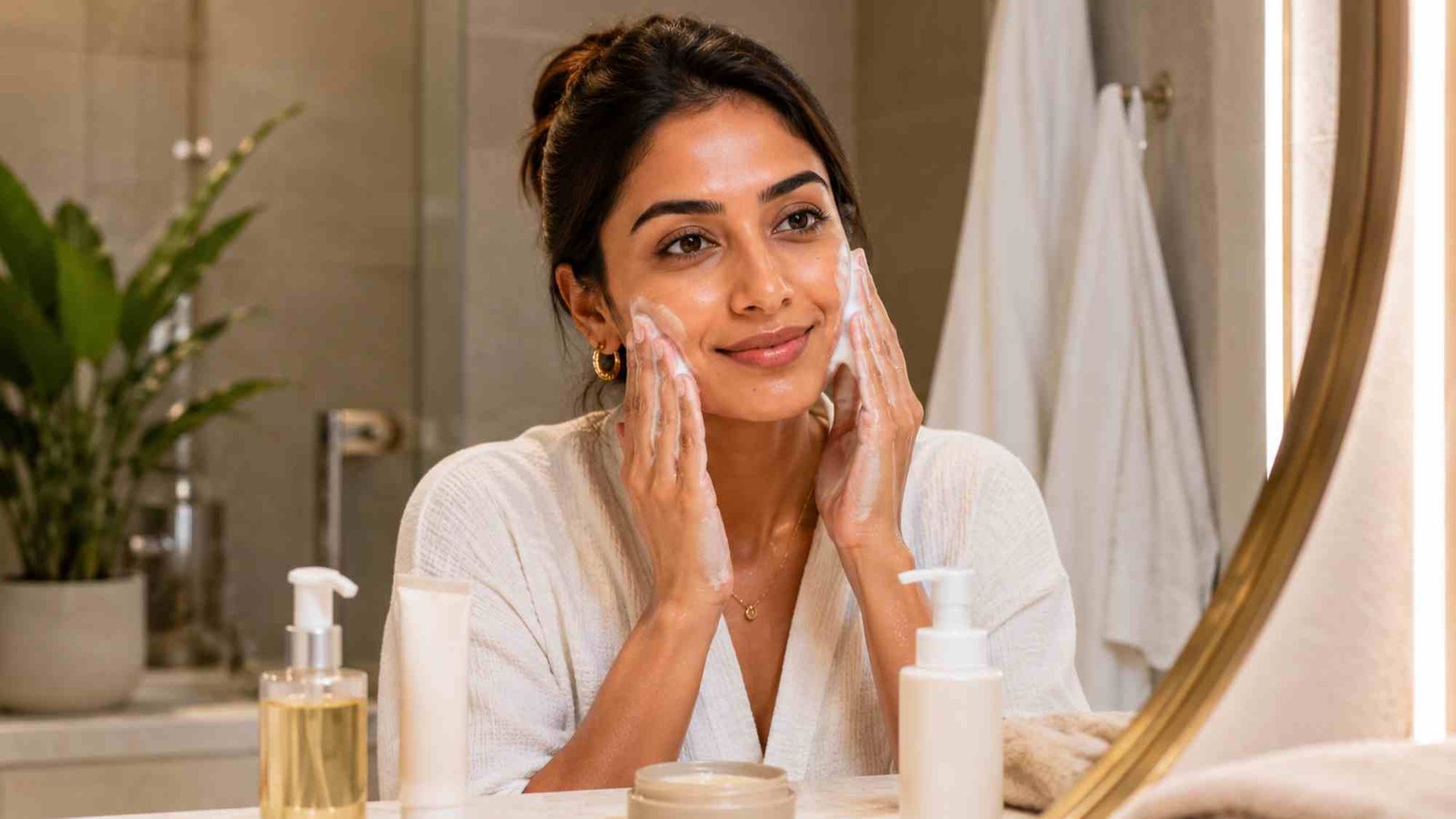
Step 1: Cleansing and the Case for Double Cleansing
Cleansing removes the daily accumulation of pollution, excess sebum, SPF, and makeup. It is the foundation of everything that follows. Apply your most expensive serum to an uncleansed face and it is largely wasted. The barrier between the active ingredient and your skin cells is still there.
One of the more counterintuitive things about cleansing is that more is not better. A harsh, high-pH cleanser applied twice daily causes more long-term damage than the dirt it removes. The goal is clean skin with an intact skin barrier, not skin that feels squeaky.
Double cleansing originated in Korean skincare and has become firmly established in the UK routine. It involves using an oil-based cleanser or cleansing balm first, to dissolve SPF and makeup (both of which are oil-soluble), followed by a water-based cleanser to remove anything the oil step left behind. For anyone wearing SPF daily (which should be everyone), double cleansing ensures full SPF removal. A single water-based cleanser often fails at this, leaving residual SPF that then blocks your evening actives. I use this method every evening and have done for four years. The difference in how well my active ingredients penetrate overnight became noticeable within a few weeks of switching.
For your morning cleanse, a gentle micellar water or a short rinse with lukewarm water is usually sufficient unless you have very oily skin. Your skin has not accumulated a day’s worth of pollution overnight.
Step 2: Toning: Useful or Marketing?
The toner debate has run for years and the short answer is: it depends entirely on the toner.
Classic astringent toners, typically containing high concentrations of alcohol or witch hazel, are largely unnecessary and actively damaging to the skin barrier. They strip the skin’s natural surface lipids and raise the skin’s pH, which disrupts the acid mantle (the slightly acidic protective film that keeps bacteria and environmental aggressors out).
The modern generation of hydrating toners and essences is a different product category entirely. These are lightweight, watery formulas that add a layer of hydration and help the skin absorb subsequent serums more effectively. If you enjoy using one and find it beneficial, there is no reason not to include it. Just be clear about what it is doing: it is a preparatory hydration step, not a treatment.
Step 3: Serums and Active Ingredients
This is where the real targeted work happens. Serums are concentrated formulas designed to deliver active ingredients directly to the skin at higher concentrations than you would find in a cleanser or moisturiser. They are typically lightweight enough to absorb fully before you apply moisturiser on top.
The key active ingredients are niacinamide, retinol, vitamin C, AHA and BHA exfoliants, and hyaluronic acid. Each targets different concerns and not all should be used at the same time. The order of application and the compatibility of your actives matters considerably more than the number of serums you own. I cover each of these in full detail in the active ingredients section below.
Step 4: Moisturiser
Every skin type needs moisturiser. This includes oily skin. It is a fact that many oily-skinned women resist, and I understand why. But moisturiser does not cause excess oil production. What it does is prevent transepidermal water loss (TEWL): the natural evaporation of water from the skin’s surface. When the skin barrier is intact and properly hydrated, it is actually less likely to compensate by overproducing oil.
The three components to look for in a good moisturiser are humectants (ingredients like glycerin and hyaluronic acid that attract water), emollients (ingredients like squalane, fatty acids, and plant oils that soften and smooth), and occlusives (ingredients like shea butter, petrolatum, or beeswax that form a physical barrier to lock moisture in). A well-formulated moisturiser contains all three. If your skin suddenly becomes congested, develops tiny bumps, or starts breaking out after switching products, it may help to understand the signs moisturizer is clogging pores before changing your entire routine.
Ceramides are also worth seeking out: they are the structural lipids that hold the skin barrier together and decline with age and damage.
Step 5: SPF Protection: The Absolute Non-Negotiable
I will say this plainly: no active ingredient, no serum, and no treatment will make a meaningful long-term difference to your skin if you are not wearing SPF daily. UV radiation is the single biggest driver of premature ageing, hyperpigmentation, uneven skin tone, and skin cancer risk. The NHS recommends at minimum SPF 30; I would argue SPF 50 is the more sensible daily choice.
A common misconception is that SPF is only necessary in summer or on sunny days. This is incorrect. The UV Index in the UK exceeds the damage threshold (UV Index 3) throughout spring, summer, and much of autumn. On overcast days, up to 80% of UV radiation still reaches the skin surface. SPF is a year-round morning step, not a holiday accessory.
For darker and medium skin tones, the traditional problem with mineral sunscreens was white cast. The UK market has improved significantly on this front: there are now excellent hybrid and tinted SPF formulas that absorb cleanly on deeper skin tones. I cover this in more detail in the section on skincare for medium and darker skin.
The Skincare Guide for Women UK: Active Ingredients Explained
This is the section I get the most questions about, and understandably so. The sheer volume of active ingredients on the market, each with its own claims, recommended percentages, compatibility rules, and application windows, is genuinely difficult to navigate. Here is what each key ingredient actually does, explained without the jargon.
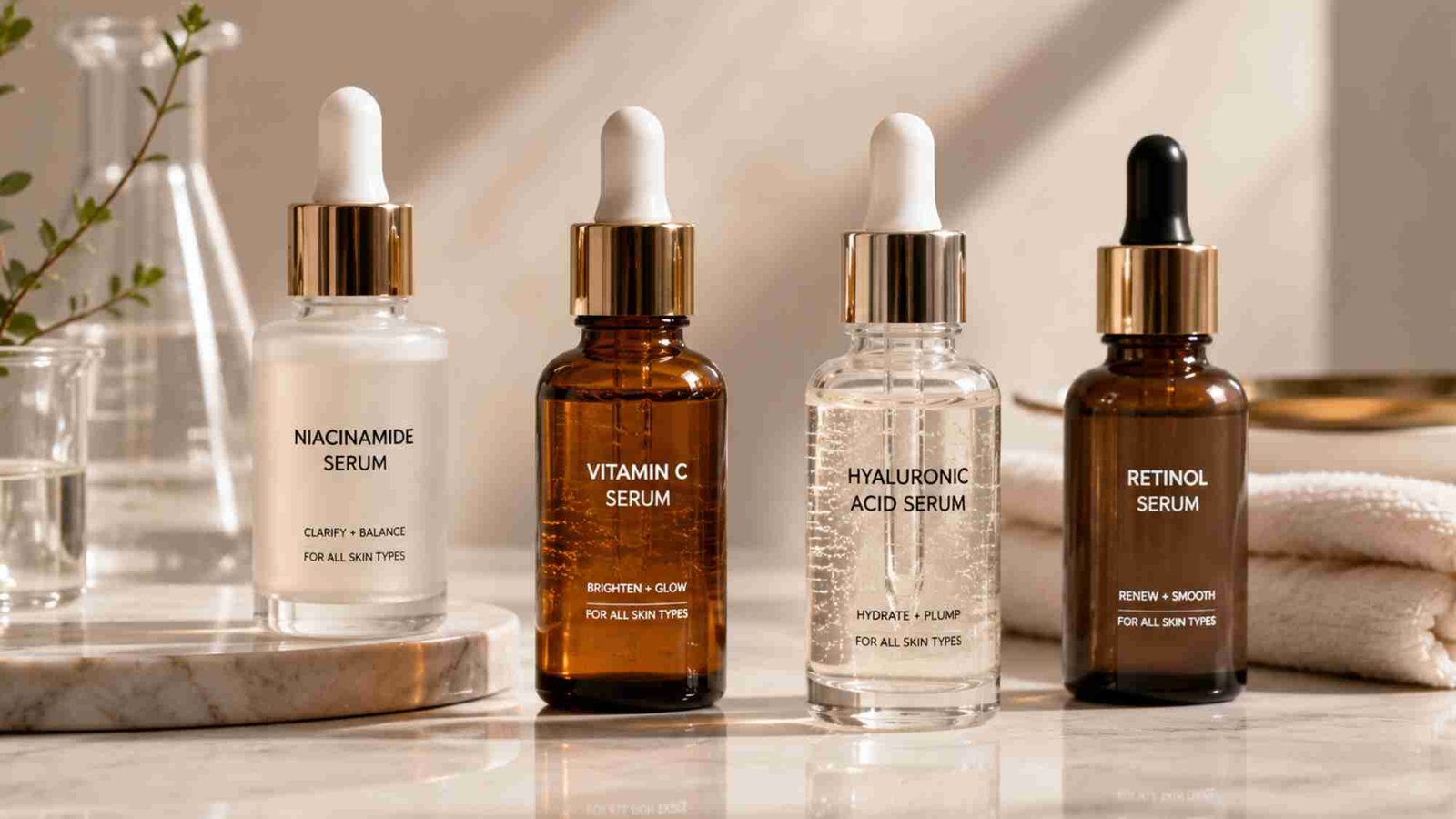
Niacinamide: The Versatile Multi-Tasker
Niacinamide is a form of vitamin B3 and one of the most extensively studied skincare ingredients of the past decade. It works through several mechanisms simultaneously: at 2-5%, it strengthens the skin barrier by boosting ceramide production and reduces redness; at 5-10%, it visibly minimises the appearance of pores and reduces excess sebum production. Its most celebrated effect is on hyperpigmentation: it inhibits the transfer of melanin from melanocytes to skin cells, reducing the visible appearance of dark spots over time.
For mature skin in particular, niacinamide can help improve elasticity, reduce the appearance of fine lines, and strengthen the skin barrier, which is why many dermatologists now recommend a dedicated niacinamide cream for wrinkles over 40 as part of an anti-ageing routine.
A 2021 review published in the International Journal of Molecular Sciences confirmed that topical niacinamide at 5% significantly reduced hyperpigmentation in participants with melasma over a 12-week period (Source: Int J Mol Sci, 2021). That is a meaningful clinical result, not marketing. It is also one of the most broadly compatible active ingredients available: it can be layered with almost everything else in your routine and is suitable for use morning and evening.
For UK women with combination or oily skin who are new to active ingredients, niacinamide is typically the most sensible place to start. It is affordable (The Ordinary’s 10% formula is £5.90 at Superdrug), well tolerated by most skin types, and produces visible results within 8-12 weeks of consistent use.
Retinol: The Gold Standard for Skin Renewal
Retinol is a derivative of vitamin A and remains the most clinically validated anti-ageing ingredient in cosmetic skincare. It accelerates cell turnover, stimulates collagen production, refines skin texture, and reduces the appearance of fine lines and hyperpigmentation over time. The results are real and they are backed by decades of peer-reviewed research.
The adjustment period is where many people give up, and that would be a shame. Retinol can cause flaking, redness, and increased sensitivity in the first four to eight weeks of use. This is sometimes called ‘retinol purging’ or colloquially the ‘retinol uglies’. Bear with it, the skin does adjust, and the long-term results from consistent use justify the initial period of discomfort.
Start at a low concentration of 0.1-0.3%, applied two or three evenings per week. Do not apply it on the same evenings as your exfoliating acids. Increase frequency gradually over 4-6 weeks as your skin tolerates it. Always apply SPF the following morning, retinol increases photosensitivity and your daytime protection becomes even more critical when you are using it.
Retinol is not recommended during pregnancy or breastfeeding. If this applies to you, speak to your GP or a dermatologist about alternatives. Bakuchiol, a plant-derived ingredient, has some evidence for similar effects and is generally considered safe during pregnancy, though the evidence base is less robust than for retinol.
Retinol works exceptionally well over time, but consistency matters far more than using the highest strength immediately. In fact, many irritation issues come from rushing the process. If you are unsure where to begin, my detailed guide on how to start using retinol explains exactly how to introduce it safely into your skincare routine.
Vitamin C: For Brightness and Antioxidant Protection
Vitamin C, most commonly in the form of L-ascorbic acid, is a potent antioxidant that neutralises free radical damage from UV radiation and environmental pollution. It also stimulates collagen synthesis and inhibits melanin production, making it a useful ingredient for women dealing with post-inflammatory hyperpigmentation (dark spots left by acne) or general UV-related uneven tone.
The complication with vitamin C is instability. L-ascorbic acid oxidises quickly on exposure to light and air, which is why effective vitamin C serums come in dark, opaque, or airless packaging and should be stored away from sunlight. If your vitamin C serum has turned orange or brown, it has oxidised and lost a significant proportion of its efficacy. This is not a marketing trick, it is straightforward chemistry.
Look for formulas containing 10-20% L-ascorbic acid for meaningful results. More stable derivatives such as ascorbyl glucoside, sodium ascorbyl phosphate, and ascorbyl tetraisopalmitate work at lower percentages and are gentler options for sensitive skin, though the evidence base for these forms is less extensive than for L-ascorbic acid. Apply vitamin C in the morning before SPF, the combination of topical vitamin C and a good SPF provides stronger photoprotection than either alone.
AHA and BHA Exfoliants: Understanding Chemical Exfoliation
AHAs (alpha-hydroxy acids, including glycolic acid and lactic acid) and BHAs (beta-hydroxy acids, primarily salicylic acid) are chemical exfoliants. They work by dissolving the molecular bonds that hold dead skin cells together at the surface, allowing them to shed more efficiently rather than building up and causing dullness, congestion, and uneven texture.
The distinction between AHA and BHA matters in practice. AHAs are water-soluble and work primarily on the skin’s surface, making them well suited for addressing dullness, texture, and uneven skin tone, particularly in dry or mature skin. Salicylic acid (BHA) is oil-soluble, which means it can penetrate into the pore lining itself and break down the excess sebum that causes congestion and breakouts. For oily and acne-prone skin, salicylic acid is the more targeted choice.
Use exfoliants two or three times per week as a maximum. Daily use compromises the skin barrier, strips essential surface lipids, and ultimately makes skin more reactive, not less. And yes, always follow with SPF the morning after any chemical exfoliant, AHAs in particular increase UV sensitivity significantly.
Physical scrubs with abrasive particles are not recommended for the face. Whilst they feel satisfying in the moment, they can create micro-tears in the skin, particularly around the thin skin under the eyes and on the cheeks. Chemical exfoliation is the more controlled and less damaging approach.
Hyaluronic Acid: Hydration Done Properly
Hyaluronic acid is one of the most widely used skincare ingredients and also one of the most misunderstood. It is a humectant, a substance that attracts and binds water molecules. This sounds simple, but it comes with an important caveat: it needs water available in the environment to bind to. Applying hyaluronic acid serum to dry skin in a warm, centrally heated room without sealing it in with a moisturiser on top can actually draw moisture upward from the deeper layers of the skin to the surface, where it then evaporates. This is the opposite of what you want.
The fix is straightforward. Apply your hyaluronic acid serum to slightly damp skin immediately after cleansing, while some water still remains on the surface. Then apply your moisturiser on top while the serum is still slightly tacky. This traps the moisture at the surface and allows the hyaluronic acid to do its actual job. I know this sounds almost too simple, but it is a detail that makes a measurable difference to how the ingredient performs.
Look for formulas containing multiple molecular weights of hyaluronic acid. High molecular weight HA sits on the surface and provides an immediate plumping effect; low molecular weight HA can penetrate more deeply for longer-lasting hydration. The combination of both in one formula is the gold standard.
Skincare for Medium and Darker Skin Tones in the UK
As a British-Indian woman with medium-olive skin, this is a topic I have a personal stake in. UK beauty has improved considerably over the past several years in terms of acknowledging that darker and medium skin tones have specific skincare needs, but there is still a significant amount of generic advice in mainstream beauty media that defaults to pale skin as the baseline.

Addressing Hyperpigmentation in Darker Skin Tones
Hyperpigmentation is considerably more prevalent in darker and medium skin tones than in paler skin. This is a physiological reality rather than a flaw. Melanin-rich skin is more reactive to both inflammation and UV damage, both of which trigger excess melanin production, resulting in dark spots and uneven tone.
Post-inflammatory hyperpigmentation (PIH) from acne, eczema, or even minor skin trauma can be particularly persistent in darker skin. The key to treating it is a combination of three things: consistent daily SPF without which any treatment active is fighting uphill, a melanin-inhibiting ingredient such as niacinamide, vitamin C, alpha arbutin, or azelaic acid, and realistic expectations. PIH can take three to six months to significantly fade. That is not a product failing, it is simply how melanin-rich skin reacts to treatment.
Dr Anjali Mahto, a leading UK consultant dermatologist who has spoken extensively about skincare for darker skin tones, has noted in published interviews that patience and consistency are often more important than ingredient choice for hyperpigmentation treatment. The fundamentals done well over time outperform aggressive treatments that cause further inflammation and paradoxically worsen pigmentation.
For women who prefer a gentler approach before moving toward stronger treatments, some ingredients like niacinamide, turmeric, and ellagic acid also have promising research behind them. I explored these options in more detail in my guide on how to fade dark spots naturally.
SPF for Darker Skin Tones: The White Cast Problem
Traditional mineral sunscreens containing zinc oxide or titanium dioxide sit on the surface of the skin rather than being absorbed into it. This is why they are so photostable and reliable. The downside is that they leave a white or greyish cast that is visible and unflattering on medium to deep skin tones. For years, this meant darker-skinned women either skipped SPF (with serious long-term consequences for pigmentation and skin health) or relied on chemical sunscreens, which have their own considerations.
The UK market has caught up considerably. Several formulas have made white cast largely a thing of the past for medium-to-deep skin tones: tinted mineral SPFs that match to the skin tone, modern micronised zinc oxide formulas where the particle size has been reduced significantly, and hybrid chemical-mineral formulas that blend the stability of minerals with the cosmetic elegance of chemical filters.
My current recommendation for medium-olive skin is the La Roche-Posay Anthelios UVmune 400 Invisible Fluid SPF 50+, available at Boots for around £18. It absorbs completely on my skin tone, does not pill under makeup, and I have used it as my permanent morning SPF since autumn 2024. No white cast.
Halal status: La Roche-Posay is cruelty-free. Not halal-certified as a brand. Verify with the brand for individual product formulations. [HALAL STATUS: verify with brand]
UK Skincare Product Recommendations Across Every Budget
You do not need to spend a fortune to build an effective skincare routine. The quality gap between drugstore and premium has narrowed significantly in the UK, particularly in the active ingredient and moisturiser category. Here are my current picks across the full budget range.
Drugstore Picks: Under £15
The Ordinary Niacinamide 10% + Zinc 1%
Available at Superdrug and Amazon UK for £5.90. At 10% niacinamide, this is one of the best-value active ingredient serums on the UK market. Effective for oily skin, enlarged pores, and hyperpigmentation. I have recommended it to more clients than I can count. It works, it is stable, and it is available in virtually every Superdrug branch.
Halal status: The Ordinary (DECIEM) is cruelty-free and does not test on animals. Not halal-certified. Check alcohol and ingredient source details directly with the brand. [HALAL STATUS: verify with brand]
Available at Boots and Superdrug for £13.50 (340ml). A dermatologist-recommended formula containing ceramides, hyaluronic acid, and niacinamide. Fragrance-free, non-comedogenic, and genuinely suitable for sensitive skin. The large tub offers exceptional value and lasts for months with daily use.
Halal status: CeraVe is cruelty-free. Not halal-certified. The brand uses some bovine-derived ceramides, verify current formulation with the brand for halal compliance. [HALAL STATUS: verify with brand]
Simple Kind to Skin Micellar Cleansing Water
Available at Superdrug and most UK supermarkets for around £4.99. An excellent fragrance-free, alcohol-free option for morning cleansing on sensitive and combination skin. The Simple range is one of the most accessible skincare lines in the UK.
Halal status: Simple is not officially halal-certified. The range is fragrance-free and alcohol-free. Verify ingredients with the brand for halal compliance. [HALAL STATUS: verify with brand]
Mid-Range Picks: £15 to £45
Paula’s Choice Skin Perfecting 2% BHA Liquid Exfoliant
Available at LookFantastic and Cult Beauty for £30. If there is one exfoliant I would recommend above all others for oily and combination skin, it is this one. The 2% salicylic acid formula is gentle enough for regular use but highly effective for pore clarity and skin texture. I used it on my own combination skin for six weeks in spring 2025 and the improvement in texture and congestion around my nose and chin was significant. Nothing else in this price bracket gets close.
Halal status: Paula’s Choice is cruelty-free and vegan. Not halal-certified. [HALAL STATUS: verify with brand]
COSRX Advanced Snail 96 Mucin Power Essence
Available on Amazon UK and Cult Beauty for around £22. The Korean skincare staple with a firm following in the UK. The snail secretion filtrate has genuine evidence for wound healing, skin barrier repair, and sustained hydration. I tested this for two months on my combination skin after a period of over-exfoliation had compromised my skin barrier, and it was one of the most effective barrier-repair tools I have used. Yes, the name is off-putting. And yes, the science backs it up.
Halal status: Snail secretion filtrate is a debated ingredient in Islamic scholarship, some scholars consider it permissible as it does not harm the animal. Muslim readers should verify with a halal authority they trust. [HALAL STATUS: verify with personal religious guidance and brand]
Neutrogena Hydro Boost Gel Cream
Available at Boots for around £18. A lightweight, oil-free gel moisturiser containing hyaluronic acid. Excellent for oily and combination skin that needs hydration without weight. It absorbs quickly, does not interfere with makeup, and works well under SPF.
Halal status: Neutrogena is cruelty-free. Not halal-certified. [HALAL STATUS: verify with brand]
Premium Picks: £45 and Above
Available at LookFantastic and SpaceNK for £166. Undeniably expensive. But if you are going to invest in one premium skincare product, this is the one with the strongest clinical evidence behind it. The patented combination of 15% L-ascorbic acid, vitamin E, and ferulic acid has been validated in multiple peer-reviewed studies for both photoprotection and collagen stimulation. Think of it as a long-term investment rather than an impulse purchase. The formula has a distinctive smell (it is the ferulic acid) that some people find off-putting at first. It fades quickly on application.
Halal status: SkinCeuticals is cruelty-free. Not halal-certified. [HALAL STATUS: verify with brand]
Available at LookFantastic and SpaceNK for around £55. Retinal (retinaldehyde) is a retinoid one step closer to retinoic acid than retinol, meaning it converts more efficiently and produces results faster. The Crystal Retinal range from Medik8 is the most accessible entry point to retinal in the UK market. The number 3 corresponds to approximately 0.03% retinaldehyde, a gentle starting concentration for retinoid beginners. Fragrance-free and formulated with a hydrating base that minimises the initial adjustment phase.
Halal status: Medik8 is cruelty-free. Not halal-certified. [HALAL STATUS: verify with brand]
Halal and Cruelty-Free Skincare in the UK
For Muslim women in the UK, finding genuinely halal-certified skincare requires a more targeted approach than simply selecting cruelty-free products. The two categories are distinct: cruelty-free refers solely to the absence of animal testing; halal certification means the product contains no prohibited ingredients, including pork-derived compounds (such as porcine glycerin, certain gelatines, and some fatty acid derivatives), certain alcohol forms, and cross-contamination from non-halal sources.
The UK halal beauty market has grown considerably in recent years and continues to expand. Brands that carry formal halal certification and are widely available in the UK include PHB Ethical Beauty (available at phbethicalbeauty.co.uk and through Amazon UK), Inika Organic (available at LookFantastic and Boots), and Inglot cosmetics (UK stores and online). PHB in particular has an excellent skincare range including a vitamin C serum, SPF moisturisers, and a full cleansing range.
For brands without formal halal certification, a practical approach is to read the full ingredients list, specifically looking for glycerin (which can be plant-derived, synthetic, or animal-derived), collagen (which may be bovine or marine), and alcohols (ethanol is generally prohibited; fatty alcohols like cetearyl alcohol are plant-derived and permissible). Most reputable brands will confirm the source of these ingredients by email or via their website FAQ. It is a brief step that provides meaningful peace of mind.
A Note for Hijab-Wearing Women
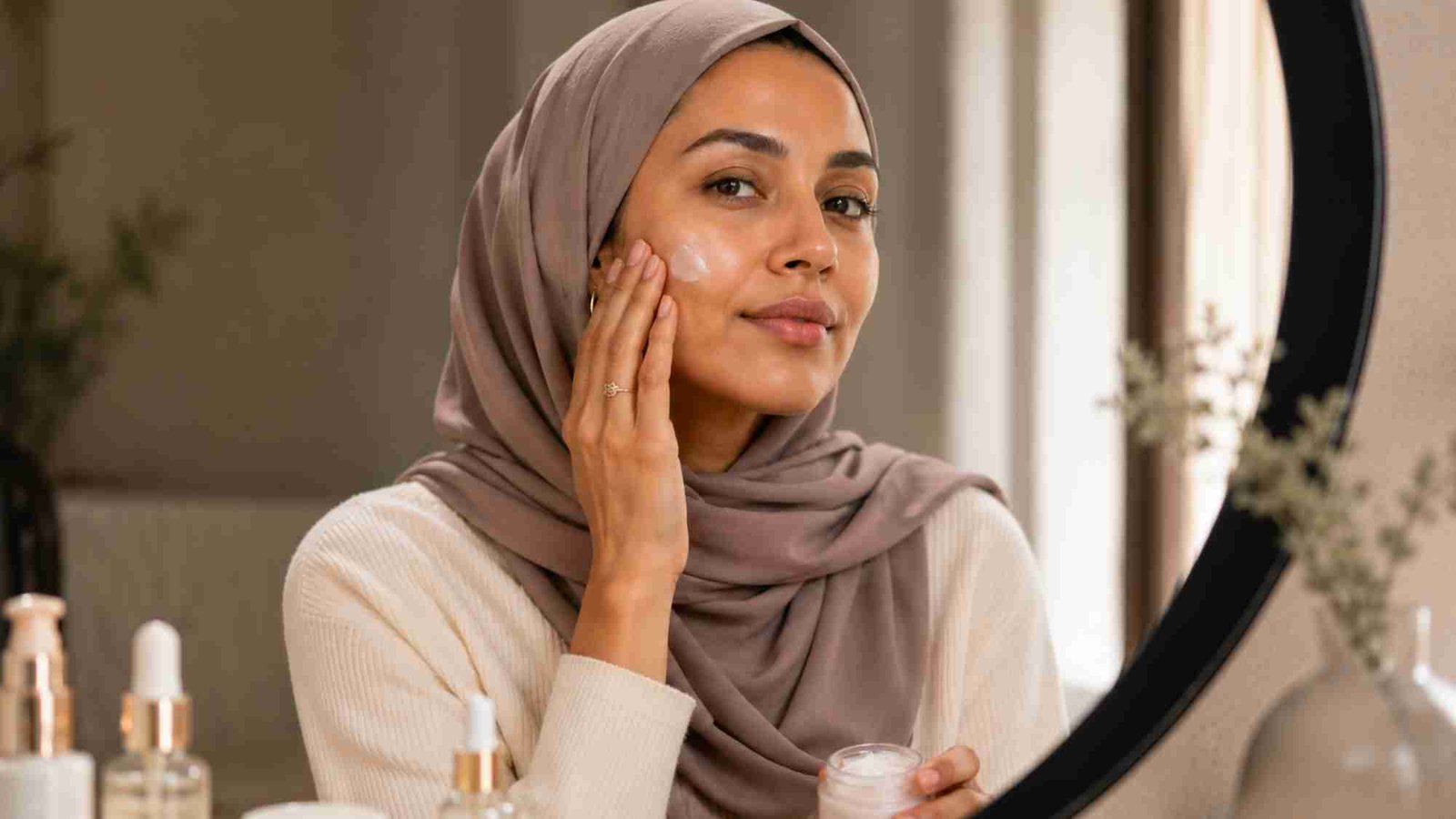
Hijab-wearing women face some specific skincare considerations that mainstream beauty media rarely covers in sufficient depth. The area of skin most directly affected is the lower face and jawline, which is typically covered by fabric throughout the day. Prolonged fabric contact, increased warmth, and reduced airflow in this area create conditions that can contribute to folliculitis, congestion, and sensitivity along the jawline and neck.
Practical adjustments worth building into your routine: use non-comedogenic formulas for any product applied to the lower face, including your moisturiser and SPF. In warmer months, a lightweight gel moisturiser rather than a cream-based formula will reduce the risk of congestion under fabric. The fabric itself matters too, natural fibres such as cotton tend to be more breathable than synthetic blends and are less likely to aggravate skin.
Many hijabi women follow skincare advice designed for uncovered skin and then wonder why they still struggle with jawline breakouts, sensitivity, or congestion under fabric. My full guide on skincare routine for hijabi women explains why hijab-covered skin behaves differently and how to build a routine that actually works with it rather than against it.
SPF application is equally important for hijab-wearing women. The upper face, forehead, ears, and any exposed areas of the neck still require daily protection. UV Index in the UK is sufficient to cause cumulative UV damage year-round, and the lower angle of winter sunlight means the forehead and nose receive direct UV exposure even in December.
One final note: the pressure that some hijab-wearing women report feeling to achieve perfect, flawless skin because the face is the primary visible area is worth acknowledging. Skin does not need to be flawless. A consistent, simple routine that supports the skin barrier and prevents UV damage is the most realistic and achievable goal, and it is more than enough.
Building Your Skincare Routine Around the UK Climate
This is something almost no skincare guide addresses, and it genuinely affects how your routine should be structured across the year.
The UK climate presents specific skincare challenges that differ from the continental European or US contexts where many product formulations are developed. The central heating season runs from October through to April in most UK homes, and centrally heated air is extremely drying. It reduces the relative humidity indoors to levels that accelerate transepidermal water loss from the skin surface. This is why many women find their skin becomes noticeably drier in winter even if they live somewhere relatively mild. The solution is a richer moisturiser from October onwards, and considering a room humidifier in spaces where you spend significant time.
Winter skincare needs a more barrier-focused approach because cold air and indoor heating can leave skin dehydrated, dull, and increasingly sensitive. I shared more practical seasonal advice in my guide on basic beauty tips for your daily skincare routine in winter.
Summer in the UK has become increasingly relevant for UV protection. Average temperatures in Birmingham and London have risen by roughly 1.5 degrees Celsius over the past 30 years, and the UV Index in July and August regularly reaches 6-7 across much of England and Wales. That is a UV level at which unprotected skin can burn in less than 20 minutes.
A seasonal skincare adjustment that I follow and recommend to UK women: a lighter, gel-based moisturiser from April to September when humidity is higher and skin tends to be oilier, switching to a richer cream-based formula from October to March. Keep the same cleanser, actives, and SPF year-round. Small adjustments to the moisturiser are usually all that is needed.
Frequently Asked Questions
What is the best skincare routine for beginners in the UK?
Start with three steps: a gentle cleanser, a moisturiser, and a daily SPF in the morning. In the evening, cleanse and moisturise. Once your skin is stable on these basics and you have been consistent for at least four weeks, introduce one active ingredient at a time, niacinamide is the most sensible starting point as it is well tolerated by most skin types and addresses a wide range of concerns. Add additional actives gradually, one at a time, with at least two weeks between each new introduction.
How many skincare steps do I actually need?
The minimum effective routine is three steps in the morning (cleanse, moisturise, SPF) and two in the evening (cleanse, moisturise). Everything else is an addition to this core, not a replacement for it. More steps are not inherently better and an overcomplicated routine is significantly harder to maintain consistently. It also makes it much more difficult to identify which product is causing a reaction if your skin responds badly to something.
Can I use niacinamide and vitamin C in the same routine?
Yes, at typical use concentrations and in modern formula pH levels, niacinamide and vitamin C can be used together without significant concern. The older worry about the two forming a yellow compound called niacin has been largely addressed by contemporary formulation science. If you find either ingredient causes irritation on its own, separating them by time of day is a sensible precaution: apply vitamin C in the morning and niacinamide in the evening.
Do I need different products for morning and evening?
The main structural differences between a morning and evening routine are: SPF is morning-only, and retinol or other photosensitising actives should be used at night. Your cleanser and moisturiser can generally be the same product at both times of day, though some people find a richer formula more comfortable in the evening. The morning routine is broadly about protection (SPF, antioxidants like vitamin C). The evening routine is about repair and renewal (retinoids, exfoliants, richer moisturisers).
Which skincare ingredients are safe to use during pregnancy?
Retinol and other retinoids, high-percentage salicylic acid, and certain chemical sunscreen filters are generally advised to be avoided during pregnancy. Always consult your GP or midwife for personalised guidance. Niacinamide, hyaluronic acid, azelaic acid (which also addresses hyperpigmentation), and mineral SPFs are typically considered safe alternatives during pregnancy. The NHS has guidance on cosmetic ingredient safety during pregnancy that is worth bookmarking for reference.
The most effective skincare routine is the one you will actually use consistently. Start with the fundamentals, cleanse, moisturise, protect with SPF every morning, and build from there as your skin settles and you have a clearer sense of what it needs. Six to twelve weeks of consistency will show you more than any amount of product shopping.
Beauty & Wellness content at MyBreezyLife is created by our editorial team and reviewed by founder Noreen Fahad. Clinical claims are referenced. This article may contain affiliate links. For personal skincare concerns, consult a qualified dermatologist or your GP.