
The best kombucha UK shoppers can buy is the one you will genuinely drink regularly, and the good news is that the choice on our shelves in 2026 is better than it has ever been. This fizzy, fermented tea has gone from health-shop curiosity to a fixture in Tesco, Boots and Holland & Barrett, and I get asked about it constantly. Which brand is worth the money, is it actually good for your gut, and the question that matters most to many of our readers, is it halal? Let me answer all three properly.
Quick answer: The best kombucha UK shoppers can buy is the one they will genuinely drink regularly. Remedy Kombucha is the top all-rounder, being sugar-free and widely available in Boots and Holland & Barrett. Other strong picks include L.A Brewery for craft, No.1 Living for supermarkets, and Real Kombucha for premium.
I am James Okafor ANutr, a Registered Associate Nutritionist based in Birmingham, and I have spent years alongside NHS dietitians separating genuine gut-health science from marketing. I keep a few cans of kombucha in my own fridge for my family, so this is a category I know from both the evidence and the everyday side.
What kombucha is, and what the evidence actually says
Kombucha, the best kombucha uk, is sweetened tea fermented with a culture of bacteria and yeast, often called a SCOBY. During fermentation those microbes eat most of the sugar and produce acids, gentle fizz and live cultures. That is where the gut-health interest comes from. The result is a tangy, refreshing drink with far less sugar than a fizzy soft drink.
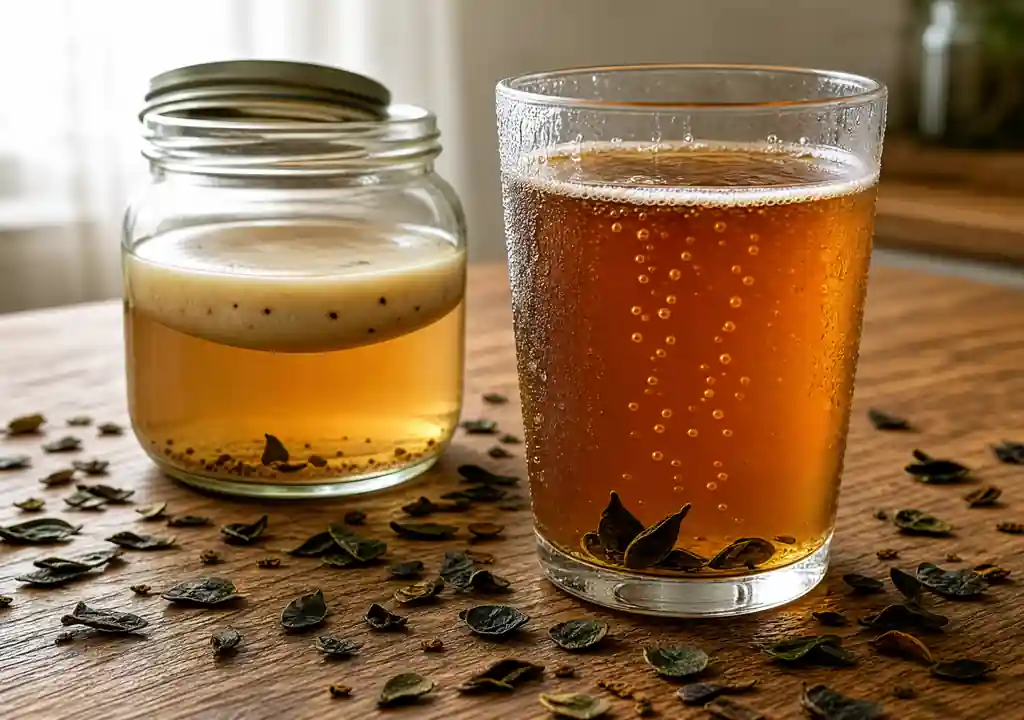
Here is the honest part, because you deserve it. The human research on kombucha specifically is still limited, so I will not tell you it cures anything, and you should be wary of any brand that does. What we can say confidently is that kombucha is a low-sugar swap for sugary drinks, and that a diet rich in diverse plants and fermented foods supports a healthier gut microbiome. The British Dietetic Association and the NHS both champion fibre and variety for gut health, and the NHS Eatwell guidance is the sensible foundation to build on. Treat kombucha as a pleasant, lower-sugar addition, not a magic bullet.
Is kombucha halal? The trace-alcohol question
This is the question I’m asked more than any other, and it deserves a clear answer rather than a dodge. Because kombucha is fermented, it naturally contains a very small amount of alcohol, usually below 0.5 percent, which is why UK brands can legally sell it as a soft drink rather than an alcoholic one. For context, that’s a similar trace to what occurs naturally in ripe fruit and some breads.
Whether that trace makes it permissible is a point of genuine difference among scholars. Many take the view that an unintended trace from natural fermentation, at a level that can’t intoxicate, is acceptable. Others prefer to avoid it entirely. As a nutritionist I won’t make a ruling for you, but I’ll give you the facts so you can decide with confidence. If you prefer to avoid any alcohol at all, choose a brand that states its ABV clearly. Then skip to my alcohol-free probiotic picks further down. This is exactly the kind of practical detail we try to get right for Muslim readers at MyBreezyLife.
The best kombucha in the UK: my top picks
These are the brands I rate on taste, sugar content and availability. Prices are approximate and correct at the time of writing, and every one is sold at a UK supermarket, pharmacy or online.
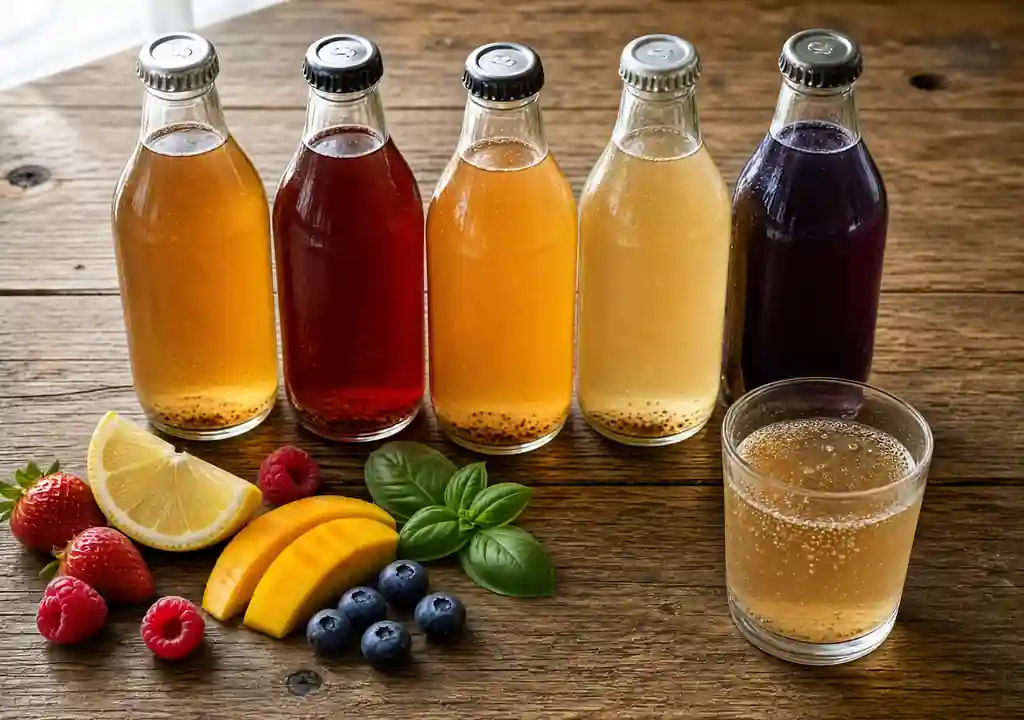
Remedy Kombucha (best all-rounder, sugar-free)
Remedy is the brand I recommend first to almost everyone, because it’s genuinely sugar-free thanks to a long brewing method that ferments out nearly all the sugar, and the range of flavours is excellent. Ginger Lemon and Raspberry Lemonade are the crowd-pleasers. You’ll find single cans in Boots and Holland & Barrett for around £2.50, and a mixed multipack works out far cheaper per can.
[Remedy Kombucha Fan Faves Mixed Pack, 12 x 250ml | Amazon UK | £24]
L.A Brewery Kombucha (best craft option)
Brewed in Suffolk, L.A Brewery makes a more grown-up, less sweet kombucha with a proper fermented depth. The Ginger is my personal favourite with a curry or a rich dinner. The sharpness cuts through beautifully. It is low sugar, vegan and gluten-free, and it feels like a treat without the sugar hit of a soft drink.
[L.A Brewery Ginger Kombucha, 12 x 330ml | Amazon UK | £26]
No.1 Living Kombucha (best supermarket buy)
If you want to grab one with your weekly shop, No.1 Living is stocked in Tesco and Sainsbury’s and is reliably good, with bright flavours like peach and passionfruit. At around £2 a bottle it is an easy, affordable place to start before committing to a multipack.
No.1 Living Kombucha 250ml at Tesco £2 at time of writing
Hip Pop Kombucha (best for beginners)
New to the tangy taste of kombucha? Hip Pop is your gateway. This northern-made brand leans a little more approachable and soda-like, with flavours like ginger and yuzu, so it’s the one I hand to people who think they don’t like kombucha. Available at Sainsbury’s and Ocado for around £2.
Hip Pop Kombucha 330ml at Sainsbury’s £2 at time of writing
Real Kombucha (best premium and alcohol-aware)
Real Kombucha is the one to serve in a wine glass at dinner. Brewed from single-estate teas, it’s elegant, dry and genuinely sophisticated, and it’s popular as a grown-up alternative to wine. It states its very low alcohol content clearly, which some readers will appreciate. Stocked in Waitrose at around £2.75 a bottle.
Real Kombucha Dry Dragon 275ml at Waitrose £2.75 at time of writing
Captain Kombucha (best organic)
A widely available organic option sold in Holland & Barrett, Captain Kombucha is reliably tangy and refreshing with a raw, unpasteurised brew. A solid choice if certified organic matters to you, at roughly £2.29 a bottle.
[Captain Kombucha Original 400ml | Holland & Barrett | £2.29]
Prefer zero alcohol? Alcohol-free probiotic drinks
If you would rather avoid even a trace of alcohol, you have excellent options that still support your gut. Water kefir and milk kefir are fermented drinks with live cultures and negligible alcohol. Bio-tiful kefir is stocked in most supermarkets for around £2.50. A small daily shot of Yakult delivers a specific live culture and is a familiar, budget-friendly pick at about £3 for a multipack.
The key principle holds either way. Live cultures do most good when they arrive alongside plenty of fibre, so pair any of these with a plant-rich diet. My guide to anti-inflammatory foods and our high protein breakfast ideas UK both give you easy ways to feed your gut well.
How to choose, and how much to drink
Check the label. First, sugar: some fruit-flavoured kombuchas sneak in surprising amounts, so compare per 100ml and favour the lower ones like Remedy. Second, the words “raw” or “live”, which tell you it has not been pasteurised into inactivity.
On quantity, start small. Here is the counterintuitive bit that catches people out: more is not better with fermented drinks. Because kombucha is acidic and contains live cultures, going from nothing to three bottles a day can leave you bloated. I suggest half a can to one can a day, ideally with food, and build up gently. In my years working alongside NHS dietitians, the people who did best with any gut-friendly change were the ones who went slow and steady. For a wider approach, our healthy meal prep for beginners UK guide helps you build the plant variety that matters most.
Kombucha during Ramadan
Kombucha can be a lovely addition at Iftar, but timing matters. Break your fast the traditional way first, with a few dates and water, then wait before reaching for anything fizzy, because a carbonated drink on a completely empty stomach can feel harsh and cause bloating. A small glass with or after your meal is gentler and still refreshing. Keep your main hydration to plain water between Iftar and Suhoor, and treat kombucha as an extra rather than a replacement for water. Our best morning drinks for glowing skin feature has more gentle, gut-friendly sips that suit the fasting month.

Shop-bought versus home-brewed kombucha
Home-brewing kombucha has become popular, and I understand the appeal of making your own for pennies. As a nutritionist, though, I gently steer beginners towards shop-bought first, and there are good reasons for it. A commercial brew is tested, consistent and produced under food-safety controls. So you know exactly what you are getting in the can.
Home fermentation is less predictable on two fronts. The alcohol content can climb higher than the sub 0.5 percent of shop-bought versions, which matters a great deal if you’re avoiding alcohol for religious or personal reasons. There’s also a small contamination risk if equipment isn’t scrupulously clean, since you’re cultivating live organisms in an open vessel. If you do brew at home, use sterilised glass, never metal containers, keep everything spotless, and if a batch ever smells off or grows anything fuzzy and coloured, throw it away. For most busy families, a reliable shop-bought brand is the safer, simpler choice, and it’s what lives in my own fridge.
Kombucha versus other gut-friendly drinks
Kombucha isn’t the only fermented drink worth your money, and the best one for you depends on taste and tolerance. Milk kefir is the most researched of the group and delivers a broad mix of live cultures, so it’s my top pick if you want the strongest evidence base, and it blends beautifully into a breakfast smoothie. Water kefir is a lighter, dairy-free, subtly sweet alternative with negligible alcohol.
Yakult offers one specific, well-studied strain in a tiny daily shot, which suits people who want simplicity and a familiar name. Supplement-style drinks such as Symprove are pricier and marketed at those with specific gut concerns, so I would only reach for them on a dietitian’s advice. Kombucha sits happily among these as the most refreshing, soft-drink-like option, and the one most likely to replace a sugary fizzy habit. There is no single winner. Variety across the week is genuinely the goal, because a diverse gut thrives on diverse inputs.
Frequently asked questions
What is the best kombucha to buy in the UK?
For most people I recommend Remedy Kombucha as the best all-round choice, because it is genuinely sugar-free and widely stocked in Boots and Holland & Barrett. For a more craft, less sweet taste, L.A Brewery is excellent, and No.1 Living is the easiest reliable supermarket pick.
Is kombucha actually good for your gut?
Kombucha contains live cultures and is a low-sugar swap for fizzy drinks, which is a positive step. However, strong human evidence for specific health benefits is still limited, so enjoy it as part of a varied, fibre-rich diet rather than expecting it to fix your gut on its own.
Is kombucha halal?
Kombucha naturally contains a trace of alcohol from fermentation. It’s usually below 0.5 percent, the same soft-drink threshold as some breads and ripe fruit. Scholars differ on whether this trace is permissible, so it is a personal decision. If you prefer to avoid all alcohol, choose kefir or a clearly labelled alcohol-free probiotic drink instead.
How much kombucha should I drink a day?
Start with half a can to one can a day, ideally with food, and build up slowly. Because it is acidic and contains live cultures, drinking too much too soon can cause bloating. Little and often is the sensible approach.
Does kombucha contain a lot of sugar?
It varies a lot by brand. Long-brewed options like Remedy are sugar-free, while some sweeter, fruit-flavoured versions contain more. Always compare the sugar per 100ml on the label and lean towards the lower-sugar brands.
Can you drink kombucha every day?
For most healthy adults, a small daily kombucha, around half a can to one can, fits comfortably into a balanced diet. Have it with food to be gentler on your stomach. If you’re pregnant, immunocompromised or managing a health condition, check with your GP or a registered dietitian first, as unpasteurised live drinks aren’t right for everyone.
Choose a lower-sugar kombucha you actually enjoy, start with a small amount alongside a plant-rich meal, and if the trace-alcohol question matters to you, a clearly labelled kefir is a brilliant alcohol-free alternative. That is how you get the pleasure and the gut-friendly benefit without the hype.
Nutrition content at MyBreezyLife is reviewed by James Okafor ANutr, Registered Associate Nutritionist. This is general guidance only. Always consult your GP or a registered dietitian for personal dietary advice.