
High protein mini meals are the simplest change I recommend to anyone who feels sluggish, bloated or ravenous by mid-afternoon, and the science behind why they work is genuinely reassuring. Instead of two or three large plates that leave you overfull and heavy, you eat smaller, protein-forward portions more often. The result for many people is steadier energy, fewer cravings and a noticeably flatter, more comfortable stomach by the evening.
In this article
I am James Okafor ANutr, a Registered Associate Nutritionist and the Nutrition and Recipes Editor at MyBreezyLife. In my years working alongside NHS dietitians in Birmingham, portion size and meal timing came up far more often than any trendy superfood, so this is the practical stuff that actually helps. Every idea below is halal-friendly and built from ordinary UK supermarket ingredients.
Why high protein mini meals help with satiety and bloating
Protein is the most satiating of the three macronutrients, meaning gram for gram it keeps you fuller for longer than carbohydrate or fat. It does this partly by slowing stomach emptying and partly by stimulating appetite-regulating hormones such as GLP-1 and peptide YY. The British Nutrition Foundation notes that protein-rich meals help control appetite and support the maintenance of muscle, which matters for women in particular as we age (British Nutrition Foundation).
The bloating side is where mini meals really earn their place. A very large meal physically distends the stomach and asks your digestive system to process a heavy load all at once, which for many people means gas, discomfort and that uncomfortable tightness. Smaller, more frequent portions reduce that load. Here is the counterintuitive part: eating a little more often can leave you feeling lighter, not heavier, precisely because you never overwhelm your gut in one sitting.
Chewing slowly matters too. Rushed eating means swallowed air and larger food particles, both of which worsen bloating. A mini meal is naturally easier to eat mindfully, which is half the benefit.
The simple formula for a balanced mini meal
You do not need to weigh anything or count obsessively. Aim for a palm-sized portion of protein, a small handful of fibre-rich plants, and a little healthy fat. That combination steadies blood sugar and keeps you full without the volume that triggers bloating. Roughly 15 to 25 grams of protein per mini meal is a sensible target for most women, spread across four or five small meals a day.
Fibre is your quiet ally here. It feeds the gut bacteria that keep digestion regular, and the NHS recommends most UK adults aim for 30 grams a day, which most of us fall short of (NHS fibre guidance). Pairing protein with fibre in every mini meal quietly ticks both boxes.
7 high protein mini meals from your local supermarket
These are the exact combinations I batch for my own family every week. Prices are approximate and based on Tesco and Aldi at the time of writing. Protein values are estimates.
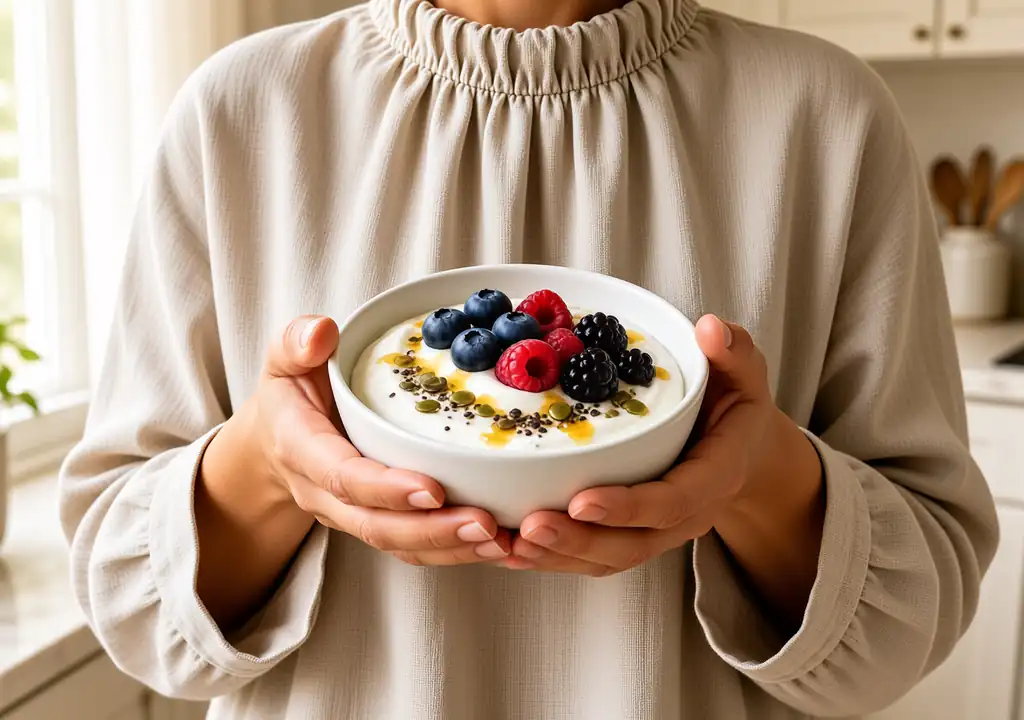
1. Greek yoghurt, berries and seeds
150g of 0% Greek yoghurt (Aldi, around 55p per portion) with a handful of frozen berries and a teaspoon of mixed seeds. Roughly 15g protein, high in fibre, and the live cultures support gut health. This is my go-to mid-morning pot.
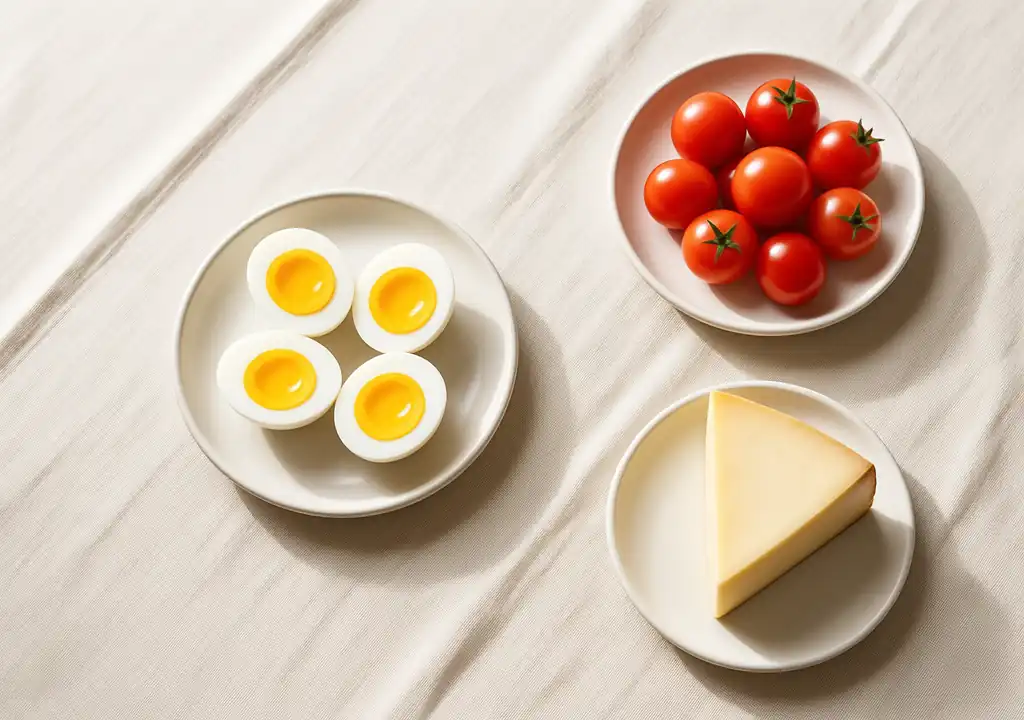
2. Two boiled eggs and cherry tomatoes
Two medium eggs give about 13g of protein for well under 50p, and a small handful of cherry tomatoes adds fibre and freshness. Boil a batch on Sunday and they last five days in the fridge.
3. Edamame and a wedge of cheese
A 100g portion of steamed edamame (Sainsbury’s frozen, budget-friendly) delivers around 11g of plant protein plus fibre, and a small piece of cheese rounds it out. Surprisingly filling for such a light pot.
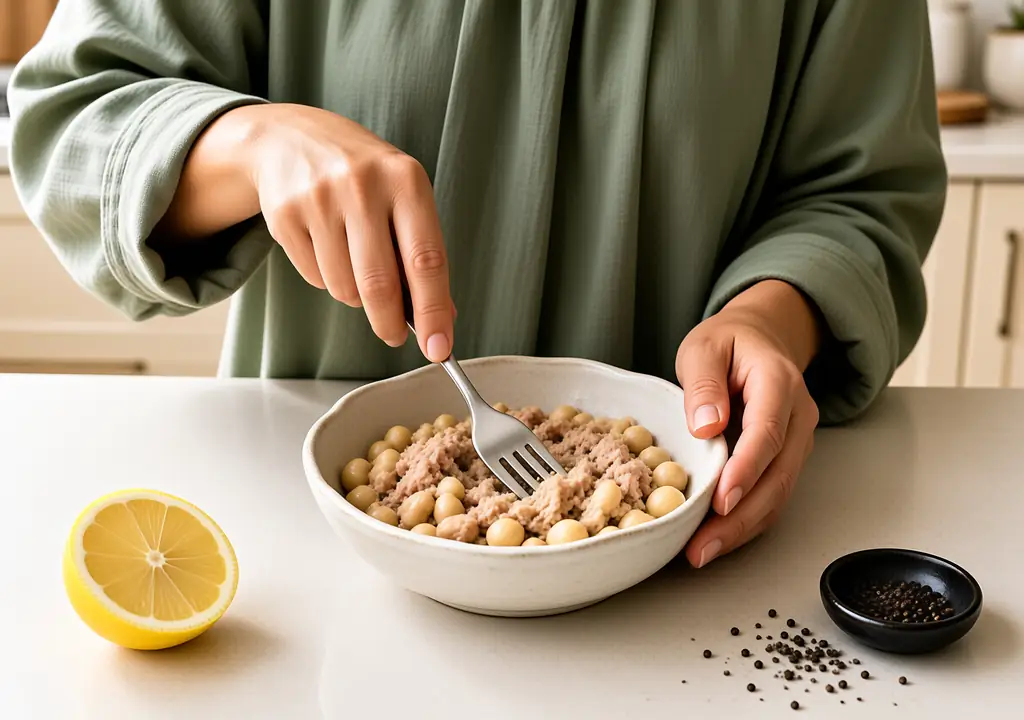
4. Tuna and butter bean smash
Half a tin of tuna in spring water mashed with a few tablespoons of tinned butter beans, a squeeze of lemon and black pepper. Around 20g protein and genuinely satisfying on oatcakes. Butter beans add creamy fibre without heaviness.
5. Cottage cheese and cucumber
Cottage cheese has had a real resurgence for good reason. A 100g serving gives about 11g protein, and paired with cucumber ribbons it is cooling and light. For a warm version, try my cottage cheese flatbread.
6. Roast chicken and hummus wrap quarters
Shredded halal roast chicken with a tablespoon of hummus in a quarter of a wholemeal wrap. Around 18g protein, portable, and the wholemeal wrap adds slow-release carbohydrate. Use leftover chicken to keep costs down.
7. Roasted chickpeas and a small apple
A handful of roasted chickpeas (tinned, drained, roasted with paprika) offers fibre and around 7g plant protein, and a small apple adds gentle sweetness. A crunchy, satisfying snack-meal that travels well.
UK shopping and kit that makes this easy
None of this needs special equipment, but a set of small portioned pots makes the habit stick. Prepping five or six mini meals on a Sunday takes me about twenty minutes. Glass containers are worth it because they go from fridge to microwave without staining or holding smells.
[Glass Meal Prep Containers 4-Pack | Amazon UK | £22.99 | buy on Amazon UK]
[Stainless Steel Reusable Snack Pots Set | Amazon UK | £29.99 | by on Amazon UK]
For the food itself, own-brand basics do the job perfectly: Aldi and Lidl Greek yoghurt, ASDA tinned pulses, and Tesco frozen edamame are all excellent value. If you want a fuller weekly system, my guide to healthy meal prep for beginners pairs neatly with this approach, and these high protein breakfast ideas make a strong first mini meal of the day.
The halal and budget angle
Every mini meal here is halal by default. For the chicken wrap, use halal roast chicken from your local halal butcher or the supermarket halal range, and check that your cheese uses vegetarian rennet if that matters to you. The beauty of this way of eating is how affordable it is, because eggs, tinned pulses, own-brand yoghurt and frozen vegetables are some of the cheapest protein and fibre sources in any UK supermarket. You are not paying for expensive protein powders or bars, just real food in sensible portions.
How this works during Ramadan
During Ramadan the mini meal principle shifts to the hours between Iftar and Suhoor. Rather than one enormous plate at Iftar that leaves you bloated and sluggish for Taraweeh, break your fast with dates and water, then spread two or three protein-forward mini meals across the evening. A yoghurt pot, a small portion of chicken and pulses, and eggs at Suhoor keep you fuller through the fast. Consult your GP if you have a medical condition that affects fasting.
Frequently asked questions
Do high protein mini meals actually reduce bloating?
For many people, yes, because smaller portions place less strain on the digestive system than large meals and are easier to eat slowly. Bloating has many causes, so if it is persistent or painful, speak to your GP to rule out an underlying issue.
How many mini meals should I eat a day?
Four to five small meals works well for most people, roughly every three hours. The total amount of food matters more than the number of meals, so this is about spreading your intake, not adding to it.
What are the best high protein foods for mini meals in the UK?
Eggs, Greek yoghurt, tinned tuna, cottage cheese, edamame, tinned pulses like butter beans and chickpeas, and leftover halal chicken are all affordable, widely available and easy to portion.
Can mini meals help with weight management?
They can support it by improving fullness and reducing the urge to overeat later, but they are not magic. A balanced overall diet and regular activity matter most. Consult a registered dietitian for a personalised plan.
Is it better to eat protein at every meal?
Spreading protein across the day is more effective for fullness and muscle maintenance than loading it all into one meal. Including 15 to 25 grams in each mini meal is a practical way to achieve that.
The takeaway
Start with just two mini meals this week, a yoghurt pot mid-morning and a tuna and butter bean smash mid-afternoon, and notice how much steadier your energy and your stomach feel by evening. Small, protein-rich portions are one of the most reliable, evidence-based habits I know.
Nutrition content at MyBreezyLife is reviewed by James Okafor ANutr, Registered Associate Nutritionist. This is general guidance only. Always consult your GP or a registered dietitian for personal dietary advice.