A homemade protein treatment for hair is one of the cheapest ways to rescue strands that feel weak, stretchy or straw-like, and most of what you need is already in your fridge. Eggs, yoghurt, mayonnaise and avocado all carry protein or fats that help damaged hair hold together a little better between trims.
The catch is that protein isn’t always the answer. Hair that’s short of moisture looks almost identical to hair that’s short of protein, and piling protein onto the wrong problem leaves it stiff and more likely to snap. This guide brings together everything we have published on protein treatments at MyBreezyLife: how to tell what your hair needs, seven masks worth making, how to apply them properly and how often to use them.
Why Hair Needs Protein
Each strand of hair is made mostly of keratin, a tough protein built from chains of amino acids. Keratin gives hair its structure and its stretch, which is why healthy hair can be pulled slightly and spring back without breaking.
Heat styling, bleach, permanent colour, relaxers and even years of tight hairstyles slowly break down that structure. The outer cuticle lifts, tiny gaps open along the strand and the hair starts losing both protein and water faster than it can hold on to them.
A protein treatment doesn’t rebuild hair from the inside. Hair isn’t living tissue once it leaves the scalp. What a treatment does is lay small protein fragments into those gaps and along the cuticle, which temporarily strengthens the strand and makes it feel smoother. The effect washes out over a few weeks, so it needs repeating.
Signs Your Hair Needs a Protein Treatment
It breaks when you comb it
Short snapped pieces in your brush, or on your shoulders after taking your hijab off, are the most common sign. Breakage along the length, rather than hair falling from the root, points to a weak strand.
It stretches and does not spring back
Take one wet strand and stretch it gently. Hair that keeps stretching like chewing gum, then snaps or stays limp, has lost the protein that gives it elasticity. Curls that have dropped and will not hold their shape are often the same issue.
It feels gummy or mushy after bleach or colour
Hair that feels sticky when wet, or oddly soft and limp after a lightening session, has had its internal bonds damaged. That texture is a clear signal to use protein before anything else.
It soaks up water and takes forever to dry
High porosity hair has so many gaps in the cuticle that it absorbs water quickly and loses it just as fast. It frizzes easily and colour fades early. Protein helps fill those gaps.
It looks flat and will not hold a style
Limp hair with no body, especially if it used to be thicker, can be short of protein. Check the other signs first, though, because product build-up causes the same flatness.
Protein or Moisture? How to Tell the Difference
Dry hair is the complaint we hear most from readers, and it has two very different causes. Getting this right matters more than choosing the perfect recipe.
Try the strand test on a clean, damp strand of hair:
- If it stretches a long way and then snaps, or feels mushy, your hair needs protein.
- If it barely stretches at all and snaps straight away, or feels rough and straw-like, your hair needs moisture.
Your hair history is the other clue. If you have bleached, coloured, relaxed or permed your hair in the last few months, protein loss is likely. If your hair is fine and you already use protein-rich products, the dryness is more likely over-proteinised hair that needs a good conditioning mask instead.
Here is something that surprises a lot of people: hair that feels crunchy, dull and brittle straight after a protein mask is usually telling you it has had too much, not too little. Switch to a moisturising mask for a couple of weeks and the softness normally comes back.
Protein Needs by Hair Type
Fine or thin hair
Fine hair overloads quickly. Use gentle treatments, such as yoghurt or a single egg, no more than once every four to six weeks, and put the emphasis on moisture in between.
Thick hair
Thick hair can handle richer masks like mayonnaise and egg, and you may need to double the quantities to cover it properly. Keep an eye out for stiffness and scale back if it appears.
Curly and coily hair
Curls need a steady balance. Protein helps define them and reduces frizz, while moisture stops them snapping. Many readers with curly hair alternate a protein mask one week with a deep conditioner the next. Our guide to curly hair tips and flaxseed gel covers the moisture side.
Colour-treated and damaged hair
Hair that has been bleached, coloured or heat-styled for years usually needs protein most. Start gently and build up, and always follow with conditioner. A protein treatment a few days before your next colour appointment can also help hair cope with the chemical process.
The Best Homemade Protein Treatment for Hair: 7 Masks to Try
Each of these masks uses ingredients you can pick up in any UK supermarket. Patch test first behind your ear if you have sensitive skin, and skip the egg recipes if you have an egg allergy.
1. Egg and yoghurt mask
The most reliable all-rounder. Eggs are rich in protein, and natural yoghurt adds lactic acid and a little moisture.
Beat 1 egg with 2 tablespoons of plain yoghurt until smooth. Apply to damp hair from mid-lengths to ends, leave for 30 minutes, then rinse with cool water before shampooing. Hot water can scramble the egg in your hair, and yes, it’s as unpleasant as it sounds. Use the yolk alone for dry hair and the white alone for oily hair.
2. Mayonnaise and egg white mask
Mayonnaise combines egg with oil and a little vinegar, so it strengthens and softens at the same time. Mix 2 tablespoons of full-fat mayonnaise with 1 egg white, apply to the lengths, and leave for 30 to 45 minutes. Shampoo twice to remove the oil. Keep it off the roots if your scalp gets greasy.
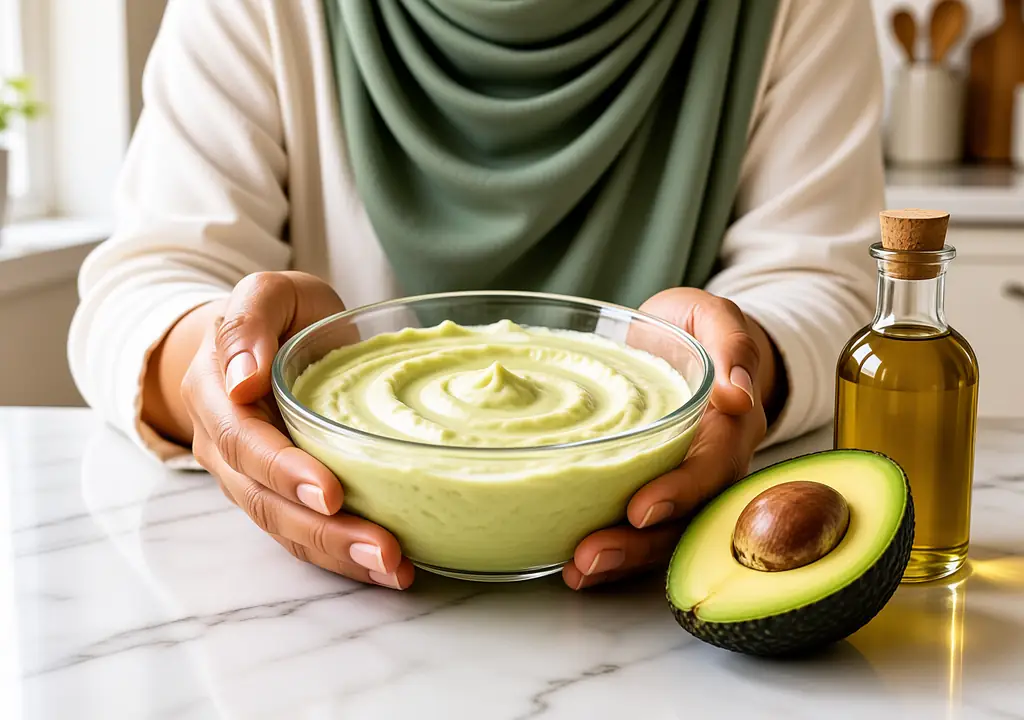
3. Avocado and coconut milk mask
A gentler option that leans towards moisture, useful for dry, thick or curly hair. Mash 1 ripe avocado with a quarter of a cup of coconut milk and a teaspoon of olive oil until there are no lumps. Leave on damp hair for 30 minutes, then shampoo and condition. Avoid this one if your hair is fine or oily, because it can weigh it down.
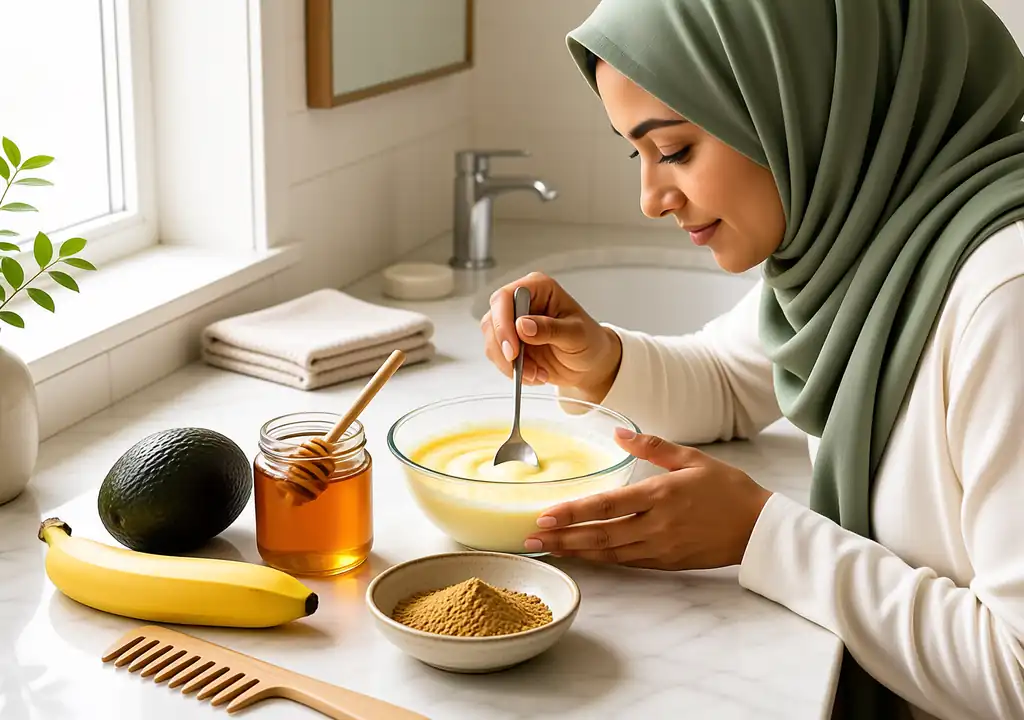
4. Banana and avocado mask
Banana adds softness and shine. Blend 1 ripe banana with 1 ripe avocado until completely smooth, because banana lumps are hard to rinse out. Apply for 30 minutes to an hour, rinse with cool water, then shampoo. Once a week is enough.
5. Egg yolk, almond oil and honey mask
Honey is a humectant, which means it draws water into the hair, so this mask suits hair that needs protein and moisture together. Whisk 1 egg yolk until frothy, then add 1 tablespoon of almond oil and 1 teaspoon of honey. Leave on damp hair for 15 to 20 minutes and rinse with cool water.

6. Rice flour and multani mitti mask (egg-free option)
This recipe is popular with readers who grew up with South Asian hair care. Multani mitti, also sold as fuller’s earth, is a clay that absorbs excess oil from the scalp, and rice flour adds a gentle cleansing effect.
Mix 8 to 10 spoons of multani mitti with 4 spoons of rice flour, then add the whites of 4 eggs, or 8 to 10 spoons of plain yoghurt if you want it egg-free. Stir into a smooth paste and apply from roots to tips. Leave for about 15 minutes and rinse before it dries completely. You can find multani mitti in most South Asian grocers in the UK, and on Amazon UK, usually for under £5.

7. Fenugreek and yoghurt mask
Fenugreek (methi) seeds are a traditional hair ingredient across South Asia and the Middle East. Mix 2 tablespoons of fenugreek seed powder with enough plain yoghurt to form a paste, strain out any large bits, and leave it to sit for 15 minutes. Apply to the scalp and lengths, ideally after oiling your scalp, then rinse after 15 to 20 minutes with a mild shampoo.
How to Apply a Homemade Protein Treatment
- Start with clean, damp hair so the treatment can spread evenly.
- Divide your hair into four sections with clips.
- Apply the mask from the mid-lengths to the ends first, where the damage usually is. Only take it to the roots if your scalp is dry.
- Comb it through with a wide-tooth comb.
- Cover with a shower cap. A few minutes of gentle warmth from a hairdryer over the cap helps the mask sit on the hair.
- Leave for the time given in the recipe, usually 20 to 30 minutes.
- Rinse with cool or lukewarm water, never hot.
- Shampoo with a gentle, sulphate-free shampoo, then use a moisturising conditioner.
An old T-shirt is a good idea, as is an applicator bottle from a hair dye kit for thicker hair.
How Often to Use a Protein Treatment
Start with one treatment every four to six weeks and watch how your hair responds. Badly damaged or bleached hair may need one every two weeks for a while. Fine hair may only need one every couple of months.
Always follow a protein treatment with conditioner, and use a proper deep conditioner in between. Our guide on when to deep condition your hair explains how to balance the two, and our weekly hair mask routine shows how protein and moisture masks fit into the same week.
If you’re losing hair from the root, not seeing breakage along the length, a mask won’t fix it. Hair loss can have many causes, including low iron or thyroid problems, and the NHS hair loss guidance is a good place to start before speaking to your GP.
Shop-Bought Protein Treatments Available in the UK
If you do not have time to make a mask, these ready-made treatments are easy to buy in the UK. Prices change often, so check before you buy.
- SheaMoisture Manuka Honey & Mafura Oil Hair Mask £9.32 at time of writing: a budget option that combines protein with a lot of moisture, good for curly and coily hair.
- Briogeo Don’t Despair Repair Super Moisture Conditioner £32.25 at time of writing: a richer mask that adds strength without leaving hair greasy.
- OLAPLEX No.3PLUS Hair Repair Pre-Shampoo Treatment £27.20 at time of writing: technically a bond repair treatment rather than a protein mask, but it is the one most colourists recommend after bleach.
Protein Treatments for Hijab-Wearing Women
Hair that stays covered for most of the day has its own needs. Friction from the underscarf, tight buns and pins that sit in the same spot every day all add to breakage, especially around the hairline.
A few simple habits help:
- Make sure your hair is completely dry after a mask before putting your hijab on, because damp hair trapped under fabric can leave the scalp itchy.
- Rinse egg-based masks thoroughly, then shampoo twice, so there is no smell left once your hair is covered for hours.
- Switch between a low bun and a loose plait, and try a satin or silk underscarf to cut down on friction.
- Treat breakage along the hairline gently. If the hairline itself is thinning, read our guide to traction alopecia before reaching for more protein.
Frequently Asked Questions
What is the best homemade protein treatment for hair?
For most hair types, a simple egg and yoghurt mask is the best starting point. It is gentle, cheap and easy to rinse out. Mayonnaise and egg suits thick or very damaged hair, while the rice flour and multani mitti mask is a good egg-free option.
Can you use too much protein on your hair?
Yes. Too much protein makes hair stiff, dry and brittle, and it can snap more easily than before. If that happens, stop the protein masks and use moisturising treatments for two to three weeks.
How long should I leave a protein treatment on my hair?
Most homemade masks work in 20 to 30 minutes. Leaving them on overnight does not add much and makes egg-based masks harder to rinse out.
Should I do a protein treatment before or after colouring my hair?
A few days before is ideal, because it strengthens the strands before the chemical process. Wait at least a week after colouring before the next protein treatment, and use a moisturising mask in the meantime.
Protein treatments work best as part of a balanced routine, so pick one mask, use it consistently for a couple of months and let your hair tell you when it needs moisture instead.
Beauty and hair care content at MyBreezyLife is created by our editorial team and reviewed by founder Noreen Fahad. This article contains affiliate links. We only recommend products we genuinely rate. This is general guidance only. Always consult your GP or a qualified professional for personal advice.