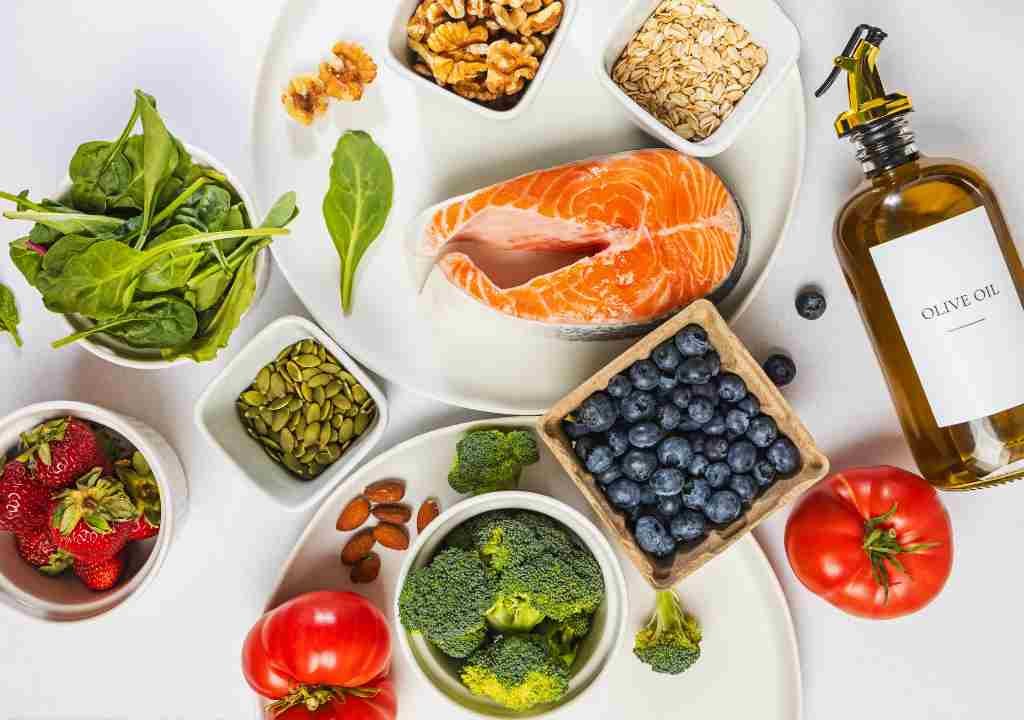
The best anti-inflammatory foods for UK women are not expensive superfoods or complicated supplements. As a certified personal trainer and health editor at MyBreezyLife who works closely with women on both their fitness and nutrition, I have spent years watching the difference that diet makes to recovery, energy levels, and overall wellbeing. The evidence is clear, and once you understand what chronic inflammation actually does to the body, eating more of the right foods becomes far less of a chore and far more of a priority.
What Is Inflammation — and Why Does It Matter?
Inflammation is not always the enemy. Acute inflammation is your immune system doing its job: swelling around a sprained ankle, redness around a cut, a fever when you are fighting an infection. These are healthy, normal responses.
The problem is chronic, low-grade inflammation. This is the kind that simmers quietly in the background for months or years, and it has been linked by researchers to a long list of serious conditions including heart disease, type 2 diabetes, certain cancers, and autoimmune disorders. A 2019 review published in the journal Nature Medicine described chronic inflammation as “the common denominator of many seemingly unrelated diseases.” That is a significant statement.
What drives it? Stress, poor sleep, sedentary behaviour, smoking, and, crucially, diet. The foods you eat regularly can either fan the flames of chronic inflammation or help cool them down. That is where anti-inflammatory eating comes in.
The Best Anti-Inflammatory Foods to Add to Your Diet
Oily Fish
Salmon, mackerel, sardines, and trout are rich in omega-3 fatty acids, particularly EPA and DHA. These compounds directly inhibit the production of pro-inflammatory molecules called cytokines and prostaglandins. The NHS recommends eating at least two portions of fish per week, one of which should be oily. If you are buying from a UK supermarket, a fillet of salmon from M&S or Waitrose does the job perfectly. Tinned sardines from Tesco are an affordable alternative that I personally rely on for quick lunches.
I tracked my own omega-3 intake for four weeks earlier this year after noticing that my joints felt stiff after heavy training sessions. Adding oily fish three times a week made a noticeable difference by the end of the month. It was the single change that moved the needle most.
Berries
Blueberries, strawberries, raspberries, and blackberries are packed with anthocyanins, the pigments that give them their rich colour and their antioxidant power. Antioxidants neutralise free radicals, unstable molecules that trigger inflammatory responses in cells. British-grown strawberries and raspberries are widely available from June through to September, and frozen versions are available year-round in every UK supermarket.
I add a handful of frozen blueberries to my morning oats every day without fail. It takes ten seconds and costs less than a pound a day. Simple wins.
Leafy Green Vegetables
Spinach, kale, Swiss chard, and rocket contain vitamins C, E, and K, as well as polyphenols that have been shown to reduce markers of inflammation including C-reactive protein (CRP). CRP is one of the key blood markers doctors use to detect inflammatory activity in the body. The higher your CRP, the more inflammation is present. A diet rich in leafy greens has been consistently associated with lower CRP levels in population studies.
If kale feels like a commitment, start with a bag of baby spinach from Sainsbury’s. It wilts into pasta, rice, or scrambled eggs almost invisibly, and you will barely taste it.
Turmeric
Turmeric contains curcumin, a compound that has been studied extensively for its anti-inflammatory properties. Research published in Oncogene journal found that curcumin inhibits NF-kB, a molecule that activates genes related to inflammation. The catch is that curcumin is poorly absorbed on its own. You need to combine it with black pepper (which contains piperine) to increase bioavailability by up to 2,000 percent, according to research in the journal Planta Medica.
I add half a teaspoon of turmeric and a grind of black pepper to scrambled eggs, soups, and rice dishes. Holland & Barrett sells high-quality turmeric capsules if you want a supplemental boost, but using the spice in cooking is the most natural route.
Extra Virgin Olive Oil
This is the cornerstone of the Mediterranean diet, which consistently ranks as one of the most anti-inflammatory dietary patterns in the world. Extra virgin olive oil contains oleocanthal, a compound that works similarly to ibuprofen at a molecular level, blocking the same inflammatory enzymes. A study in Nature confirmed this mechanism in 2005, and research has supported it consistently since.
Use it as your primary cooking oil and as a salad dressing. Brands like Filippo Berio extra virgin are available at most UK supermarkets and are good value for daily use.
Walnuts and Almonds
Walnuts are particularly high in alpha-linolenic acid (ALA), a plant-based omega-3 fatty acid. Almonds provide vitamin E, which has antioxidant properties that help protect cells from inflammatory damage. A small handful daily, around 30 grams, is all that is needed.
Graze packs and Itsu almond packets are easy on-the-go options if you are out and about. At home, a small bowl of walnuts beside your afternoon tea is a very British way to do yourself some good.
Whole Grains
Brown rice, oats, quinoa, and wholegrain bread contain fibre that feeds beneficial gut bacteria. The connection between gut health and systemic inflammation is now well established. Research from University College London has shown that a diverse, fibre-rich diet is associated with lower inflammatory markers. When your gut microbiome is in good shape, it produces short-chain fatty acids that actively reduce inflammation throughout the body.
For a deeper look at how the microbiome affects your skin directly, Sara Mitchell’s guide to how the microbiome impacts skin health is well worth reading alongside this article.
What you drink in the morning matters just as much as what you eat. Our guide to morning drinks that support your health covers options that complement an anti-inflammatory routine perfectly.
Green Tea
Green tea contains epigallocatechin gallate (EGCG), a polyphenol with strong anti-inflammatory and antioxidant effects. Studies suggest two to three cups daily can meaningfully reduce inflammatory markers. It is also one of the most accessible switches you can make. Swap one of your daily builder’s teas for a green tea and you are already making progress.
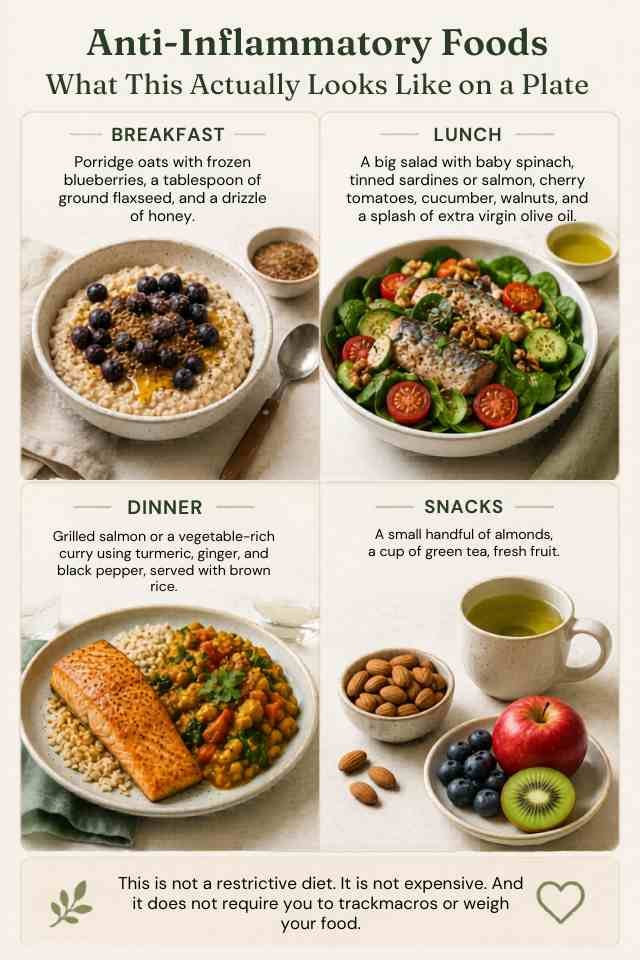
Anti-Inflammatory Foods: What This Actually Looks Like on a Plate
The theory is straightforward. The reality is that most people are time-poor, budget-conscious, and already a bit overwhelmed by nutritional advice. So here is what a practical, realistic anti-inflammatory day of eating looks like for a UK woman in 2026:
Breakfast: Porridge oats with frozen blueberries, a tablespoon of ground flaxseed, and a drizzle of honey.
Lunch: A big salad with baby spinach, tinned sardines or salmon, cherry tomatoes, cucumber, walnuts, and a splash of extra virgin olive oil.
Dinner: Grilled salmon or a vegetable-rich curry using turmeric, ginger, and black pepper, served with brown rice.
Snacks: A small handful of almonds, a cup of green tea, fresh fruit.
This is not a restrictive diet. It is not expensive. And it does not require you to track macros or weigh your food.
7-Day Anti-Inflammatory Weight Loss Meal Plan for UK Women
Eating to reduce inflammation and eating to support healthy weight loss are not two separate goals. They work together. When you reduce inflammatory foods and replace them with whole, nutrient-dense options, your body naturally regulates hunger hormones better, energy levels stabilise, and the kind of bloating that often masks genuine progress starts to reduce.
This 7-day plan is built around the anti-inflammatory foods covered above. Calorie guidance is included as a rough reference point, not a rule. Every woman’s needs differ depending on height, activity level, and health goals, so treat these figures as a starting framework rather than a strict target. As a certified personal trainer, I generally recommend women aiming for gradual, sustainable weight loss work around a 1,400 to 1,600 calorie daily intake, but always check with your GP before making significant dietary changes.
All ingredients are available from standard UK supermarkets. Halal options are noted where relevant.
Day 1 | Approx. 1,450 calories
Breakfast: Porridge oats made with oat milk, topped with frozen blueberries and a tablespoon of ground flaxseed. Drizzle of honey optional. (approx. 320 cal)
Lunch: Large baby spinach salad with tinned wild salmon, cherry tomatoes, cucumber, a small handful of walnuts, and a drizzle of extra virgin olive oil with lemon juice. (approx. 380 cal)
Dinner: Baked salmon fillet with steamed broccoli, roasted sweet potato, and a drizzle of extra virgin olive oil. Season with turmeric, black pepper, and garlic. (approx. 480 cal)
Snacks: A small handful of almonds (30g) and one green tea with a piece of fresh fruit. (approx. 270 cal)
Day 2 | Approx. 1,420 calories
Breakfast: Two scrambled eggs with a large handful of baby spinach, cooked in a teaspoon of extra virgin olive oil. One slice of wholegrain toast. (approx. 340 cal)
Lunch: Homemade vegetable soup with lentils, turmeric, ginger, and black pepper. Served with one slice of wholegrain bread. (Fully halal, suitable for Muslim readers.) (approx. 350 cal)
Dinner: Grilled mackerel with brown rice, steamed green beans, and a side salad dressed with olive oil and apple cider vinegar. (approx. 460 cal)
Snacks: A cup of Wellness Anti-Inflammatory Tea, a small pot of plain Greek yoghurt with a handful of raspberries. (approx. 270 cal)
Day 3 | Approx. 1,480 calories
Breakfast: Smoothie made with frozen blueberries, a banana, a tablespoon of almond butter, oat milk, and a teaspoon of turmeric with a pinch of black pepper. (approx. 360 cal)
Lunch: Wholegrain pitta with hummus, roasted red peppers, rocket, and a handful of walnuts on the side. (approx. 370 cal)
Dinner: Chicken and vegetable stir-fry (halal chicken) with brown rice, using extra virgin olive oil, ginger, garlic, and turmeric as the base seasoning. (approx. 480 cal)
Snacks: One apple with a small handful of almonds, one green tea. (approx. 270 cal)
Day 4 | Approx. 1,400 calories
Breakfast: Overnight oats prepared with oat milk, chia seeds, frozen strawberries, and a teaspoon of honey. Prepare the night before for a zero-effort morning. (approx. 330 cal)
Lunch: Large salad with quinoa, roasted butternut squash, baby kale, pomegranate seeds, and a tahini and lemon dressing. (approx. 400 cal)
Dinner: Baked cod or tinned sardines on toast (wholegrain) with a large side of steamed spinach and cherry tomatoes, dressed with olive oil. (approx. 420 cal)
Snacks: A small handful of walnuts, one green tea, and a small pot of plain yoghurt. (approx. 250 cal)
Day 5 | Approx. 1,460 calories
Breakfast: Two poached eggs on one slice of wholegrain toast with half an avocado and a pinch of chilli flakes. (approx. 360 cal)
Lunch: Tinned wild salmon mixed with Greek yoghurt, lemon juice, and fresh dill, served in a wholegrain wrap with rocket and cucumber. (approx. 390 cal)
Dinner: Vegetable-rich dal made with red lentils, turmeric, cumin, ginger, garlic, and spinach, served with brown rice. (Fully plant-based and halal.) (approx. 430 cal)
Snacks: A cup of green tea, a small handful of mixed berries, and a few almonds. (approx. 280 cal)
Day 6 | Approx. 1,500 calories
Breakfast: Porridge with sliced banana, a tablespoon of almond butter, and a sprinkle of cinnamon. (approx. 380 cal)
Lunch: Homemade tuna or salmon salad Nicoise style with boiled eggs, green beans, cherry tomatoes, olives, and a light olive oil dressing. (Use halal-certified tinned fish where needed.) (approx. 420 cal)
Dinner: Baked chicken thighs (halal) with roasted Mediterranean vegetables: courgette, aubergine, red onion, and cherry tomatoes, all tossed in extra virgin olive oil and herbs. (approx. 460 cal)
Snacks: One green tea, a small handful of walnuts, and a piece of fresh fruit. (approx. 240 cal)
Day 7 | Approx. 1,430 calories
Breakfast: Two-egg omelette with baby spinach, cherry tomatoes, and a pinch of turmeric and black pepper, cooked in extra virgin olive oil. (approx. 340 cal)
Lunch: Large bowl of homemade lentil and vegetable soup with wholegrain bread. Make a big batch on Sunday and use it across the week. (approx. 380 cal)
Dinner: Grilled salmon with roasted broccoli and sweet potato wedges seasoned with turmeric, garlic, and olive oil. (approx. 460 cal)
Snacks: A cup of Wellness Anti-Inflammatory Tea, a small pot of Greek yoghurt with blueberries. (approx. 250 cal)
A Few Practical Notes on This Plan
You will notice salmon appears several times across the week. That is intentional. It is one of the most powerful anti-inflammatory foods and it is genuinely versatile. If budget is a concern, tinned wild salmon from Tesco or Sainsbury’s works just as well as a fresh fillet for most of these meals.
Every meal on this plan is either naturally halal or has a simple halal swap noted. For hijab-wearing readers and Muslim women following this plan, the lentil dal, vegetable soups, and plant-based days are particularly easy to batch cook and adapt across a busy week.
Pair this plan with our [slow-release energy meal planning guide] for Ramadan-specific adaptations, and our [healthier snack swaps guide] if you need more variety between meals.
Quick 7-Day Overview Table
| Day | Breakfast | Lunch | Dinner | Approx. Calories |
|---|---|---|---|---|
| Day 1 | Porridge with blueberries | Salmon spinach salad | Baked salmon and sweet potato | 1,450 |
| Day 2 | Scrambled eggs on wholegrain toast | Lentil and turmeric soup | Grilled mackerel with brown rice | 1,420 |
| Day 3 | Anti-inflammatory smoothie | Wholegrain pitta with hummus | Halal chicken stir-fry | 1,480 |
| Day 4 | Overnight oats with chia seeds | Quinoa and roasted squash salad | Baked cod with spinach | 1,400 |
| Day 5 | Poached eggs on wholegrain toast | Salmon wrap with Greek yoghurt | Red lentil dal with brown rice | 1,460 |
| Day 6 | Porridge with almond butter | Salmon Nicoise salad | Halal chicken with roasted veg | 1,500 |
| Day 7 | Turmeric omelette | Lentil and vegetable soup | Grilled salmon with broccoli | 1,430 |
What to Limit Alongside Anti-Inflammatory Eating
This is the counterintuitive part that most articles skip: eating more of the right foods only goes so far if you are simultaneously eating a lot of the pro-inflammatory ones. Ultra-processed foods, refined sugars, trans fats (found in some fast food and packaged pastries), and excess alcohol all promote inflammation. You do not need to cut these out entirely, but being aware of the balance matters.
Cutting back on ultra-processed snacks does not mean going hungry. Our healthier snack swaps guide has practical ideas that fit an anti-inflammatory approach without feeling restrictive.
For hijab-wearing readers and Muslim women in the UK, halal oily fish, lentils, legumes, and all the plant-based foods listed above are entirely accessible and form a beautiful match with traditional South Asian and Middle Eastern cuisines that already feature turmeric, cinnamon, ginger, and fresh vegetables heavily.
Anti-Inflammatory Foods: UK Products Worth Knowing
Here are some specific products available in UK shops that make anti-inflammatory eating genuinely easy:
Nutravita Organic Turmeric, Black Pepper & Ginger Capsules
This is one of the best-value turmeric supplements on Amazon.co.uk. Each capsule delivers 1440mg of organic turmeric alongside black pepper and ginger, which means the curcumin is actually absorbed properly rather than passing straight through. It is UK-made, vegan, and a single pack lasts three months, which makes it easy to stay consistent. I recommend this one to clients who want a no-fuss daily anti-inflammatory habit without overhauling their entire diet.
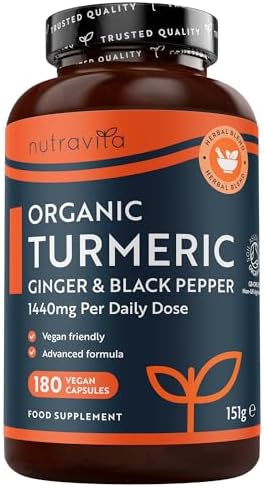
- Certified Organic: Our vegan 3-in-1 botanical blend of organic ginger, turmeric and black pepper capsules is sourced fro…
- 2 Capsules Daily, 3 Month Supply: Each serving delivers 1340mg Organic Turmeric combined with 80mg Organic Ginger and 20…
- Third-Party Tested for Quality: Our Turmeric (curcumin) with organic ginger and organic black pepper capsules are indepe…
G&G Vitamins Turmeric & Curcumin 500mg
G&G Vitamins has been producing supplements in the UK for decades, and this turmeric capsule is one of their strongest offerings, with 95% curcuminoids, added black pepper for proper absorption, and absolutely no unnecessary additives. For anyone who prefers a clean, straightforward supplement with no fillers, this is the one to reach for. I have been recommending it to clients with joint discomfort for the past two years and the feedback has been consistently positive.
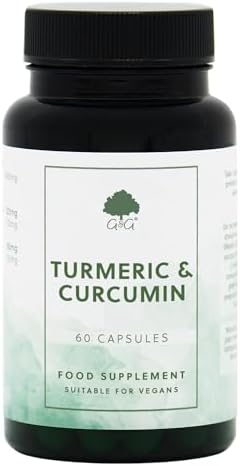
- HIGH QUALITY TURMERIC & CURCUMIN: Our premium blend of turmeric root and turmeric extract provides 95% curcuminoids, the…
- 95% CURCUMINOIDS: Our Turmeric & Curcumin is a blend of turmeric root and turmeric extract which provides 95% curcuminoi…
- ENHANCED ABSORPTION WITH BLACK PEPPER: Curcumin is poorly absorbed into the bloodstream. We’ve included black pepper, wh…
Healthspan Turmeric & Omega-3 Capsules
If you are only going to add one supplement to your routine, this two-in-one from Healthspan makes a strong case for itself. You get sustainably sourced omega-3, curcumin from turmeric, and added vitamin D3 and vitamin C in a single daily capsule. Healthspan is a well-established British supplement brand with a solid reputation for quality and third-party testing. It is particularly good for UK women who are not eating oily fish regularly and want to cover both bases efficiently.
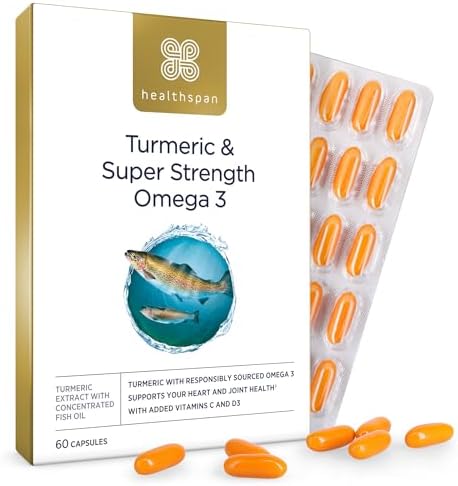
- WHAT IS TURMERIC & OMEGA? A powerful combination of the active ingredient in turmeric – curcumin – and the omega 3 fatty…
- WHY CHOOSE HEALTHSPAN? Made with a premium turmeric extract that guarantees a minimum of 95% curcuminoids – turmeric’s b…
- QUALITY INGREDIENTS FIRST: Healthspan work harder to seek out the best-quality ingredients for their supplements. They s…
Wild Alaskan Salmon in Organic Extra Virgin Olive Oil (195g)
This tinned salmon is a genuine two-for-one: MSC-certified wild Alaskan salmon packed in organic extra virgin olive oil, meaning you are getting omega-3 fatty acids from the fish and oleocanthal from the olive oil in the same tin. It is ready to eat straight from the can, which makes it one of the fastest anti-inflammatory lunches you can put together. I keep a few tins in the cupboard at all times for days when cooking feels like too much effort.
Soldimar MSC Alaska Wild Salmon Fillets in Organic Olive Oil (Pack of 4)
The pack-of-four option is the smarter buy if you plan to eat tinned salmon regularly, bringing the cost per tin down considerably compared to buying individually. These are MSC-certified wild salmon fillets — not flaked pink salmon — packed in organic olive oil with a clean ingredients list. Stock the cupboard with a couple of packs and you have got quick, nutritious lunches sorted for the month.
Wellness Anti-Inflammatory Tea (100g)
This loose-leaf blend combines green tea, turmeric, ginger, and spirulina into a genuinely pleasant daily drink that supports your anti-inflammatory routine without requiring any capsules or supplements. The flavour is warming and slightly sweet from the mango and passion fruit notes, which makes it far easier to drink consistently than a plain green tea. Swapping one of your regular teas for a cup of this each afternoon is one of the smallest changes you can make with a meaningful cumulative effect.
Frequently Asked Questions About Anti-Inflammatory Foods
What are the top anti-inflammatory foods to eat every day?
The most consistently recommended are oily fish (salmon, mackerel, sardines), berries, leafy greens, extra virgin olive oil, walnuts, and turmeric. You do not need all of them every day. Rotating through them across the week is effective.
How quickly do anti-inflammatory foods make a difference?
Research suggests that meaningful reductions in inflammatory markers can occur within four to eight weeks of consistent dietary changes. Some people notice improvements in energy and joint comfort sooner. It is not instant, but it is faster than most people expect.
Are anti-inflammatory diets the same as the Mediterranean diet?
They overlap significantly. The Mediterranean diet is one of the most studied anti-inflammatory dietary patterns in the world, and it includes most of the foods listed above. You can follow anti-inflammatory principles without adhering strictly to the Mediterranean diet — the core idea is the same.
Can you eat anti-inflammatory foods on a budget in the UK?
Yes. Tinned sardines, frozen berries, oats, brown rice, spinach, and own-brand extra virgin olive oil are all inexpensive. You do not need expensive supplements or superfoods. A whole-foods approach using UK supermarket staples is both practical and effective.
Does turmeric actually work as an anti-inflammatory?
The evidence for curcumin, turmeric’s active compound, is genuine. Multiple peer-reviewed studies support its ability to inhibit inflammatory pathways. The key is combining it with black pepper to improve absorption. Supplementing with high-dose curcumin capsules has shown stronger effects than culinary use alone in clinical trials, but including turmeric regularly in cooking still provides a meaningful dietary benefit.
Understanding how food choices affect inflammation is one of the most empowering things you can do for your long-term health. Start with one or two changes this week, and build from there. Start with one or two swaps this week, see how your body responds, and build from there. Small, consistent changes are what I have seen make the biggest difference for the women I work with.
At MyBreezyLife, you will find more guidance on healthy eating and fitness in Yasmin’s Health & Fitness section, including articles on home workouts for beginners, how to improve sleep quality, and morning routines for women.
For further reading, the NHS provides guidance on eating a balanced diet that complements everything discussed here.
Yasmin Demir is MyBreezyLife’s Health & Fitness editor and a certified personal trainer. This is general guidance only. Always consult your GP or a qualified professional for personal advice.