Finding the best retinol cream UK shoppers can actually trust is harder than it sounds, because the retinol market is absolutely flooded right now. I have been researching and testing retinoids for nearly a decade, first as an undergraduate studying BSc Cosmetic Science at the London College of Fashion UAL, and then as a beauty editor. So when I say I have seen every overclaimed formula on the market, I mean it.
Retinol is one of the few skincare ingredients with decades of clinical research behind it. A 2019 review published in Dermatologic Therapy confirmed that topical retinoids, which are derivatives of vitamin A, stimulate collagen production and accelerate skin cell turnover, making them effective for reducing fine lines, uneven tone, and hyperpigmentation (source: PubMed). The science is solid. The problem is that not every retinol product on a UK shelf is created equal, and picking the wrong strength or formula can leave your skin red, flaky, and more frustrated than when you started.
This guide is for every UK woman considering retinol for the first time, and for those already using it who want to upgrade their routine.
What Retinol Actually Does to Your Skin
Retinol is a form of vitamin A that, once applied to skin, converts into retinoic acid. That conversion process is what makes retinol gentler than prescription-strength tretinoin (the full retinoic acid form), while still delivering meaningful results over time.
The main benefits are well established, and we break them down fully in our guide to the 5 benefits of using retinol. Retinol speeds up skin cell turnover, which means fresher, newer cells come to the surface more quickly. It also stimulates fibroblasts in the dermis to produce more collagen, the protein responsible for keeping skin firm and plump. For anyone dealing with congested pores, pigmentation, or the early signs of ageing, a consistent retinol routine is genuinely one of the most evidence-backed steps you can add.
The catch, and it is worth being honest about this upfront, is that retinol causes a period of adjustment. In the first two to four weeks, you might experience some dryness, mild peeling, or sensitivity. This is sometimes called the “retinol uglies” and it is completely normal. A flaky fortnight does not mean the product is wrong for you. Your skin is simply adjusting. The way to manage it is to start low, go slow, and moisturise generously.
How to Choose the Best Retinol Cream UK for Your Skin Type
Strength is the first thing to consider. UK retinol products typically range from 0.1% to 1%, with some encapsulated formulas sitting higher. If you have never used retinol before, start at 0.1% to 0.3% and work up gradually over several months.
For Beginners and Sensitive Skin
Look for a cream or balm format rather than a serum. Creams deliver retinol in a base that already contains emollients, which means the active ingredient is slightly more buffered and less likely to cause irritation. If you have reactive or rosacea-prone skin, look for encapsulated retinol, which releases slowly and is far gentler. And if retinol still proves too much for your skin, our at-home exosome therapy vs retinol comparison weighs up a gentler alternative for sensitive skin.
For Combination and Oily Skin
A lightweight serum format works well here. You can still follow with your usual moisturiser, and you will get the benefits without any added heaviness. My own combination skin handles retinol serums much better than thick creams, particularly in warmer months. If you want the full AM and PM breakdown, our skincare routine for combination skin UK walks through every step.
For Mature or Dry Skin
Go for a richer cream format and pair it with a ceramide-rich moisturiser over the top. Dry and more mature skin is more prone to transepidermal water loss, so anything you can do to reinforce the skin barrier alongside your retinol routine will reduce the risk of irritation.
The Best Retinol Creams Available in the UK Right Now
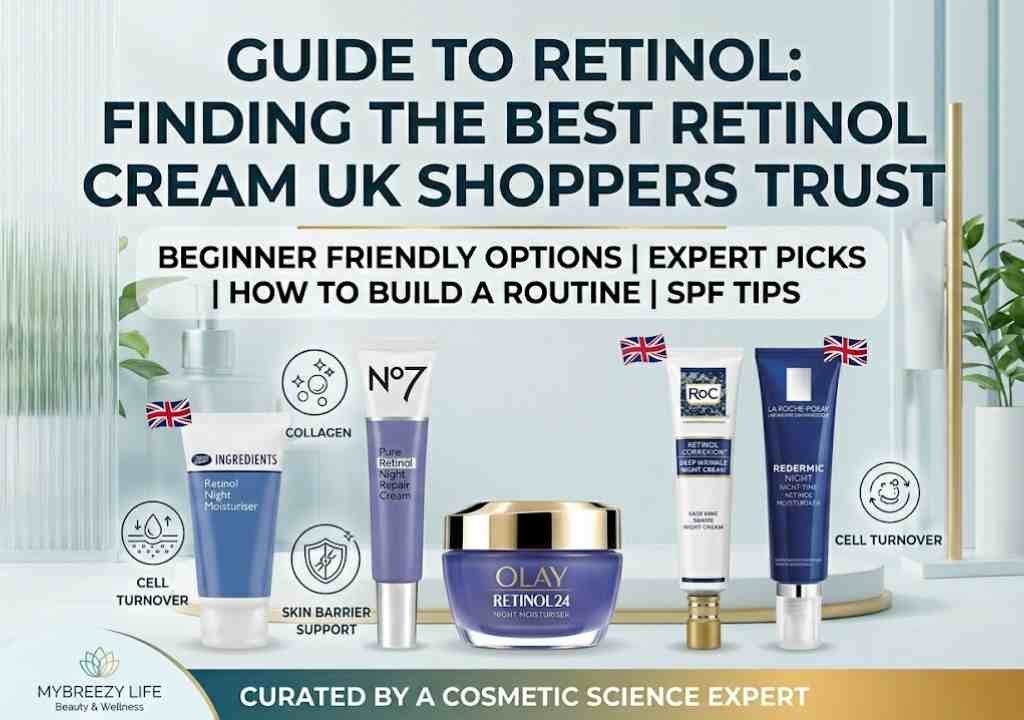
Here are my top retinol creams and night moisturisers, every one a genuine cream format rather than a serum, spanning budget to premium. All are available from UK retailers, and I have either tested them on my own combination skin or recommended them to readers. Prices move around with offers, so treat these as a guide and check the live listing before you buy.
1- Boots Ingredients Retinol Night Moisturiser
If you want to try retinol without spending much, this is where I send people first. The Ingredients range is Boots’ own no-frills line, and this night moisturiser pairs a low dose of retinol with glycerin in a simple, lightweight cream. It is not the most sophisticated formula here, but at under £8 it is a sensible, low-risk way to see how your skin reacts before committing to anything pricier.
Boots Ingredients Retinol Night Moisturiser | Buy on Boots | £7.70
Halal and cruelty-free status: Boots Ingredients is not halal certified. Cruelty-free status can change, so always verify both directly with the brand.
2- Olay Retinol24 Night Moisturiser
Olay’s Retinol24 is the cream I spot in the most UK bathroom cabinets, and for good reason. It combines retinol with vitamin B3 (niacinamide), so the niacinamide supports the skin barrier while the retinol works on texture and tone. The fragrance-free formula absorbs quickly and never feels greasy overnight. The RRP sits around £31.99, but Boots and Superdrug discount it so often that I would rarely pay full price for it.
Olay Retinol24 Night Cream | Buy on Amazon | £17.10
Halal and cruelty-free status: Olay is not halal certified. Cruelty-free status can change, so always verify both directly with the brand.
3- No7 Pure Retinol Night Repair Cream
For a richer, properly nourishing cream, this is my pick. No7’s Pure Retinol Night Repair Cream uses the brand’s pure retinol alongside its Matrixyl 3000 collagen-peptide technology, plus shea butter and bisabolol, so it treats and comforts the skin at the same time. It is fragrance-free and suitable for all skin types. The RRP is £39.95, though it is frequently reduced to nearer £32, particularly during No7’s three-for-two events.
No7 Pure Retinol Night Repair Cream | Buy on Amazon | £39.95
Halal and cruelty-free status: No7 is not halal certified. Cruelty-free status can change, so always verify both directly with the brand.
4- RoC Retinol Correxion Deep Wrinkle Night Cream
RoC was formulating with retinol long before it became a skincare buzzword, and this night cream is a no-nonsense option focused squarely on fine lines and wrinkles. The texture is a true night cream, rich enough to double as your moisturiser, which makes it a tidy one-step choice if you like to keep your routine short. Expect to pay somewhere around £25 to £29 depending on the retailer.
RoC Retinol Correxion Deep Wrinkle Night Cream | Buy on Amazon | £23.00
Halal and cruelty-free status: RoC is not halal certified. Cruelty-free status can change, so always verify both directly with the brand.
5- La Roche-Posay Redermic Night-time Retinol Moisturiser
This is the one I recommend most often for sensitive and reactive skin. It is the moisturiser-format version of La Roche-Posay’s award-winning Redermic R, with 0.3% pure retinol plus a retinol booster complex, and it is fragrance-free, hypoallergenic and non-comedogenic. I have been pointing readers towards it for years when they tell me retinol has stung or flaked their skin in the past, because it tends to deliver results without the reaction. It usually costs around £33, dropping to nearer £25 on offer.
La Roche-Posay Redermic Night-time Retinol Moisturiser | Buy on Amazon | £38.49
Halal and cruelty-free status: La Roche-Posay is not halal certified. Cruelty-free status can change, so always verify both directly with the brand.
How to Build a Retinol Routine That Works
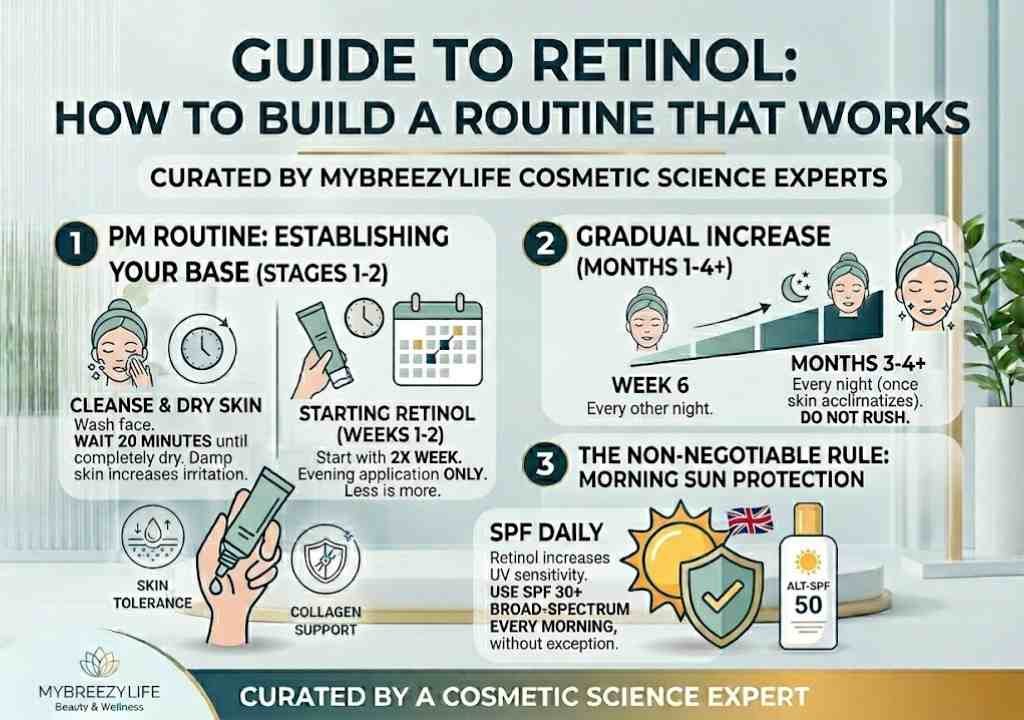
Start with twice a week application, always in the evening. Apply to clean, dry skin. Wait at least 20 minutes after washing your face before applying retinol, because damp skin increases absorption and can amplify irritation. If you are completely new to the ingredient, our guide on how to start using retinol walks through those first few weeks step by step.
The most important rule is SPF the following morning. Retinol increases your skin’s sensitivity to UV light, so using it without daily sun protection actively undoes some of the benefits. Reach for a broad-spectrum SPF 30 or above every morning, no exceptions. If you want help choosing one, our Altruist SPF 50 sunscreen review covers a lightweight UK option for under £8.
You can increase frequency gradually over several months. Most people find they are able to use retinol every other night after six weeks, and every night after three to four months of consistent use. Do not rush this. Skin needs time to acclimatise.
A Note for Hijab-Wearing Readers
One question I get asked regularly on MyBreezyLife is whether retinol is relevant if you cover your face. The answer is absolutely yes. Hyperpigmentation, uneven tone, congested pores, and the early signs of ageing can affect skin regardless of whether it is exposed to the sun. Retinol works on cell turnover independently of UV damage, so it is a valid and effective step for everyone.
That said, SPF is still non-negotiable for any areas of skin that are exposed, including the face if you remove your hijab at home or in non-mixed settings. The NHS advises daily sunscreen use of at least SPF 30 (NHS: Sunscreen and sun safety). As someone with a BSc in Cosmetic Science from UAL, I would add that this matters year-round in the UK, not just in summer. For a routine built specifically around covered skin, see our skincare routine for hijabi women.
Frequently Asked Questions About Retinol Cream
Which retinol percentage should a beginner start with in the UK?
Start at 0.1% to 0.3%. The goal in the first few months is to let your skin acclimatise without causing significant irritation. You can move up to 0.5% or 1% once your skin has adjusted, typically after three to six months of consistent use.
Can I use retinol cream every night?
Not at first. Most dermatologists recommend starting with two to three nights a week and building up gradually. Using retinol every night too soon is the most common cause of the redness and flaking that puts people off.
Can I use retinol if I have dark skin or a deeper skin tone?
Yes. Retinol is effective and safe across all skin tones. For deeper skin tones, it can be particularly useful for hyperpigmentation and post-inflammatory marks. Start low to avoid any initial irritation that could temporarily worsen pigmentation concerns.
Is retinol safe during pregnancy?
No. All forms of vitamin A, including topical retinol, are not recommended during pregnancy. Consult your GP or midwife for alternatives such as azelaic acid, which is considered safe in pregnancy.
What is the difference between retinol and retinoid?
Retinoid is the umbrella term for all vitamin A derivatives. Retinol is one type of retinoid available over the counter. Tretinoin and adapalene are stronger prescription retinoids that do not require the same conversion process and deliver faster, more potent results, but they also carry a higher risk of irritation.
Start with the right strength, build up slowly, and remember that SPF the morning after is not optional. Done consistently, retinol really is the anti-ageing step that earns its reputation. For more on targeting lines specifically, see our guide to using retinol for face wrinkles.
Beauty & Wellness content at MyBreezyLife is created by our editorial team and reviewed by founder Noreen Fahad. Clinical claims are referenced. This article may contain affiliate links. We only recommend products we genuinely rate. This is general guidance only. Always consult your GP or a qualified dermatologist for personal advice.