Healthy meal prep for beginners is one of the most practical nutrition habits you can build, and it is considerably simpler than most guides make it look. I cook in batches for my own family every Sunday. Two children, a busy week ahead, and roughly 90 minutes of kitchen time. What comes out of that 90 minutes feeds us well for the majority of the week without the daily scramble of deciding what to eat and whether it is ready in time.
As James Okafor ANutr, a Registered Associate Nutritionist with a background working alongside NHS dietitians in Birmingham, I have seen firsthand how much of a difference structured meal preparation makes, not just for health outcomes, but for reducing the daily decision fatigue around food. When the answer to “what’s for dinner?” is already sitting in a container in the fridge, eating well becomes the easy option rather than the effortful one.
This guide is for beginners. No elaborate recipes, no special appliances, and no spending Sunday in the kitchen from dawn until dark.
Why Meal Prep Actually Works
The science behind meal prep is less about nutrition chemistry and more about behavioural economics. When healthy food is convenient and unhealthy food is less immediately available, people consistently choose the healthy option. According to the NHS Eatwell Guide, one of the most effective strategies for maintaining a balanced diet is planning meals in advance and keeping portion-appropriate food readily available at home.
A 2018 study published in the International Journal of Behavioral Nutrition and Physical Activity found that people who engaged in regular meal planning were more likely to have higher diet quality scores and lower rates of obesity than those who did not plan. The mechanism is straightforward: removing the decision from the moment of hunger removes the moment of vulnerability where convenience food wins.
The counterintuitive insight from my years of nutrition work is this: you do not need to prep everything. People who try to prep every single meal for the whole week burn out quickly and abandon the habit entirely. The sweet spot for beginners is prepping your key building blocks: a protein, a grain, and some prepared vegetables. With those three things ready in your fridge, you can assemble a different combination every day without eating the same meal twice.
What You Actually Need to Get Started
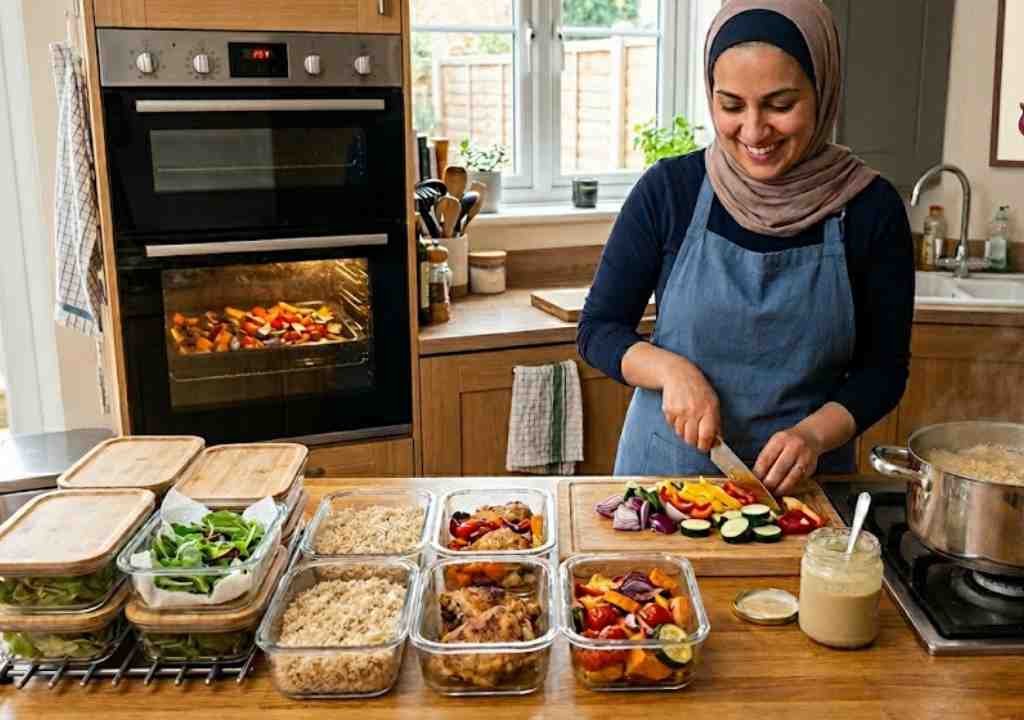
Equipment: A large baking tray, a large saucepan, 4 to 6 meal prep containers (glass or BPA-free plastic, around 1-litre capacity), and a sharp knife and chopping board. That is it.

- 【Multifunctional Glass Containers】Our glass containers with lids comes with 8 containers, 4 large 35.1oz lunch boxes and…
- 【Premium Material】The container is made of borosilicate clear glass and can withstand temperatures from -20ºC to 400°C. …
- 【Stackable & Transparent Design】Food storage containers can be stacked in the refrigerator or cabinet to save space, whi…
Time investment: For a beginner prep session, allow 90 minutes on a Sunday afternoon. As you become more efficient, this often drops to 60 minutes.
My 90-Minute Sunday Routine for Healthy Meal Prep for Beginners
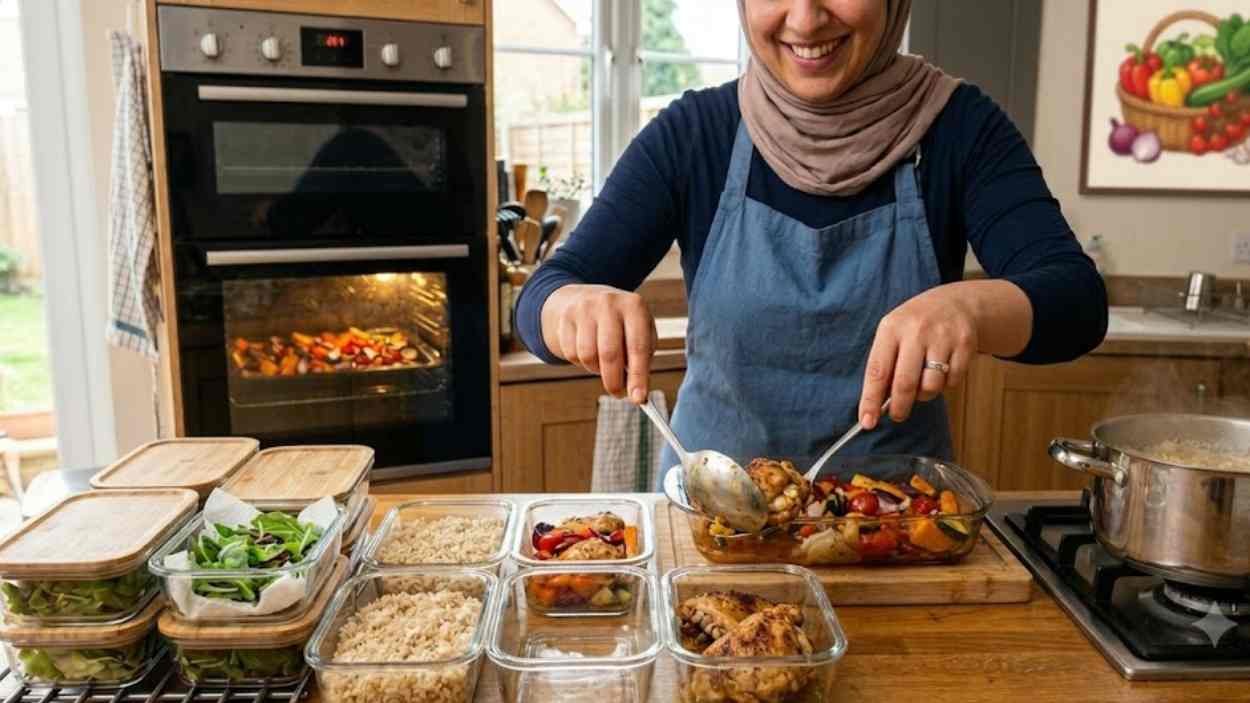
Everything runs simultaneously, which is the key to keeping the time under 90 minutes.
When you arrive in the kitchen: Preheat the oven to 200°C / 180°C fan. Put a large pot of water on to boil for your grains. Start chopping vegetables for roasting.
Running simultaneously: Tray of roasted vegetables in the oven (30-35 minutes, no attention needed once in). Grain cooking on the hob (20-25 minutes, occasional stir). Protein cooking runs last and takes 15-20 minutes.
While the vegetables and grains are going, you can prepare sauces, wash salad leaves, and portion out snacks. By the time the oven is done, everything else is ready too.
The Five Building Blocks to Prep This Week
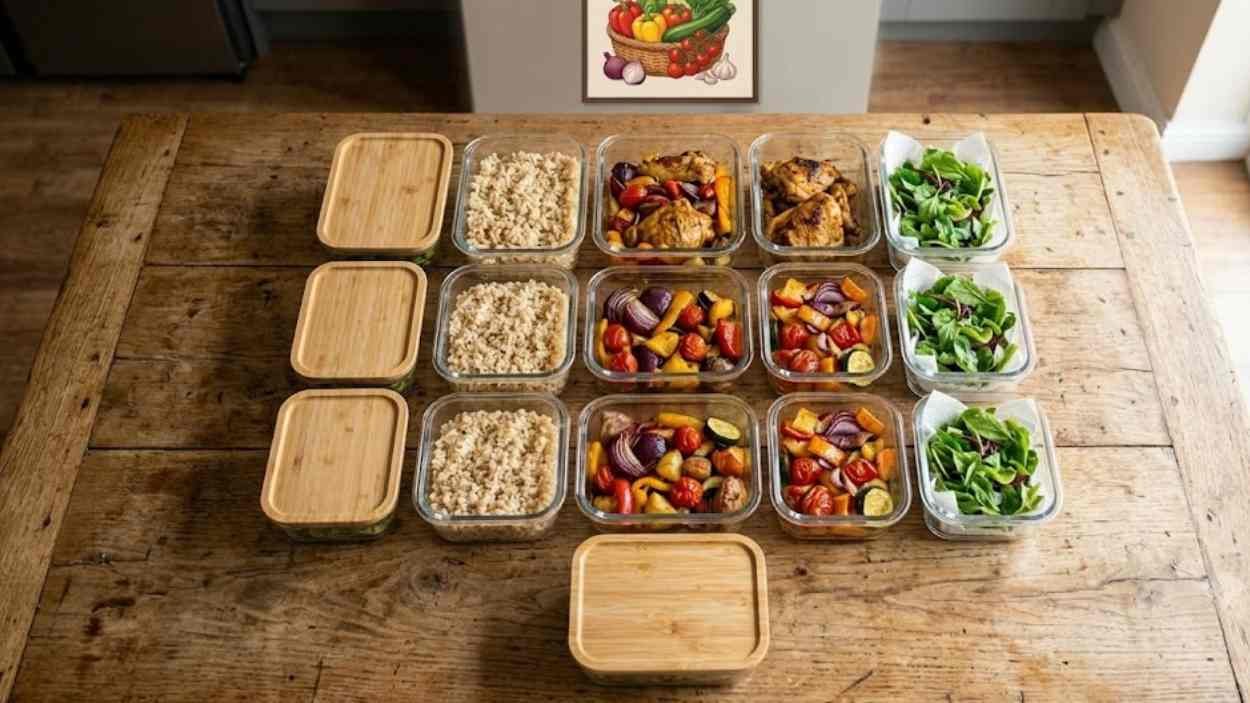
1. A Grain Base
Brown rice or wholewheat couscous. Both cook in under 25 minutes, store well for up to 4 days in the fridge, and work as a base for almost any meal. 400g dry weight serves a family of 4 for multiple meals.
Tesco own-brand brown rice (£1.65 for 1kg) or Sainsbury’s wholewheat couscous (£1.20 for 500g) are both excellent value. Brown rice is a particularly good choice for sustained energy. The fibre content slows glucose absorption, which means you stay fuller for longer than white rice would allow.
2. Roasted Vegetables
A large tray of seasonal vegetables cut to roughly equal sizes. In June, try: courgette, red pepper, red onion, cherry tomatoes, and sweet potato. Season with olive oil, cumin, and a pinch of smoked paprika. Cook for 30-35 minutes at 200°C.
A tray of mixed vegetables for a family of 4 costs around £4-5 at Tesco or ASDA. Sweet potatoes are particularly good value at Aldi (around 65p each) and their fibre and vitamin A content is excellent. Roasted vegetables keep for 4 days in the fridge.
3. A Cooked Protein
Baked halal chicken thighs or a tin of chickpeas for a plant-based option. Season 8 bone-in halal chicken thighs with garlic powder, paprika, cumin, salt, and a drizzle of olive oil. Bake at 200°C for 35-40 minutes until cooked through. These store for 3 days in the fridge.
For chickpeas: one 400g tin drained, tossed in cumin and olive oil, roasted for 20 minutes until slightly crisp. High in plant protein (around 8g per 100g) and fibre.
Halal chicken thighs from your local halal butcher will generally be the best quality. For convenience, Tesco, Sainsbury’s and ASDA all carry halal-certified chicken (look for the halal label on the packaging). A pack of 8 thighs typically costs £4-6.
4. A Sauce or Dressing
One versatile sauce lifts everything. My go-to for beginners is a simple tahini dressing: 3 tablespoons of tahini, juice of one lemon, one minced garlic clove, and 3-4 tablespoons of water to loosen. Season with salt. This keeps for a week in the fridge and makes any grain bowl instantly satisfying.

- An ideal dipping snack or spread
- Creamed sesame seeds
- Wheat free, gluten free, GMO free, yeast free and dairy free
5. Pre-Washed Salad Leaves
The most overlooked prep step. Wash a full bag of mixed leaves or spinach on Sunday, dry them thoroughly, and store in a container lined with kitchen roll. They last 3-4 days in good condition. Having fresh salad leaves ready means every meal can have a vegetable component without any extra effort during the week.
Assembling the Meals: No Recipe Required
With your five building blocks ready, here is what a week of easy eating looks like:
Monday lunch: Brown rice, roasted vegetables, tahini dressing.
Monday dinner: Halal chicken thighs, roasted vegetables, side salad.
Tuesday lunch: Wholewheat wrap, roasted vegetables, chickpeas, tahini drizzle.
Tuesday dinner: Chicken, brown rice, fresh salad leaves.
Wednesday onwards: Any combination of the above. By Wednesday, you are genuinely grateful to past-you for doing the prep.
People often ask how I actually work out the calories in these meal combinations, so it is worth explaining the method, because it is simpler than it looks. I use the McCance and Widdowson’s Composition of Foods tables, which is the reference database most UK nutritionists and dietitians work from, alongside the nutrition information printed on the supermarket packaging itself.
Take Monday lunch as a worked example. A 75g dry portion of brown rice, the standard single serving, comes to roughly 260 kcal once cooked. A 150g portion of roasted vegetables, mostly courgette, pepper and sweet potato, adds around 120 kcal. One tablespoon of the tahini dressing contributes close to 90 kcal. Add those together and Monday lunch comes to approximately 470 kcal, which sits comfortably within the NHS guidance of roughly 400 to 600 kcal for a main meal as part of a balanced 2,000 kcal daily intake for most women.
For a meal built around the halal chicken thighs, swap the tahini dressing for the protein portion. Two chicken thighs at around 120g cooked weight add roughly 250 kcal, so a dinner of chicken, rice and roasted vegetables comes to around 630 kcal, which sits at the higher end and works well after a more active day.
I am not asking anyone to weigh and calculate every single meal forever. Once you know roughly what each building block contributes, you can mix and match with a reasonable sense of the total without reaching for a calculator every evening. After a few weeks of doing this, it genuinely becomes second nature, and that rough mental tally is often more useful day to day than an exact figure.
Halal and Budget-Friendly Meal Prep
All five building blocks above are halal by default. There are no substitutions needed.
For a budget-focused prep session, the full five components (enough for 8 to 10 meals for two people) costs approximately: brown rice £0.70, mixed vegetables £4.50, halal chicken thighs £5.00, tahini and lemon £3.00, salad leaves £1.50. Total: approximately £14.70. That works out at roughly £1.50 per meal.
Summer Meal Prep: Keeping Things Light and Fresh
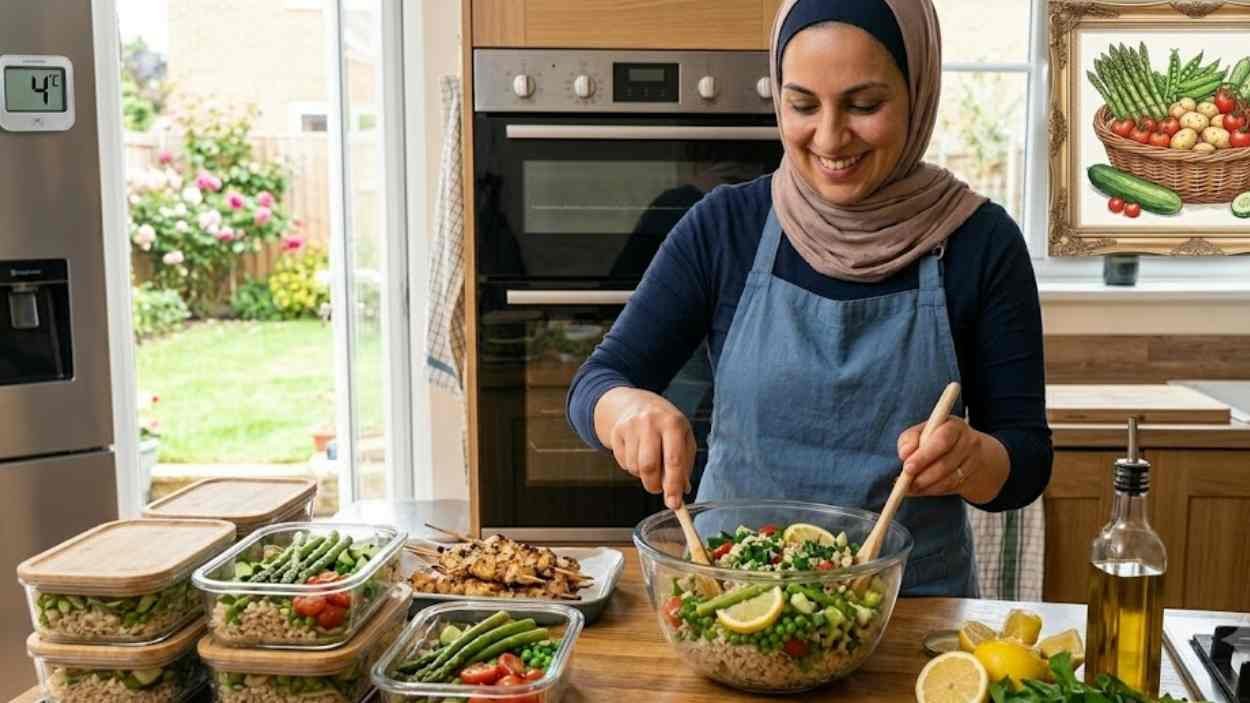
Healthy meal prep for beginners looks a little different in June than it does in January, and it is worth adjusting the approach rather than forcing the same routine through warmer weather. Last Sunday I tried serving the usual warm roasted chicken and rice combination on a 24°C afternoon in my kitchen in Birmingham, and barely touched it. By Wednesday I had switched the whole batch to a cold grain salad instead, and ate every bit of it.
The simplest change is to swap warm for cold using the same building blocks. Cook the grains exactly as before, then rinse them briefly under cold water to stop the cooking process and cool them quickly. Toss with olive oil, lemon juice and a handful of chopped mint or parsley, and the result is a grain salad that tastes considerably better cold than reheated rice ever does.
This is also the moment to lean into seasonal UK produce, which is both cheaper and at its best right now. British asparagus is in its final weeks, new potatoes are excellent value, and salad staples like cucumber, peas and cherry tomatoes are widely available at low prices in Tesco, ASDA and Aldi throughout June and July. A quick blanch and cool of asparagus or peas works far better in summer than a long roast.
Food safety becomes more important in warm weather, and this is the part beginners tend to overlook. The NHS guidance that cooked food should be cooled within two hours and kept at 5°C or below in the fridge applies all year, but warmer kitchens in summer make fridges work harder, so it is worth checking a fridge thermometer if you have one. Do not leave prepped containers out on the counter while finishing cooking. Get them into the fridge as each component cools.
If prepping for a summer family gathering or an Eid celebration, the same building blocks work brilliantly as a halal cold buffet: grain salad, a tray of marinated halal chicken skewers cooked ahead and served at room temperature, and plenty of fresh salad leaves and cucumber to keep things light. Bear with me on this one if it sounds too simple, but a big bowl of cold grain salad has saved more than one of my family’s warm-weather get-togethers.
Storage Guide
Cooked grains, roasted vegetables, and cooked chicken all keep safely for up to 3 to 4 days at 4°C or below in sealed containers. Cooked grains and chicken freeze excellently for up to 3 months. The NHS advises that cooked food should be cooled to room temperature within 2 hours before refrigerating, and should not be reheated more than once.
Frequently Asked Questions About Healthy Meal Prep for Beginners
How long does meal prep take for a beginner?
Allow 90 minutes for your first few sessions. Once you have the routine established, most beginner meal preps come down to 60 to 75 minutes.
What containers are best for meal prep in the UK?
Glass containers are the most durable and do not retain smells or stains. A 6-piece glass set from Amazon UK costs around £25 and will last for years. BPA-free plastic containers are a lighter, more affordable alternative at around £10 to £15 for a set.
Is meal prep suitable for a halal diet?
Completely. All the building blocks in this guide are halal by default. Use halal-certified chicken from a halal butcher or labelled supermarket packaging, and every component is suitable.
Can I meal prep if I am cooking for one?
Yes. Simply halve all quantities. Cooking for one via meal prep is actually even more efficient because a small prep session can cover your entire week with very little waste.
What is the best day of the week to meal prep?
Most people find Sunday afternoon works best. The same day each week means it becomes a habit rather than a decision.
For more practical nutrition guidance, read our articles on high protein breakfast ideas UK, easy halal dinner recipes, and anti-inflammatory foods and how to eat more of them.
The goal of meal prep is not perfection. It is giving your future self a better chance at eating well on the evenings when everything else is demanding your attention. Start this Sunday with just two or three of the building blocks above, and add from there.
Nutrition content at MyBreezyLife is reviewed by James Okafor ANutr, Registered Associate Nutritionist. This is general guidance only. Always consult your GP or a registered dietitian for personal dietary advice.