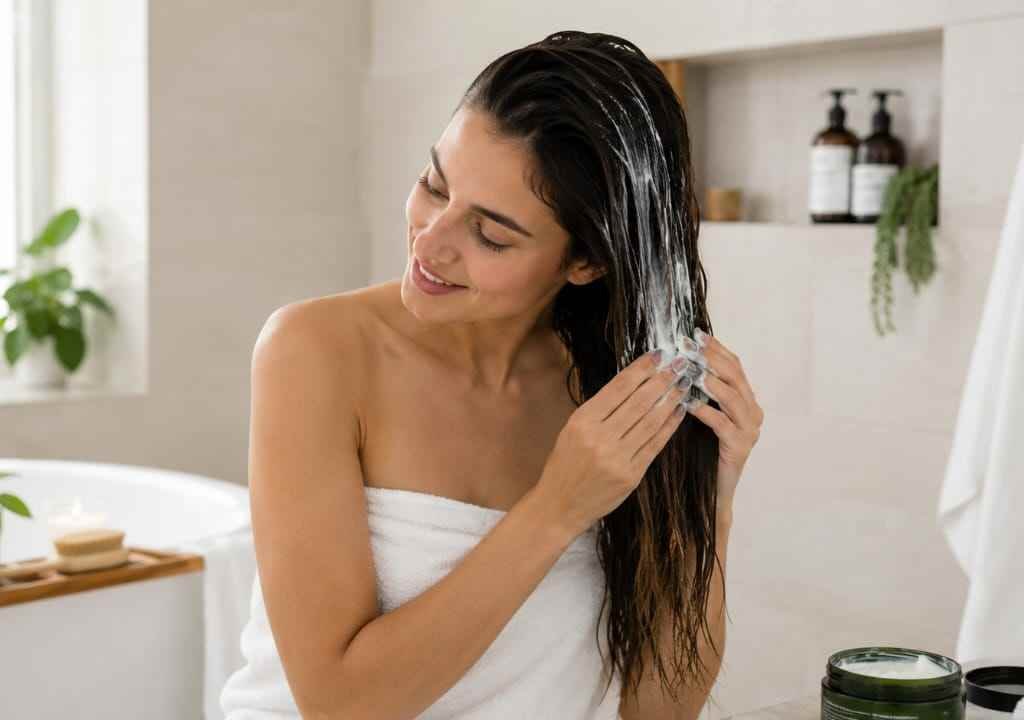
Let me be honest with you. For years I thought a hair mask was just a fancier, thicker conditioner you used when your hair was feeling a bit sad. I would slap it on, leave it for two minutes while I washed my face, rinse it off, and wonder why my hair still felt like straw.
It took me an embarrassingly long time to realise I was doing it completely wrong. The timing was off. The application was wrong. I was using the wrong type for my hair. And I was definitely not doing it consistently enough to see any real results.
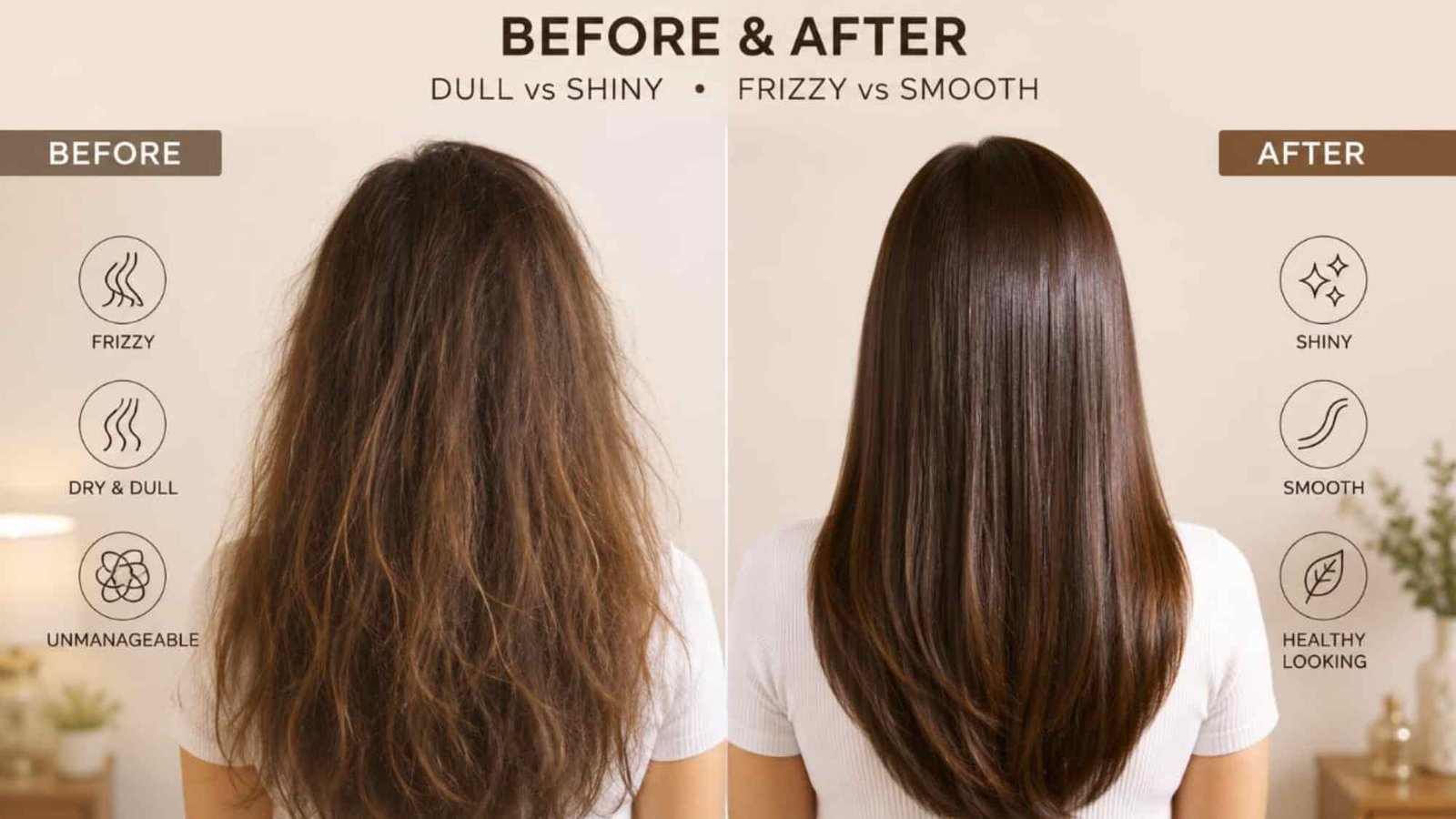
If any of that sounds familiar, you’re in the right place. This guide covers everything: how to choose the right mask for your specific hair type, the correct application method step by step, how long to leave it on, and how to build a weekly hair mask routine that actually delivers results; softer, stronger, shinier hair that you can see the difference in within two to three weeks.
I’ve also included honest product recommendations across every budget, because great hair shouldn’t require a luxury price tag.
| What you’ll learn in this guide: |
|---|
| What a hair mask actually does vs regular conditioner · How to choose the right mask for your hair type · The full step-by-step application process · How long to leave it on (it depends on the mask) · The weekly routine schedule that works · Mistakes that cancel out your results · Product recommendations from budget to premium · FAQ section answering the most searched questions |
What Actually Is a Hair Mask | And Why Is It Different From Conditioner?
Before we get into routine, it’s worth understanding what you’re actually using. A lot of people use hair masks and conditioners interchangeably and then wonder why neither seems to be working that well.
Here’s the key difference: regular conditioner works on the surface of your hair shaft; it smooths the cuticle, adds slip for detangling, and provides a light layer of moisture. It’s quick-acting and designed for every wash. A hair mask, on the other hand, is a concentrated deep conditioning treatment designed to penetrate the hair shaft itself, delivering more intensive moisture, protein, or repair where your hair actually needs it most.
According to the American Academy of Dermatology, regular deep conditioning treatments can help improve hair manageability and reduce visible dryness and breakage.
Think of it this way: conditioner is your daily moisturiser. A hair mask is your weekly intensive serum treatment. In fact, building the right deep conditioning routine for dry hair can completely change how your hair feels over time.. Both serve a purpose, but they are not the same thing, and using them correctly in the right order and at the right frequency makes a noticeable difference.
| Regular Conditioner | Hair Mask | |
| Purpose | Surface smoothing + detangling | Deep repair + intensive hydration |
| Formula | Lighter, rinse-out | Thicker, concentrated |
| How often | Every wash | 1–3 times per week |
| Leave on time | 1–3 minutes | 5–30 minutes |
| Results | Immediate softness | Cumulative, long-term improvement |
| Best for | Daily maintenance | Damage, dryness, frizz, breakage |
Choosing the Right Hair Mask for Your Hair Type
This is where most people go wrong first. Not every hair mask works for every hair type. Using a heavy, oil-rich mask on fine hair will leave it limp and greasy within hours. Using a lightweight mask on thick, coarse, or colour-treated hair will barely touch it. Here’s exactly what to look for:
| Dry or Damaged Hair |
| How often: 2–3 times per week, or every wash day Best mask type: Moisturising masks with hyaluronic acid, shea butter, glycerin, or argan oil Tip: Leave on for at least 20 minutes. Apply heat with a shower cap for deeper penetration. |
| Fine or Limp Hair |
| How often: Once a week maximum Best mask type: Lightweight protein masks. Look for collagen, silk protein, or keratin. Avoid heavy butters. Tip: Apply to mid-lengths and ends only, never the roots. Rinse thoroughly to avoid flatness. |
| Curly or Coily Hair (Type 3–4) |
| How often: Every wash day, or 2–3 times per week Best mask type: Deep moisture masks with shea butter, mango butter, or coconut oil. Look for ‘curl-defining’ or ‘moisture-rich’. Tip: Detangle while the mask is in using a wide-tooth comb. It makes a dramatic difference to curl definition. |
| Colour-Treated or Bleached Hair |
| How often: 1–2 times per week Best mask type: Bond-repair masks (Olaplex, K18) or colour-protecting formulas. Avoid anything with sulfates. Tip: Bleached hair is porous and absorbs product fast. A 10-minute mask is plenty, you can overload it. |
| Oily Scalp with Dry Ends |
| How often: Once a week on lengths and ends only Best mask type: Balancing masks applied from mid-shaft to ends. Avoid the scalp entirely. Tip: Focus all product on the bottom half of your hair. If your roots feel heavy after, you’ve gone too far up. |
| Hijab Hair Tip from Noreen: |
|---|
| If you wear hijab, your hair experiences less environmental damage from sun and wind — but it does experience more friction, heat build-up, and reduced airflow at the scalp. Over time, repeated tension and friction can also contribute to issues like traction alopecia, especially when hair is tied too tightly underneath the hijab.. A weekly deep moisture mask focused on the scalp and lengths, combined with a breathable hair liner underneath, makes a significant difference in how healthy your hair feels day to day. |
The 7-Step Weekly Hair Mask Routine — Done Properly
Here is the correct process from start to finish. Work through these steps in order — the sequence matters more than most people realise.
| Step 1: Start With a Clarifying or Deep Cleanse Shampoo |
|---|
| Before your mask can work, your hair needs to be genuinely clean. Product build-up, dry shampoo residue, and natural oils sitting on the hair shaft act as a barrier that stops mask ingredients from absorbing properly. |
| On your weekly mask day, use a clarifying shampoo or lather up twice. The first wash removes the surface build-up. The second wash actually cleans the hair. Rinse thoroughly. |
| If you clarify too frequently (more than once a week), switch to a gentle sulphate-free shampoo for your other wash days and save the clarifying wash for mask day only. |
| Products to try: Neutrogena Anti-Residue Clarifying Shampoo · OGX Extra Strength Refreshing Scalp + Teatree Mint Shampoo · L’Oreal Elvive Extraordinary Clay Shampoo |
| Noreen’s Tip: Warm water opens the cuticle and allows the mask to penetrate more effectively. Cold water seals everything in at the end — use it for your final rinse after the mask. |
| Step 2: Squeeze Out Excess Water — But Keep Hair Damp |
|---|
| This step is more important than it sounds. Hair mask should be applied to damp hair — not dripping wet, not dry. |
| If your hair is too wet, the water sitting on the hair shaft dilutes the mask and reduces absorption. If your hair is dry, the cuticle is closed and the mask cannot penetrate properly. |
| After shampooing, squeeze your hair gently from roots to ends with your hands. Then wrap in a microfibre towel or a cotton T-shirt (not a regular towel — the rough texture causes friction and frizz) for 2–3 minutes. Remove and apply your mask immediately. |
| Noreen’s Tip: Never rub your hair with a towel. Always blot or squeeze. Wet hair is at its most fragile and rubbing causes breakage that no mask can fix. |
| Step 3: Apply the Mask — Starting From the Ends |
|---|
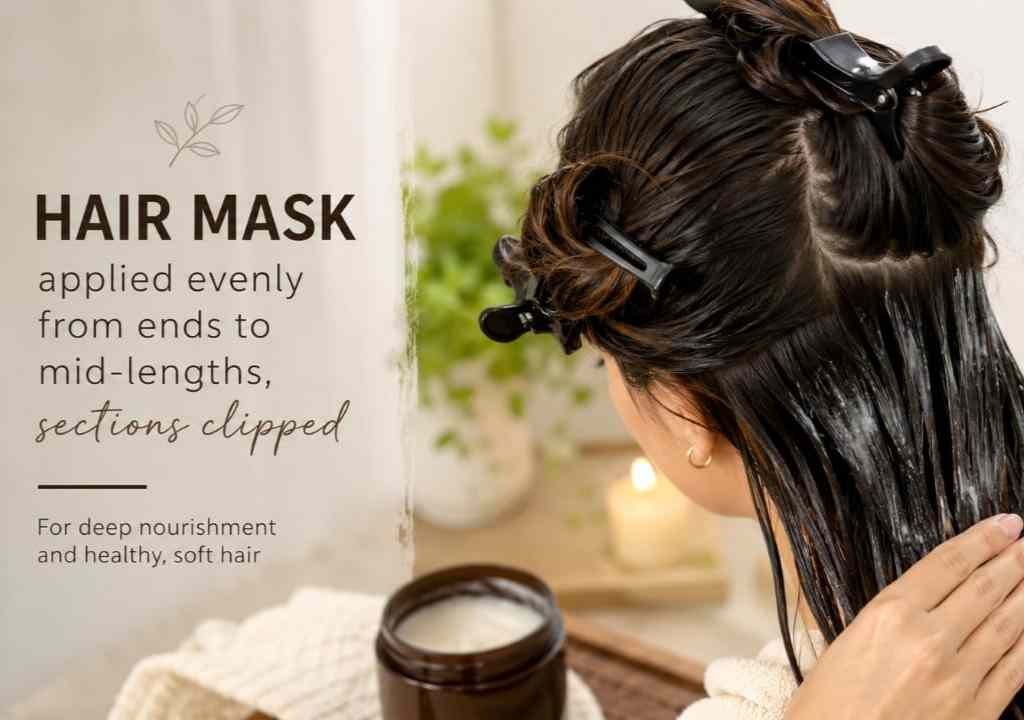
| Section your hair if it’s thick. Use a clip to divide into 2–4 sections so you can apply evenly. |
| Start from your ends — the oldest, most damaged part of your hair — and work your way up to the mid-lengths. End-focused application ensures your driest hair gets the most product. |
| For most hair types, stop 2–3 inches from the roots. The roots are the newest hair growth and usually the most moisturised naturally from your scalp’s oils. Applying mask to your roots can cause greasiness and weigh the hair down. |
| Exception: if you have a dry scalp or your hair is very coarse and dry all the way to the root, you can apply all over — but use a lighter amount at the roots. |
| How much to use: a 50p-coin to a golf ball sized amount for shoulder-length hair. More for longer or thicker hair. |
| Noreen’s Tip: Use your fingers to work the mask through each section and then follow with a wide-tooth comb to distribute evenly. This is especially important for curly and coily hair types. |
| Step 4: Add Heat — This Is the Game Changer |
|---|
| Heat opens the hair cuticle and allows the mask ingredients to penetrate more deeply into the hair shaft. Most people skip this step entirely — and it’s why their masks never seem to make a real difference. |
| Option 1 (best): put on a disposable shower cap over the mask, then sit under a hooded hair dryer, use a heat cap, or wrap a warm towel around the shower cap for 15–20 minutes. |
| Option 2 (good): put on a shower cap and do the rest of your shower or bath routine. The ambient heat from the shower steam is enough to help the mask work. |
| Option 3 (fine): no heat at all, but leave the mask on for at least 20–30 minutes to compensate. |
| Protein masks (bond repair, strengthening) work differently — they don’t need heat. 10–15 minutes is usually sufficient and you should never leave a protein mask on for longer than recommended or it can cause protein overload, making hair stiff and brittle. |
| Products to try: Conair Soft Bonnet Hood Hair Dryer · Thermal Hair Cap Microwave Heat Cap · Kitsch Microfibre Hair Towel |
| Noreen’s Tip: If you use a shower cap, secure your hair in a loose bun inside it before putting it on. This stops the mask dripping onto your face and keeps everything in place while you wait. |
| Step 5: The Wait Time — How Long Is Actually Enough? |
|---|
| Timing varies by mask type, and most people either don’t leave it long enough or leave it far too long. |
| Moisturising / hydrating mask: 15–30 minutes minimum. These masks contain heavy emollients that need time to work through the cuticle. |
| Protein or bond-repair mask (Olaplex, K18): follow the label exactly. K18 is 4 minutes. Olaplex No.3 is 10+ minutes. Over-processing protein masks leads to protein overload — hair that feels stiff, snaps easily, and loses its natural movement. |
| Oil-based pre-shampoo mask: 30 minutes to overnight. These are applied before shampooing. |
| The golden rule: if the label says 5 minutes, it means 5 minutes with good application technique — not 30 minutes without heat. Read the label, apply correctly, and add heat if you want to extend results. |
| Noreen’s Tip: Set a timer. It genuinely makes a difference. Most of us underestimate how quickly time passes in the shower and end up rinsing too early. |
| Step 6: Rinse Thoroughly — Then Cold Water |
|---|
| This is the most under-appreciated step. Rinsing too quickly or not thoroughly enough leaves product residue that weighs hair down, makes it look dull, and can clog follicles over time. |
| Rinse with warm water until the water runs completely clear. Part your hair and run your fingers through it while rinsing — you’ll feel when all the product is gone. |
| Once fully rinsed: switch to cold water for 30 seconds. Cold water closes the hair cuticle, sealing in the moisture from the mask, smoothing the outer layer, and giving hair that glassy shine you see in hair care adverts. |
| Do you need conditioner after a hair mask? Generally no — a good hair mask provides more conditioning than a regular conditioner. If your hair is very coarse or long, you can apply a light conditioner to the ends only. |
| Noreen’s Tip: The cold water rinse is non-negotiable if you want shine. It takes 30 seconds and the difference is visible immediately. Do not skip it. |
| Step 7: Post-Mask Care — Lock in the Results |
|---|
| What you do after the mask matters almost as much as the mask itself. |
| Gently blot hair dry with a microfibre towel — no rubbing. |
| Apply a leave-in conditioner or hair serum while hair is still damp. This locks the moisture in before it evaporates as your hair dries. |
| If air drying: scrunch a small amount of hair oil into the ends and let your hair dry naturally. This prevents moisture loss as it dries. |
| If blow drying: apply a heat protectant before any heat tools. You just spent 30 minutes deep conditioning your hair — protect that work. |
| Avoid touching your hair while it dries. Repeated touching disturbs the cuticle and causes frizz. |
| Products to try: OGX Renewing Argan Oil of Morocco Extra Penetrating Oil · Redken All Soft Mega Curls Supercream · Garnier Fructis Sleek & Shine Leave-In Conditioner |
| Noreen’s Tip: On mask day, try to let your hair air dry at least 80% before using any heat. Your hair will feel genuinely different — smoother, softer, and more manageable — and you want to preserve that for as long as possible. |
Your Weekly Hair Mask Schedule — Built Around Real Life
Consistency is what makes the difference between a hair mask that ‘doesn’t work’ and one that transforms your hair. Here’s a simple weekly schedule that works around a normal wash routine:
| Day | Hair Routine |
|---|---|
| Monday (Mask Day) | Clarifying shampoo → Hair mask (20–30 min + heat) → Cold rinse → Leave-in serum → Air dry |
| Wednesday or Thursday | Gentle shampoo → Regular conditioner → Style as normal |
| Saturday (optional) | Co-wash or conditioner-only wash if hair feels dry → No mask needed |
| Every day | Silk/satin pillowcase or sleep with hair in loose braid or bun to reduce friction |
| Once a month | Scalp massage with oil (rosemary, castor, or coconut) night before wash — this is separate from your mask routine |
| For hijabi women specifically: |
|---|
| Wash day is a great opportunity for a deep mask treatment because you’re already taking your hair down. Many hijabi women find that washing twice a week works well — once with a full mask treatment and once with just a gentle shampoo and conditioner. Adjust based on how much sweat and friction your hair experiences under your hijab. |
The Best Hair Masks of 2026 — Recommended by Hair Type & Budget
Here are genuinely good hair masks across every budget. Add your affiliate links to each product name before publishing.
| Product | Why We Love It | Best For | Price Range |
|---|---|---|---|
| Aussie 3 Minute Miracle Moist | Fast-absorbing, smells incredible, affordable — genuinely works in 3 minutes | Dry, normal hair | £3–£5 |
| L’Oreal Elvive Total Repair 5 Balm | Protein + moisture balance, widely available, great for damaged hair | Damaged, colour-treated hair | £6–£9 |
| Garnier Honey Treasures Repairing Mask | Honey + propolis — seals split ends, boosts shine noticeably after 1 use | Dry, frizzy, dull hair | £5–£8 |
| Pantene Intense Rescue Shots | Single-use ampoules — perfect for travel or intensive treatments | All hair types | £5–£8 (pack) |
| SheaMoisture Manuka Honey & Yogurt | Rich moisture without heaviness — brilliant for curly and coily types | Curly, coily (Type 3–4) | £12–£15 |
| Briogeo Don’t Despair Repair Mask | Clean formula, banana + algae — serious repair without heavy feel | All hair types, especially fine | £28–£35 |
| Olaplex No.3 Hair Perfector | Bond-repair technology — rebuilds disulfide bonds from inside | Bleached, heat-damaged hair | £28–£30 |
| K18 Leave-In Molecular Repair Mask | 4 minutes, no rinse needed — restores up to 91% hair strength clinically | Severely damaged hair | £65–£75 |
| Moroccanoil Intense Hydrating Mask | Argan oil base — rich, luxurious, leaves hair silky for days | Coarse, thick, dry hair | £30–£45 |
| Philip Kingsley Elasticizer | Pre-shampoo treatment — original elasticizer that’s been trusted for decades | Fine, limp, or fragile hair | £18–£30 |
7 Common Hair Mask Mistakes (And Exactly How to Fix Them)
1. Applying to dry hair.
Hair mask on dry hair is a common mistake that wastes both time and product. Dry hair fibres are tightly closed, which means the nourishing ingredients in your mask cannot actually penetrate. Always apply to freshly washed, towel-blotted hair that is damp but not dripping — this is when the cuticle is open and receptive. For hijabi women who wash hair less frequently, this is especially important: make the most of every wash day by applying your mask to damp hair immediately after shampooing, before the cuticle has a chance to close back up.
2. Not shampooing first.
Applying a mask to hair that has not been shampooed first means you are layering conditioning ingredients on top of product build-up, scalp oils, and residue from dry shampoo or styling products. The mask cannot bond with the hair properly, and the results are significantly weaker. Always shampoo first, even a quick single wash is enough. The only exception is an oil pre-treatment, which goes on before shampooing, not after. Do not confuse a pre-treatment with a conditioning hair mask: they are different steps with different purposes.
3. Rinsing too quickly.
A hair mask is not a conditioner, it needs time to work. Most masks require a minimum of 10 to 20 minutes to allow the conditioning agents to penetrate the hair shaft properly. Rinsing after two minutes gives you essentially the same result as not using a mask at all. Apply your mask, wrap your hair in a warm towel or a shower cap to retain heat (which helps the ingredients absorb faster), set a timer, and leave it. If your mask says 20 minutes, trust it. For deep conditioning treatments or hair that is severely damaged, 30 minutes is not excessive.
4. Applying from roots to ends.
Your scalp produces its own natural oils and does not need the additional conditioning that a mask provides — in fact, applying a heavy mask directly to the roots will leave your hair looking flat, greasy, and weighed down within hours of washing. The mid-lengths and ends are where hair is oldest, most porous, and most in need of moisture. Always apply your mask from the mid-shaft downwards, squeezing it into the ends where damage is most concentrated. If you have a particularly oily scalp — common for hijabi women whose scalp runs warmer — keep the mask at least three to four centimetres away from the roots entirely.
5. Over-using protein masks.
Protein masks rebuild strength in damaged hair — but too much protein causes the hair to become stiff, brittle, and prone to snapping. This is called protein overload, and it is more common than most people realise. The fix is simple: alternate between a protein mask and a moisture mask rather than reaching for the same protein treatment every week. If your hair feels straw-like, wiry, or snaps easily after masking, protein overload is likely the culprit. Switch to a moisture-rich mask for four to six weeks to rebalance. A good general rule: one protein mask per month is sufficient for most hair types unless your hair is severely chemically processed.
6. Skipping the cold rinse.
This one step makes a visible difference and almost nobody does it. After rinsing out your mask with warm water, finish with a 10-second cold rinse. Cold water closes the hair cuticle — the outer layer of each hair strand — which locks in the moisture your mask just delivered and leaves your hair smoother, shinier, and less frizzy immediately. Warm water leaves the cuticle open, which means moisture escapes quickly and hair looks dull faster. It does not need to be ice cold to be effective — cool is enough. For hijabi women who need their hair to look its best on wash days, this single step will make a noticeably bigger difference than any styling product.
7. Using the wrong mask for your hair type.
A heavy, deeply moisturising mask designed for thick, coarse, or afro-textured hair will leave fine hair flat and greasy for days. A lightweight, protein-focused mask designed for fine hair will do nothing for thick, dry, or chemically treated hair that actually needs intense moisture. Match your mask to your hair type — fine hair needs lightweight hydration (look for hyaluronic acid or aloe vera as primary ingredients), thick or coarse hair needs rich moisture (shea butter, argan oil, coconut oil), and damaged or colour-treated hair benefits from protein rebuilding (keratin, hydrolysed silk protein, rice protein). For hair that lives under a hijab, which tends to lose moisture through friction and heat build-up, a moisture-first mask is almost always the right starting point.
3 Simple DIY Hair Masks That Actually Work
If you’d rather go natural or want to save money between product purchases, these three DIY masks use ingredients you likely already have at home. They’re genuinely effective — not just a nice idea.
1. Banana + Honey Moisture Mask (for dry, frizzy hair)
- 1 ripe banana (the riper the better — mushy is ideal)
- 2 tablespoons honey
- 1 tablespoon coconut oil
Blend until completely smooth (lumps cause it to get stuck in hair). Apply to damp hair from ends to mid-lengths. Leave 20–30 minutes, then rinse with warm water. The banana provides natural fatty acids and potassium that soften and strengthen. Honey is a natural humectant that draws moisture in.
2. Egg + Olive Oil Protein Mask (for damaged, brittle hair)
- 2 eggs (whole, not just whites)
- 2 tablespoons olive oil
- 1 tablespoon honey
Whisk together until combined. Apply to damp hair, cover with a shower cap, leave for 20 minutes. Rinse with cool water — never hot, or you’ll cook the egg. The protein in eggs rebuilds the hair shaft structure from the outside in. Olive oil provides deep moisture. This mask works noticeably well on colour-damaged hair.
The protein in eggs helps temporarily reinforce weakened hair strands and improve the feel of brittle, damaged hair. Olive oil provides deep moisture, making this mask especially helpful for colour-damaged hair. If you want a more intensive DIY protein treatment, try our guide on homemade protein treatment for hair.
3. Avocado + Yoghurt Frizz Control Mask (for thick, coarse, or curly hair)
- Half a ripe avocado
- 3 tablespoons plain Greek yoghurt
- 1 teaspoon argan or jojoba oil
Mash and mix until smooth. Apply generously from roots to ends. Leave for 30 minutes with a shower cap. Rinse thoroughly. Avocado is packed with oleic acid and natural proteins that penetrate the hair shaft. Yoghurt contains lactic acid which gently smooths the cuticle and adds shine. This combination is particularly transformative for coily hair types.
| Important: |
|---|
| DIY masks don’t have preservatives, so use them immediately after making them and discard any leftovers. Don’t store them in the bathroom — the ingredients will spoil quickly. Make fresh each time. |
How Long Before You See Results From a Hair Mask Routine?
This is the question that matters most, and the honest answer is: it depends on how damaged your hair is and how consistently you use the mask.This is the question that matters most, and the honest answer is: it depends on how damaged your hair is and how consistently you use the mask.
After 1 use:
Your hair will feel noticeably softer and smoother — the cuticle is temporarily smoothed and sealed, so shine improves immediately. Frizz is reduced. The ends feel less rough to the touch. This is real improvement, but it is surface-level at this stage. Think of it as a preview of what consistent masking will eventually build into your hair permanently.
After 2–3 weeks:
With weekly use, you will start to notice that the softness is lasting longer between washes rather than disappearing after a day or two. Manageability improves — hair detangles more easily, styling takes less effort, and breakage when brushing reduces. For hijabi women, this is also when you may notice less static and friction damage along the hairline where the scarf sits.
After 6–8 weeks:
This is where the real transformation becomes visible to others, not just you. Hair that was dry and dull looks genuinely healthier. Split ends are less noticeable (masking does not repair a split end, but it seals the cuticle around it so it looks and feels smoother). If you have been dealing with breakage, you will see less hair on your brush. Elasticity improves — hair stretches slightly before snapping rather than breaking immediately when wet.
After 3 months:
Consistent masking over three months creates a cumulative effect that no single treatment can replicate. New growth coming in is healthier because the scalp environment has improved. The condition of existing hair is dramatically better. For hair under hijab specifically — where daily friction, heat, and compression cause ongoing damage — three months of weekly masking is the point at which most women report genuinely noticing the difference in how their hair looks when the scarf comes off.
The key word in all of this is consistent. One incredible mask session followed by three weeks of neglect will not transform your hair. Once a week, done properly, every week — that’s what creates lasting change.
Frequently Asked Questions
Q: How often should I use a hair mask?
For most hair types, once a week is the ideal starting point. If your hair is very dry, damaged, or colour-treated, you can increase to twice a week. Fine or oily hair should stick to once a week or even once every two weeks to avoid product build-up. Start with once weekly and adjust based on how your hair responds.
Q: Can I leave a hair mask on overnight?
Some masks — specifically oil-based pre-shampoo treatments — are designed for overnight use. Regular rinse-out masks are not designed for this and leaving them on too long can cause over-conditioning or protein overload, particularly if the mask contains keratin or protein. Stick to the recommended time on the label and add heat instead of extra time.
Q: Do you use a hair mask before or after conditioner?
Hair masks are used after shampoo but before conditioner — though if your mask is rich enough, you often don’t need conditioner at all afterwards. Think of the mask as the main treatment and conditioner as the finishing step. If your hair is very coarse or long, a light conditioner on the ends after the mask can help with detangling
Q: Can I use a hair mask every day?
No. Daily masking will over-condition your hair, leaving it feeling heavy, greasy, and limp. Your hair needs balance between moisture and protein — daily deep conditioning disrupts that balance. Once or twice a week is sufficient for the vast majority of hair types.
Q: My hair still feels dry after a hair mask — why?
There are three common reasons: (1) You rinsed too quickly — most masks need 15–30 minutes to work. (2) You didn’t use heat — a shower cap and ambient steam make a significant difference. (3) Your hair needs protein, not moisture — if your hair feels stretchy or mushy when wet, you need a protein mask, not a moisturising one. Over-moisturised hair can feel dry despite the moisture.
Q: What is the difference between a deep conditioner and a hair mask?
Deep conditioners are usually lighter and designed for more frequent use — they work on the outer cuticle. Hair masks are more concentrated, thicker, and designed for less frequent use, penetrating more deeply into the hair shaft. Deep conditioners are for maintenance; hair masks are for targeted repair or intensive hydration.
Q: Can I use a hair mask on my scalp?
It depends on the mask. Moisturising masks can be applied to the scalp if it’s dry or flaky — use a light amount and massage gently. However, if your scalp is oily or prone to build-up, applying mask to the scalp will make it greasier and can clog follicles. Most people should apply masks to the lengths and ends only.
Q: Are hair masks safe for colour-treated hair?
Yes — in fact, colour-treated hair needs regular masking more than most hair types because the colouring process opens and partially damages the cuticle. Look for masks labelled ‘colour-safe’ or formulated specifically for chemically treated hair. Avoid masks with sulfates or high alcohol content
The Bottom Line
A weekly hair mask routine is genuinely one of the simplest and most effective things you can do for your hair — and the barrier to entry is low. You don’t need expensive products, a complicated multi-step routine, or a lot of time. You need the right mask for your hair type, the correct application technique, enough time for it to work, and the consistency to do it every week.
Start with once a week. Find a mask that matches your hair’s main concern. Follow the steps above properly — especially the damp hair, the timing, and the cold water rinse at the end. Give it four to six weeks and look at your hair. I promise you’ll notice a difference.
And if you’re a hijabi woman reading this — your hair deserves as much attention as your skincare. Wearing hijab is not a reason to neglect your hair care routine. If anything, it’s a reason to be more consistent with it.
| Bookmark this guide: Save this page, pin it, or share it with someone whose hair could do with some love. And if you try the routine, tell us in the comments what mask you’re using and what your hair type is — we’d love to hear what’s working for you. |