


Crafting an effective Slow-Release Energy Suhoor Meal Plan for 14-Hour Fasts is not merely about consuming food before dawn; it’s a strategic nutritional endeavor designed to optimize physical stamina, mental acuity, and overall well-being throughout an extended period of abstinence. For individuals undertaking fasts of approximately 14 hours, the pre-dawn meal, or Suhoor, becomes the critical metabolic anchor, laying the physiological groundwork for sustained energy and minimizing the challenges of hunger and fatigue.
Neglecting this vital meal or making suboptimal food choices can profoundly impact one’s capacity to maintain focus and productivity, transforming a potentially enriching experience into one marked by significant discomfort and waning vitality. Research consistently underscores the profound impact of a well-orchestrated Suhoor on stabilizing blood glucose levels, preventing dehydration, and bolstering mental clarity during fasting periods.
This comprehensive guide delves into the nutritional science underpinning sustained energy release, highlighting the pivotal roles of complex carbohydrates and high-quality proteins in preventing the dreaded mid-day energy crash. We will meticulously deconstruct the benefits of incorporating nutritional powerhouses such as oats, eggs, and Greek yogurt into your Suhoor, offering research-backed insights and practical meal strategies to empower you through your 14-hour fast.
Suhoor Strategy: Quick Reference Guide
| Component | Strategic Example Foods | Primary Benefit | 14-Hour Fasting Impact |
| Complex Carbs | Steel-cut oats, Quinoa, Barley | Steady glucose supply | Prevents the “Sugar Crash” and mid-day slump. |
| High Protein | Eggs, Greek Yogurt, Egg whites | Muscle preservation & Satiety | Triggers fullness hormones (like Peptide YY). |
| Healthy Fats | Avocado, Walnuts, Chia seeds | Delayed gastric emptying | Slows digestion to keep you full until the 10th hour+. |
| Hydration | Water, Cucumber, Watermelon | Physical & Mental Stamina | Prevents “Brain Fog” and fasting headaches. |
Understanding the Science of Sustained Energy for Fasting
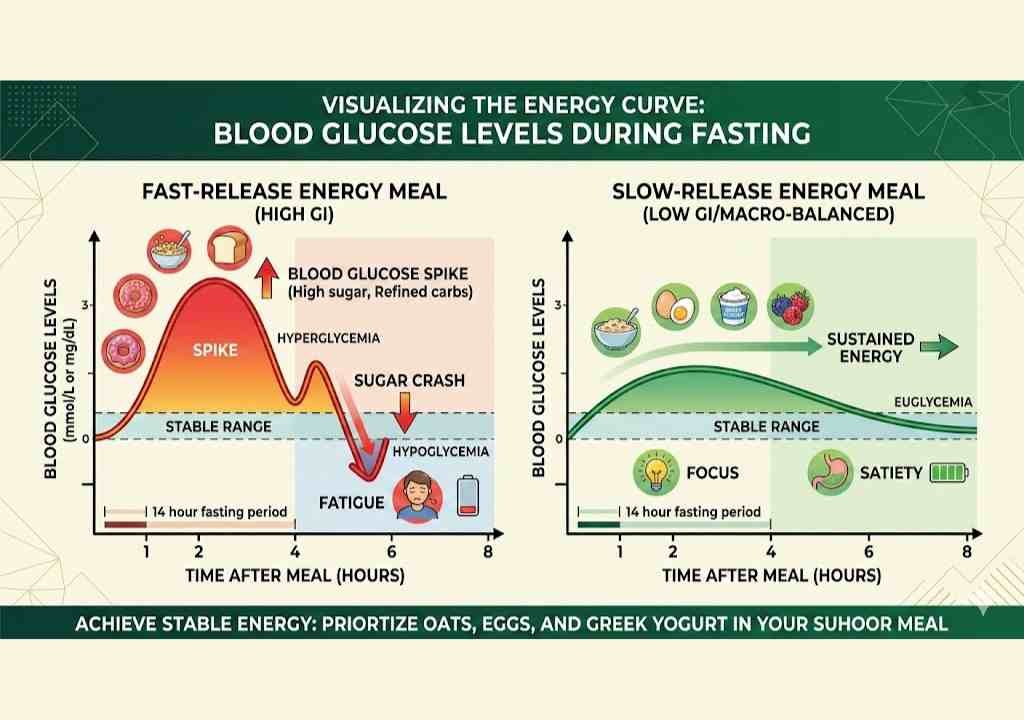
To truly appreciate the efficacy of a slow-release energy Suhoor, it’s imperative to grasp the fundamental physiological mechanisms governing energy production and utilization during fasting. The human body primarily relies on glucose, derived from carbohydrates, as its immediate fuel source. During fasting, when exogenous glucose intake ceases, the body transitions to utilizing stored glycogen (a complex carbohydrate reserved in the liver and muscles) and, subsequently, fat reserves for energy. A primary goal of Suhoor is to replenish these glycogen stores and provide a consistent, gradual influx of glucose to prevent rapid depletion and the ensuing fatigue.
The Glycemic Index and Energy Regulation
A crucial concept in understanding sustained energy is the Glycemic Index (GI). The GI is a numerical scale that ranks carbohydrate-containing foods based on how quickly and significantly they raise blood glucose levels over a two-hour period after consumption. Foods are broadly categorized: high GI (70-100), medium GI (56-69), and low GI (0-55). Consuming high GI foods, such as refined sugars or white bread, leads to a rapid spike in blood glucose, followed by an equally sharp decline, often resulting in an “energy crash” or “sugar slump” characterized by fatigue, irritability, and poor concentration.
Conversely, low GI foods, typically rich in complex carbohydrates and fiber, are digested slowly. This gradual breakdown ensures a steady, sustained release of glucose into the bloodstream, thereby maintaining stable blood sugar levels and providing a consistent energy supply. This stability is paramount for enduring a 14-hour fast, as it prevents the body from experiencing drastic energy fluctuations and helps to prolong satiety.
The Critical Role of Macronutrients
A well-balanced Suhoor meal must incorporate an optimal synergy of macronutrients: carbohydrates, proteins, and healthy fats. Each plays a distinct yet interconnected role in providing sustained energy and supporting overall physiological function during fasting.
- Complex Carbohydrates: These are the bedrock of a slow-release energy meal. Composed of long chains of sugar molecules, complex carbohydrates take longer to digest compared to simple sugars. This slow digestion ensures a gradual release of glucose into the bloodstream, providing a consistent energy supply throughout the fasting period. Moreover, the fiber content in many complex carbohydrates (like oats) contributes significantly to satiety, helping to curb hunger pangs.
- High-Quality Proteins: Protein is essential for satiety, muscle maintenance, and numerous enzymatic processes. During fasting, adequate protein intake helps preserve lean muscle mass, which can be at risk when caloric intake is reduced. Proteins also slow down gastric emptying, further contributing to a prolonged feeling of fullness. Foods considered “complete proteins,” like eggs and Greek yogurt, contain all nine essential amino acids the body cannot produce on its own.
- Healthy Fats: While not a primary energy source in the same immediate way as carbohydrates, healthy fats are crucial for satiety and the absorption of fat-soluble vitamins. They also contribute to the slower digestion of a meal, helping to extend the feeling of fullness and prevent premature hunger. Examples include nuts, seeds, avocado, and olive oil.
Deconstructing the “Slow-Release Energy Suhoor Meal Plan for 14-Hour Fasts” Philosophy
The philosophy behind a Slow-Release Energy Suhoor Meal Plan for 14-Hour Fasts is rooted in maximizing the body’s natural metabolic efficiency and minimizing the physiological stresses associated with prolonged fasting. It’s about consciously selecting foods that work synergistically to provide a steady stream of nutrients, rather than quick bursts followed by crashes. This approach allows the body to maintain stable blood glucose, optimize glycogen stores, and tap into fat reserves more efficiently, ensuring mental clarity and physical endurance.
Why 14 Hours Matters: Physiological Adaptations
A 14-hour fast represents a significant duration during which the body undergoes a series of metabolic shifts. Initially, it utilizes readily available glucose from the most recent meal. As fasting progresses, typically within 8-12 hours, the body depletes its liver glycogen stores and begins to transition towards gluconeogenesis (producing glucose from non-carbohydrate sources like amino acids) and fat oxidation for energy. For a 14-hour fast, a strategic Suhoor helps to:
- Extend Glycogen Stores: By providing complex carbohydrates, the body slowly digests and absorbs glucose, replenishing liver and muscle glycogen without causing rapid insulin spikes. This means glycogen stores are sustained for longer.
- Moderate Insulin Response: Low GI foods prevent sharp rises in blood sugar, which in turn prevents excessive insulin release. Stable insulin levels allow the body to efficiently tap into fat stores for energy, a key benefit for sustained endurance.
- Enhance Satiety Hormones: The combination of fiber, protein, and healthy fats stimulates the release of satiety hormones, helping to suppress appetite and reduce feelings of hunger. Beta-glucan in oats, for instance, can delay stomach emptying and stimulate the release of peptide YY, a hormone that contributes to satiety.
- Maintain Cognitive Function: The brain relies heavily on glucose. A continuous, albeit slow, supply of glucose from complex carbohydrates helps to prevent cognitive fog, maintain concentration, and reduce irritability during the fast.
Core Components of Your Sustained Energy Suhoor
When curating your Slow-Release Energy Suhoor Meal Plan for 14-Hour Fasts, three ingredients stand out for their exceptional nutritional profiles and synergistic benefits: oats, eggs, and Greek yogurt. These foods are not merely nutritious; they are strategically powerful in supporting prolonged fasting.
Oats: The Quintessential Complex Carbohydrate
Oats (Avena sativa L.) are heralded as a cornerstone of sustained energy, and for good reason. They are whole grains, meaning they retain all parts of the kernel: the bran, germ, and endosperm, each contributing to their rich nutrient density.
Nutritional Profile and Benefits:
- Complex Carbohydrates: Oats are predominantly composed of complex carbohydrates, with approximately 66% of their dry weight being carbs. About 85% of these carbs are starch, which provides a steady, slow release of energy. This sustained release prevents the sharp blood sugar spikes and subsequent crashes associated with simple sugars.
- Fiber Powerhouse (Beta-Glucan): Oats are exceptionally rich in dietary fiber, with whole oats packing almost 11% fiber by dry weight. A significant portion of this is soluble fiber, primarily beta-glucan. Beta-glucan is unique in its ability to form a gel-like solution in the digestive tract. This gel slows down digestion and the absorption of glucose into the bloodstream, leading to more stable blood sugar levels and prolonged satiety. The European Food Safety Authority (EFSA) and the US Food and Drug Administration (FDA) have approved health claims related to oat beta-glucan’s ability to lower cholesterol and reduce blood glucose levels.
- Protein Content: While often celebrated for their carbohydrates and fiber, oats also provide a respectable amount of protein, around 10.7 grams per 1 cup (81 grams) of raw oats. The major protein in oats, avenalin, is similar to legume proteins and contributes to feelings of fullness.
- Vitamins and Minerals: Oats are a good source of several vital micronutrients, including manganese, phosphorus, magnesium, iron, and B vitamins (Thiamin, B1, B5, B6). These nutrients are crucial for energy-yielding metabolism and reducing tiredness and fatigue, especially important during a prolonged fast.
Preparation Tips for Maximum Benefit:
To maximize the slow-release properties, opt for steel-cut or rolled oats over instant varieties, as they are less processed and have a lower glycemic impact. Overnight oats, prepared by soaking rolled oats in liquid overnight, can further enhance this effect by allowing the beta-glucan to fully hydrate and increase viscosity, leading to even slower digestion and absorption of glucose. Combining oats with protein, fiber, and healthy fats can help support healthy blood sugar levels.
Eggs: The Protein Powerhouse
Eggs are often referred to as nature’s perfect food due to their exceptional nutritional density and bioavailability. They are an indispensable component of a Suhoor meal focused on sustained energy and satiety.
Nutritional Profile and Benefits:
- Complete Protein: Eggs are one of the few foods considered a complete protein, meaning they contain all nine essential amino acids that the human body cannot synthesize on its own and must obtain from the diet. These include histidine, isoleucine, leucine, lysine, methionine, phenylalanine, threonine, tryptophan, and valine. A large egg typically provides about 6 grams of high-quality protein.
- Sustained Satiety: The high protein content in eggs significantly contributes to satiety, helping to keep hunger at bay for longer periods during fasting. Protein slows down the digestive process, leading to a sustained feeling of fullness and reducing the likelihood of mid-day cravings.
- Versatile Micronutrients: Beyond protein, eggs are a good source of essential vitamins and minerals, including Vitamin D, B12, riboflavin, selenium, and choline. Vitamin B12, for instance, is vital for preventing anemia and maintaining healthy blood cells and nerves, playing a role in overall energy.
Versatile Preparation for Suhoor:
Eggs can be prepared in numerous ways to suit individual preferences and time constraints during Suhoor. Hard-boiled eggs can be prepared in advance, offering a quick, grab-and-go protein source. Scrambled eggs or an omelet with added vegetables provide fiber and additional micronutrients. Combining eggs with whole-grain bread is a recommended pairing for sustained energy.
Greek Yogurt: A Probiotic-Rich Protein Source
Greek yogurt, a strained form of traditional yogurt, is a formidable addition to a slow-release energy Suhoor due to its concentrated protein content and beneficial probiotics.
Nutritional Profile and Benefits:
- High Protein Concentration: The straining process of Greek yogurt removes excess liquid whey, resulting in a thicker, denser product with a significantly higher protein content compared to regular yogurt. A 6-ounce serving can provide approximately 15-20 grams of protein, nearly double that of regular yogurt. This abundant protein aids in muscle maintenance and promotes extended satiety, crucial for a 14-hour fast.
- Probiotic Benefits for Gut Health: Greek yogurt is typically produced with live bacterial cultures, making it a rich source of probiotics. These beneficial microorganisms support a healthy gut microbiome, which is essential for efficient digestion, nutrient absorption, and a robust immune system. A balanced gut can contribute to overall well-being and even influence mood.
- Calcium and Vitamin B12: Greek yogurt is an excellent source of calcium, vital for bone health, and Vitamin B12, which supports energy metabolism and prevents anemia.
- Lower in Sugar and Carbs: Compared to many flavored regular yogurts, plain Greek yogurt is generally lower in sugar and carbohydrates, making it a superior choice for blood sugar management during Suhoor.
Serving Suggestions for Suhoor:
Greek yogurt can be enjoyed plain or enhanced with nutrient-dense toppings. Combining it with oats and chia seeds, for example, creates a meal rich in protein, fiber, and healthy fats, further boosting its slow-release energy properties. Adding berries (low GI fruits) or a handful of nuts and seeds can provide additional vitamins, antioxidants, and healthy fats.
Crafting Your 14-Hour Fast Suhoor Meal Plan: Practical Applications
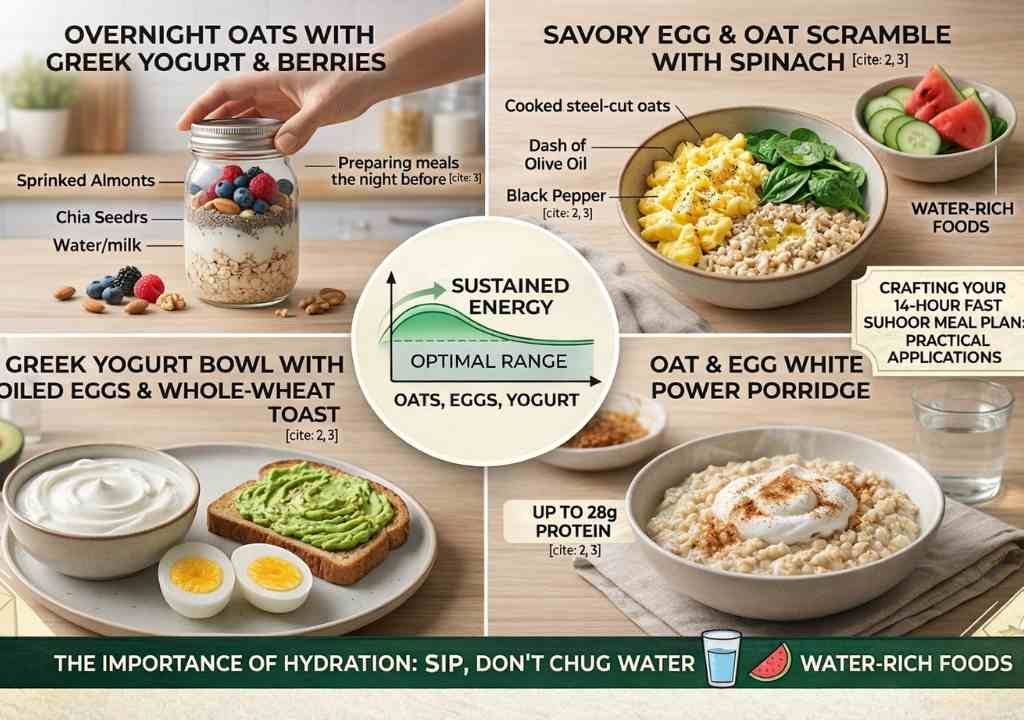
Implementing a Slow-Release Energy Suhoor Meal Plan for 14-Hour Fasts requires thoughtful planning and mindful consumption. The goal is to create balanced meals that are satisfying, nutrient-dense, and designed for prolonged energy. Preparing meals the night before can save precious time in the early morning and ensure healthier choices are made.
Sample Meal Combinations
Here are some examples that synergize oats, eggs, and Greek yogurt with other beneficial ingredients for optimal energy release:
| Meal Option | Key Ingredients | Nutritional Rationale |
|---|---|---|
| Overnight Oats with Greek Yogurt & Berries | ½ cup rolled oats, ¾ cup plain Greek yogurt, ½ cup water/milk, 1 tbsp chia seeds, ½ cup mixed berries, a sprinkle of nuts (almonds or walnuts). | Oats and chia seeds provide complex carbs and soluble fiber (beta-glucan), ensuring slow glucose release and prolonged satiety. Greek yogurt adds high-quality protein and probiotics. Berries offer antioxidants and fiber. Nuts provide healthy fats and micronutrients. This combination can deliver around 13-30+ grams of protein per serving. |
| Savory Egg & Oat Scramble with Spinach | 2-3 scrambled eggs, ½ cup cooked steel-cut oats, a handful of fresh spinach, a dash of olive oil, pinch of black pepper. | Eggs provide complete protein for muscle maintenance and satiety. Steel-cut oats offer sustained energy. Spinach adds essential vitamins (like Vitamin K, Vitamin A) and minerals. Olive oil contributes healthy monounsaturated fats. This meal is hearty and avoids sugary components. |
| Greek Yogurt Bowl with Boiled Eggs & Whole-Wheat Toast | 1 cup plain Greek yogurt, 1-2 hard-boiled eggs, 1 slice of whole-wheat toast, 1 tbsp avocado spread. | Greek yogurt offers a significant protein boost and probiotics. Hard-boiled eggs are a convenient source of high-quality protein. Whole-wheat toast (complex carbohydrate) digests slowly. Avocado provides healthy fats and fiber for added satiety and nutrient absorption. |
| Oat & Egg White Power Porridge | ½ cup rolled oats cooked with water or unsweetened almond milk, mixed with 3 tbsp pasteurized egg whites (stirred in while cooking), topped with a dollop of Greek yogurt and a sprinkle of cinnamon. | This innovative approach boosts the protein content of oatmeal significantly, reaching upwards of 28 grams of protein and 9 grams of fiber in some variations. The egg whites integrate seamlessly, making the oats light and fluffy, while Greek yogurt adds creaminess and further protein. Oats provide prebiotics, and Greek yogurt provides probiotics for gut health. |
The Importance of Hydration
Hydration is as crucial as nutrition for a successful fast. Dehydration can exacerbate feelings of fatigue, headaches, and reduce cognitive function. During Suhoor, it’s vital to consume adequate fluids, primarily water, to pre-hydrate the body for the hours ahead.
- Sip, Don’t Chug: Drink water gradually throughout your Suhoor meal rather than consuming a large quantity all at once. This allows for better absorption and retention by the body.
- Water-Rich Foods: Incorporate fruits and vegetables that have high water content, such as cucumbers, tomatoes, oranges, and watermelon. These contribute to fluid intake and provide essential electrolytes.
- Avoid Diuretics: Steer clear of excessive caffeine (coffee, tea) and sugary drinks, as these can act as diuretics, leading to increased fluid loss and dehydration later in the day.
A successful fast doesn’t start at Iftar, it begins at Suhoor. Choosing slow-release energy foods before dawn can make a dramatic difference in how you feel throughout the day. For science-backed guidance on sustained energy and blood sugar stability, read our detailed guide on Healthy Ramadan Suhoor Recipes.
Micronutrient Considerations
While macronutrients provide the bulk of energy, micronutrients (vitamins and minerals) are the catalysts for countless bodily functions, including energy production. During periods of caloric restriction or fasting, there’s a risk of micronutrient deficiencies if meal planning isn’t astute.
Key micronutrients to focus on for sustained energy include:
- Iron: Essential for oxygen transport in the blood, insufficient iron can lead to anemia and severe fatigue. Oats contain iron.
- B Vitamins (especially B1, B2, B3, B5, B6, B12): These are integral to energy-yielding metabolism and help reduce tiredness and fatigue. Eggs are a good source of B12 and riboflavin (B2), while oats provide B1, B5, and B6.
- Magnesium: Involved in hundreds of biological processes, including energy production and muscle function, magnesium deficiency can contribute to fatigue. Oats are rich in magnesium.
- Potassium: Important for maintaining blood pressure, nerve function, and muscle contraction, often found in fruits and vegetables.
- Zinc: Plays a vital role in immune function and overall cellular health.
Ensure a diverse intake of fruits, vegetables, whole grains, and protein sources to cover these micronutrient needs. If concerns persist, consulting a nutritionist about targeted supplementation might be beneficial.
Preventing Mid-Day Fatigue: The Role of Complex Carbohydrates
The core strategy for averting mid-day fatigue during a 14-hour fast lies in the intelligent selection of carbohydrates for Suhoor. As elucidated, not all carbohydrates are created equal; the distinction between simple and complex carbohydrates is paramount. Simple carbohydrates, found in sugary foods and refined grains, are rapidly digested and absorbed, leading to a quick surge in blood glucose followed by an equally swift decline. This physiological sugar rush is often succeeded by a profound “crash,” leaving one feeling drained, sluggish, and prone to irritability precisely the state a fasting individual wishes to avoid.
Complex carbohydrates, on the other hand, are the veritable workhorses of sustained energy. Their intricate molecular structure—longer chains of sugar molecules demands more time and effort from the digestive system to break down into glucose. This deliberate digestion ensures a slow and steady influx of glucose into the bloodstream. This physiological process provides a continuous, moderate supply of energy, effectively stabilizing blood sugar levels and preventing the precipitous drops that characterize mid-day fatigue.
The fiber content inherent in many complex carbohydrates, particularly soluble fibers like beta-glucan in oats, further enhances this effect. Beta-glucan forms a viscous gel in the digestive tract, physically impeding the rate at which carbohydrates are broken down and absorbed. This increased viscosity not only smooths out glucose absorption but also extends gastric emptying time, contributing significantly to prolonged satiety. The result is a prolonged feeling of fullness and a steady energy curve that can comfortably carry an individual through the majority of a 14-hour fast, mitigating both hunger and the debilitating effects of energy depletion.
Consider the contrast: a Suhoor comprising sugary pastries or refined cereals might offer an initial burst of energy, but the inevitable crash will leave one struggling well before noon. Conversely, a Suhoor rich in complex carbohydrates like oats, complemented by protein and healthy fats, orchestrates a metabolic symphony that promotes stable blood glucose, sustained mental focus, and reduced physical tiredness. This strategic nutritional choice empowers individuals to navigate their fast with greater ease, maintaining productivity and concentration throughout the day.
Beyond the Plate: Lifestyle Factors for a Successful Fast
While the Slow-Release Energy Suhoor Meal Plan for 14-Hour Fasts is foundational, its effectiveness can be significantly enhanced by integrating supportive lifestyle practices. Fasting is a holistic experience, impacting not just metabolism but also mental state and physical resilience.
- Prioritize Quality Sleep: Adequate rest before and during a fasting period is paramount. Sleep deprivation can impair glucose metabolism, increase cortisol levels (stress hormone), and heighten feelings of hunger, making fasting considerably more challenging. Aim for 7-9 hours of quality sleep, adjusting your schedule to accommodate the early Suhoor meal.
- Manage Stress Effectively: Stress can negatively influence appetite hormones and energy levels. Engaging in stress-reducing activities such as meditation, light stretching, or deep breathing exercises can contribute to a more harmonious fasting experience.
- Incorporate Light Activity: While strenuous exercise should generally be avoided during a 14-hour fast, light activities like a gentle walk or mild yoga can improve circulation and mood without depleting energy reserves prematurely. Listen to your body and prioritize rest if needed.
- Mindful Eating at Iftar: The meal that breaks the fast (Iftar) is equally important. Avoid overeating or indulging in excessive sugary, fried, or highly processed foods. Instead, break your fast gently with hydrating fluids and dates, followed by a balanced meal rich in whole foods, similar to the principles applied for Suhoor, to replenish nutrients effectively and prepare for the next day’s fast.
- Listen to Your Body: Every individual’s physiological response to fasting can vary. Pay close attention to your body’s signals. Adjust portion sizes, ingredient combinations, and hydration strategies as needed to optimize your comfort and energy levels.
While Suhoor fuels your body for the day ahead, how you break your fast is equally important. After sustaining energy for 14 hours, your body needs gentle, nourishing foods to restore hydration and stabilize blood sugar levels. If you’re looking for balanced and easy options, explore our complete guide on Ramadan Snack Ideas | 4 Easy Iftar Recipes to break your fast the right way.
Empowering Your Fast with Strategic Nutrition
Embarking on a 14-hour fast, whether for spiritual observance or personal health goals, presents a unique opportunity to attune to your body’s innate wisdom and optimize your nutritional strategy. The meticulously crafted Slow-Release Energy Suhoor Meal Plan for 14-Hour Fasts, grounded in robust nutritional science, empowers you to navigate these extended periods of abstinence with remarkable ease and sustained vitality. By consciously prioritizing complex carbohydrates from oats, high-quality protein from eggs and Greek yogurt, along with essential healthy fats and diligent hydration, you effectively prime your body for a smoother, more energetic, and profoundly focused fasting experience.
The strategic synergy of these core ingredients works to stabilize blood glucose, extend satiety, and prevent the debilitating energy crashes that often plague unprepared fasters. Beyond the plate, integrating mindful lifestyle practices such as adequate sleep, stress management, and light physical activity further amplifies the benefits, creating a holistic framework for enhanced well-being. This isn’t merely a diet plan; it’s a blueprint for physiological resilience, transforming the challenge of a 14-hour fast into an opportunity for sustained spiritual and physical vitality. By embracing this insightful approach to your pre-dawn meal, you are not just fueling your body; you are fortifying your spirit for the journey ahead.
FAQs – Sustained Energy for 14-Hour Fasts
Why is a slow-release energy Suhoor crucial for a 14-hour fast?
A slow-release energy Suhoor is crucial because it provides your body with a steady, gradual supply of glucose, preventing rapid blood sugar spikes and crashes. This sustained energy release, primarily from complex carbohydrates and proteins, helps maintain stable blood glucose levels, prolongs satiety, and minimizes feelings of hunger and fatigue throughout the 14-hour fasting period.
What specific benefits do oats offer in a slow-release energy Suhoor?
Oats are a cornerstone of a slow-release energy Suhoor due to their high content of complex carbohydrates and soluble fiber, especially beta-glucan. Beta-glucan forms a gel in the digestive system, which slows down digestion and the absorption of glucose, leading to sustained energy and prolonged fullness.
How do eggs contribute to sustained energy during fasting?
Eggs are an excellent source of high-quality, complete protein, containing all nine essential amino acids. This protein content significantly contributes to satiety, helping to keep hunger at bay for longer. Protein also slows down gastric emptying, further supporting sustained energy release and muscle maintenance during fasting.
What makes Greek yogurt an ideal component for a Suhoor meal?
Greek yogurt is ideal due to its high concentration of protein (nearly double that of regular yogurt) and its rich probiotic content. The protein boosts satiety and aids muscle preservation, while probiotics support gut health, digestion, and nutrient absorption. It’s also generally lower in sugar and carbs compared to regular yogurt, contributing to stable blood sugar.
Can complex carbohydrates really prevent mid-day fatigue?
Yes, complex carbohydrates are highly effective in preventing mid-day fatigue. Unlike simple sugars that cause a rapid energy spike and subsequent crash, complex carbs are digested slowly, providing a consistent and gradual supply of glucose to the bloodstream. This stable energy supply prevents blood sugar dips, which are a primary cause of fatigue and loss of concentration.
What are some practical tips for preparing a slow-release energy Suhoor?
Practical tips include opting for steel-cut or rolled oats over instant varieties, preparing overnight oats in advance, combining oats with protein sources like Greek yogurt or eggs, and incorporating healthy fats like nuts or chia seeds. Ensuring adequate hydration by sipping water and consuming water-rich fruits and vegetables is also crucial. Avoid sugary drinks and excessive caffeine.
References & Further Reading
- Oat Beta-Glucan and Glycemic Control: Clinical Study on Oat Beta-glucans and Blood Glucose – National Institutes of Health (PMC) This research details how the soluble fiber in oats creates a viscous gel that effectively slows down the absorption of glucose into the bloodstream.
- The Science of Protein and Satiety: Protein-Rich Breakfasts and Appetite Control – National Institutes of Health (PMC) This study demonstrates that high-protein morning meals significantly increase the release of satiety hormones, leading to better appetite control throughout the day.
- Understanding the Glycemic Index: The Glycemic Index: A Practical Guide – University of Sydney As the leading global resource on the Glycemic Index, this site provides comprehensive data on how various carbohydrates impact blood sugar levels and energy stability.
- Hydration and Cognitive Performance: Impact of Hydration on Mental Acuity – European Hydration Institute This resource explains the direct physiological link between adequate fluid intake and the maintenance of concentration, memory, and overall brain function.