
Signs moisturizer is clogging pores can manifest in various ways, from sudden breakouts to persistent skin congestion, and recognizing these warning signals early is crucial for maintaining clear, healthy skin.While moisturizers are essential for proper skin hydration and barrier function, not all moisturizers are created equal. Choosing the right non-comedogenic moisturizer can make a dramatic difference in preventing clogged pores. If you struggle with oily or acne-prone skin, our guide to the best non-comedogenic moisturizers for extremely oily skin explains which formulations hydrate without blocking pores.
Understanding the relationship between your moisturizer and pore health is fundamental to developing an effective skincare routine that nourishes rather than suffocates your complexion.
Clogged pores are a common skin condition caused by a buildup of dead skin cells, oil or dirt , and when your moisturizer contributes to this problem, it can trigger a cascade of skin issues ranging from minor congestion to inflammatory acne. The phenomenon known as acne cosmetica refers to acne breakouts caused by cosmetics , and moisturizers rank among the most common culprits. Recent research has shed significant light on this issue, with moisturizers identified as independent risk factors for acne, with higher usage dose correlating with increased risk .
Understanding How Moisturizers Can Clog Pores
The mechanism by which moisturizers clog pores involves a complex interplay between product formulation, skin type, and environmental factors. Moisturizers can clog pores if they contain comedogenic ingredients, which are substances known to block pores and promote breakouts . These ingredients, when applied to the skin’s surface, can mix with naturally occurring sebum and dead skin cells, creating a plug that obstructs the hair follicle.
Clogged pores occur when ingredients in your skincare products mix with sebum (your skin’s natural oil), dead skin cells, and environmental debris, forming blockages that lead to acne, blackheads, or milia . The comedogenicity of an ingredient—its tendency to cause comedones or blocked pores—has been studied extensively since the 1970s, though the science behind these ratings continues to evolve.
Comedogenic ingredients are substances that block your pores, leading to blackheads, whiteheads, and inflammatory acne lesions by trapping sebum and dead skin within the follicle . However, it’s important to understand that while individual ingredients have an established comedogenic rating, their real impact depends on the overall formulation, and a highly comedogenic oil used in very low concentrations may have little to no pore-clogging effect .
The 5 Key Signs Your Moisturizer Is Clogging Your Pores

1. Sudden Increase in Breakouts
The most obvious sign that your moisturizer is clogging your pores is an increase in breakouts. For people prone to deeper or painful acne, understanding the right treatment strategy becomes essential. Our detailed guide on the best acne treatment for adult cystic acne explores dermatologist-recommended solutions.
If you’ve noticed more pimples, whiteheads, or blackheads after incorporating a new moisturizer into your routine, it may be a sign that it’s clogging your pores. This is particularly telling if the breakouts appear shortly after you begin using a new product.
If you notice an increase in whiteheads, blackheads, or cystic acne shortly after starting a new moisturizer, it may be clogging your pores . Pay attention to the timing—if breakouts consistently appear within days or weeks of introducing a new moisturizer, this temporal relationship strongly suggests the product is the culprit.
If the breakouts are concentrated in areas where you applied the moisturizer, it’s likely the culprit. This localized pattern of breakouts provides valuable diagnostic information about whether your moisturizer is causing the problem.
2. Skin Congestion and Bumpy Texture
Congestion refers to the appearance of small bumps under the skin’s surface, usually on the forehead, cheeks, or chin, a sign that your pores are clogged with oil and debris but haven’t yet erupted into full-blown breakouts, and congested skin is a clear sign that your moisturizer may be blocking your pores . These closed comedones often feel rough to the touch and create an uneven skin texture.
Small, bumpy texture or closed comedones (skin-colored bumps) can indicate comedogenic ingredients . Unlike inflammatory acne, these bumps typically don’t hurt or show signs of infection, but they signal that something beneath the skin’s surface is trapped and cannot escape.
These can result from clogged pores and may not always be visible but can be felt when you touch your skin . Running your fingers across your cheeks, forehead, or jawline may reveal a rough, sandpaper-like texture that indicates pore congestion.
3. Increased Blackheads and Whiteheads
Blackheads are a common form of non-inflammatory acne that occur when dead skin cells and oil inside the pores oxidize, causing a darkened plug, and if you’re noticing more blackheads in the areas where you apply moisturizer, it could be a sign that the moisturizer is contributing to pore blockages . The oxidation of the trapped material creates the characteristic dark appearance of blackheads.
Blackheads or whiteheads are classic signs of clogged pores, and if they emerge shortly after using a new product, consider it suspect . These visible manifestations of pore congestion often cluster in areas where moisturizer is most heavily applied, such as the cheeks, chin, and forehead.
Visible blackheads are open pores filled with dead skin cells and oil, while whiteheads are similar but closed and covered by a thin layer of skin . Both types of comedones indicate that your pores are becoming blocked, potentially due to your moisturizer’s formulation.
4. Excessive Oiliness or Greasy Residue
If your skin looks or feels excessively greasy after applying a moisturizer, it might be too heavy for your skin type, and oily skin in particular can react poorly to heavy, oil-based moisturizers, leading to clogged pores and increased acne, with greasy or shiny skin that lasts for hours after applying moisturizer being a red flag . This persistent greasiness indicates that the product is not absorbing properly into your skin.
A lingering film or greasiness may indicate occlusive ingredients that trap oil and debris . When a moisturizer sits on top of your skin rather than absorbing, it can create an environment where pores become blocked and sebum accumulates beneath the surface.
If you notice clogged pores or increased oiliness after moisturizing, you might be overdoing it, which can be caused by using heavy creams that block your skin’s natural moisture and oil, resulting in clogged pores . The appropriate amount of moisturizer should absorb within minutes, leaving skin hydrated but not slick.
5. Enlarged or More Visible Pores
When pores are clogged, they stretch and become more noticeable, especially on the nose and forehead . This visible enlargement occurs because the accumulated material inside the pore physically stretches the follicular opening, making pores appear larger than their natural size.
If your skin starts to feel congested or you notice that your pores appear larger and more pronounced, it could be a sign that your moisturizer is too heavy or contains pore-clogging ingredients . While pore size is largely genetic, clogging can temporarily make them appear more prominent and visible.
It’s important to note that clogged pores equal new bumps, while “my pores look huge” alone usually means something else . The combination of enlarged pores with other signs like breakouts or congestion is more indicative of a moisturizer problem than pore visibility alone.
Common Comedogenic Ingredients to Watch For

Understanding which ingredients are more likely to clog pores can help you make informed choices when selecting a moisturizer. Ingredient offenders include isopropyl myristate and its analogs, such as isopropyl palmitate, isopropyl isostearate, butyl stearate, isostearyl neopentanoate, myristyl myristate, decyl oleate, octyl stearate, octyl palmitate or isocetyl stearate .
Lanolins continue to be a problem, especially derivatives such as acetylated or ethoxylated lanolins . These waxy substances, while excellent moisturizers for very dry skin, can create an occlusive barrier that traps sebum and dead skin cells in the pores of acne-prone individuals.
The most troublesome finding is the comedogenic potential of D & C Red dyes, which are universally used in the cosmetic industry, especially in blushers, which may explain the predominance of cosmetic acne in the cheekbone area, as all D & C Red dyes tested to date are comedogenic . These synthetic colorants can trigger pore clogging even in small amounts.
Most natural products contain comedogenic oils such as coconut oil, almond oil, soybean oil, avocado oil, olive oil, and more . The “natural” label doesn’t guarantee that a product won’t clog pores, making ingredient awareness essential regardless of a product’s marketing.
The Science Behind Comedogenicity Testing
The concept of comedogenicity has evolved significantly since its inception. In 1984, dermatologist Dr. Jim Fulton did a large study to see which cosmeceutical ingredients caused blackheads when applied to a rabbit’s ear, and the data from Fulton’s study is usually found on lists of comedogenic ingredients, with other similar studies using the rabbit ear model resulting in a very long comedogenic ingredients list .
However, the rabbit ear assay initially guided comedogenicity ratings, but later studies revealed inconsistent results when applied to human skin . This discrepancy has led to ongoing debates about the reliability of traditional comedogenicity ratings.
Finished products using comedogenic ingredients are not necessarily comedogenic . This important finding underscores that the formulation context matters enormously—how ingredients are combined, at what concentrations, and with what other components can dramatically alter their comedogenic potential.
The chemistry of the finished formula can change the comedogenicity of individual ingredients for better or worse, and for example, cetearyl alcohol has a comedogenic rating of 2, ceteareth-20 also has a 2, but combined they score 4 . This synergistic effect demonstrates why examining individual ingredients in isolation provides an incomplete picture.
The Relationship Between Moisturizers and Acne Cosmetica
Research has established clear links between moisturizer use and acne development in susceptible individuals. The presence of comedogenic ingredients in facial cleansers was found to be independently associated with the risk of acne, with the risk of acne being 2.49 times higher in facial cleansers containing comedogenic ingredients than in those without . While this research focused on cleansers, similar principles apply to leave-on products like moisturizers.
Moisturizers produce a barrier-repair environment by introducing occlusive moisturizing ingredients like petrolatum, mineral oil, paraffin, and squalene to the skin’s surface to form a film, and thicker films can obstruct sebum drainage and keratin buildup, which can aggravate acne . The balance between providing adequate hydration and avoiding excessive occlusion is delicate, especially for acne-prone skin.
Cosmetic acne is a type of acne characterized by persistent mild breakouts that occur due to the fact that sebum and comedogenic substances in cosmetics clog pores and irritate the skin leading to the development of comedones (blackheads and whiteheads) and papules (red bumps) . This distinct form of acne typically presents with non-inflammatory lesions concentrated in areas where products are applied.
Why Moisturizers Are Still Important for Acne-Prone Skin
Despite the risk of pore clogging, abandoning moisturizer entirely is not the solution. Using a moisturizer every day can help your skin tolerate acne medications, and when your skin becomes dry, your body makes more oil, which can clog your pores and lead to more breakouts . This compensatory mechanism means that drying out the skin often backfires, leading to increased sebum production.
Research consistently shows that hydrated skin tolerates acne treatments better and helps maintain the skin’s protective barrier. When the barrier becomes compromised, skin becomes more reactive and prone to breakouts. If you’re unsure whether your skin barrier is damaged, read our guide on the signs of a damaged skin barrier. Proper hydration supports the skin’s natural barrier function and helps active ingredients work more effectively.
Using the right moisturizer can help prevent dryness and can balance your skin, making it less likely to break out, and moisturizers can also help reduce side effects of acne medications like dryness and irritation . The key is selecting a formulation appropriate for your skin type and concerns.
How to Choose a Non-Comedogenic Moisturizer
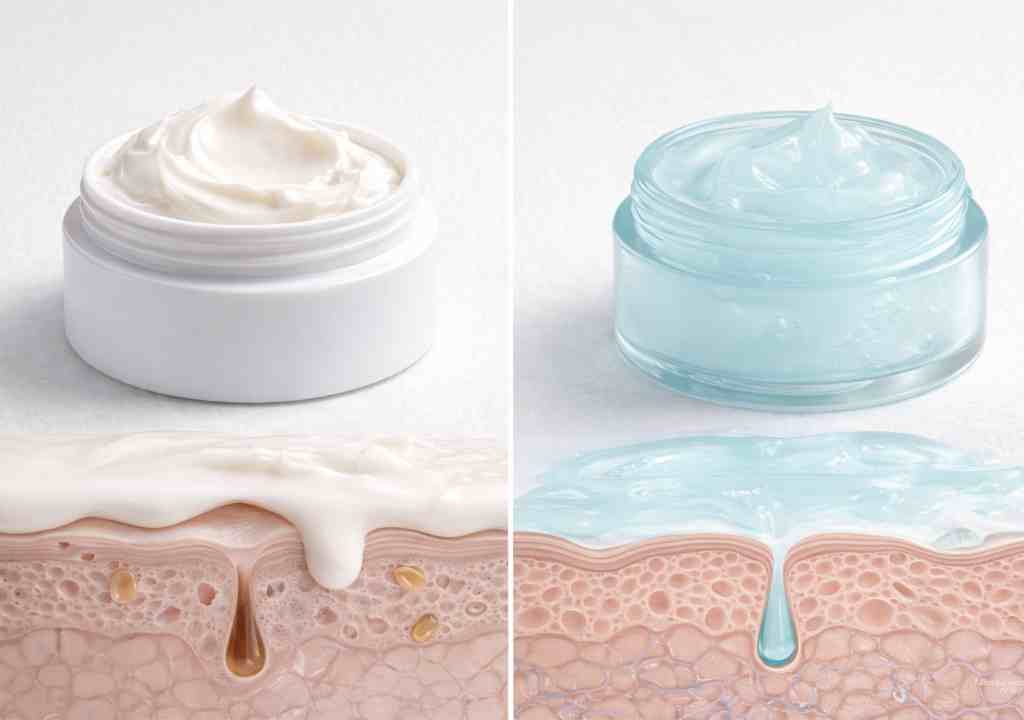
Selecting the right moisturizer requires careful attention to both ingredients and formulation. The term non-comedogenic means a product won’t clog pores, so look for cleansers, cosmetics and moisturizers that say non-comedogenic or oil-free on the label . However, it’s important to understand that these terms are not regulated by government agencies.
Even if it says “noncomedogenic”, “oil free” or “won’t clog your pores” on the bottle, that doesn’t mean it’s safe to use on your skin, as no government agency oversees this, so skincare companies can claim their products promote clear skin and still have pore-cloggers in their products . This lack of regulation makes personal research and patch testing essential.
Key non-comedogenic ingredients include hyaluronic acid, glycerin, squalane (derived from plants, not olive oil), niacinamide, and ceramides. Niacinamide helps regulate oil production, while salicylic acid penetrates pores to dissolve excess sebum. If you’re unsure which ingredient is right for your skin, read our full comparison of niacinamide vs salicylic acid for oily skin.
These humectants and skin-identical ingredients provide moisture without the occlusive properties that can trap sebum.
| Skin Type | Recommended Moisturizer Type | Key Ingredients to Look For | Ingredients to Avoid |
|---|---|---|---|
| Oily/Acne-Prone | Lightweight gel or water-based | Hyaluronic acid, niacinamide, salicylic acid | Heavy oils, coconut oil, lanolin |
| Dry | Cream with ceramides | Ceramides, glycerin, squalane | Alcohol, harsh surfactants |
| Combination | Gel-cream hybrid | Hyaluronic acid, glycerin, niacinamide | Very heavy occlusives |
| Sensitive | Fragrance-free lotion | Ceramides, colloidal oatmeal, allantoin | Fragrances, essential oils, alcohol |
What to Do If Your Moisturizer Is Clogging Your Pores
If you suspect your moisturizer is causing problems, take systematic steps to confirm and address the issue. Stop using the suspected product for 1-2 weeks while maintaining the rest of your routine, and if breakouts decrease, the moisturizer is likely the issue; reintroduce it sparingly to see if symptoms return, and consult a dermatologist if you’re unsure . This elimination method provides clear diagnostic information.
During this period, focus on gentle cleansing and minimal product use. Gently wash your face twice each day with a non-comedogenic cleanser and warm (not hot) water, and use an oil-free moisturizer after cleansing to avoid dry skin. This simplified routine allows your skin to reset while maintaining necessary hydration.
Choosing a gentle but effective cleanser is crucial, especially if your skin is sensitive or acne-prone. You can explore dermatologist-recommended options in our guide to the best acne face wash for sensitive skin.
Retinol and salicylic acid help clear out dirt, oil and other debris clogging your pores, though some people find that these ingredients irritate their skin, so talk to your healthcare provider before using products that contain retinol or salicylic acid . These active ingredients can help unclog pores but require careful introduction to avoid irritation.
Environmental and Lifestyle Factors That Affect Pore Clogging
Timing matters, as a formula that works beautifully in winter can feel suffocating in summer, with humidity, sweat, sunscreen, and layering all changing how a moisturizer behaves on your skin, though nothing is wrong with the moisturizer—your skin’s needs just shifted . Seasonal adjustments to your skincare routine are often necessary to maintain optimal skin health.
The way you apply products also matters. Over-application can lead to problems even with non-comedogenic formulas. Less product often goes a long way, with a pea-sized amount or even less sufficient for the whole face, and unless addressing dry skin in winter, cleansing once daily and moisturizing before bed is often enough . Product layering should be thoughtful rather than excessive.
In the event of over-moisturizing your skin for a period of time, you could notice your skin becoming bumpy, clogged pores, breakouts, and even dry spots . Paradoxically, too much moisturizer can disrupt your skin’s natural barrier function and lead to various problems including those it was meant to prevent.
Persistent clogged pores and acne can eventually leave behind dark spots or post-inflammatory hyperpigmentation. If you’re already dealing with acne marks, our guide on how to fade dark spots naturally explains science-backed treatments.
The Role of Professional Guidance
When dealing with persistent pore congestion and breakouts, professional help can be invaluable. If using a moisturizer still seems as though it would worsen rather than help clear your acne, you may want to speak with a dermatologist, who during an office visit can tell you what can help clear your acne and create a treatment plan for you that may very well include a moisturizer .
Dermatologists can provide personalized recommendations based on your specific skin type, concerns, and medical history. They can also prescribe treatments that address both acne and hydration needs simultaneously, ensuring that moisture retention doesn’t come at the expense of clear pores.
Dermatologists and skincare professionals should look beyond labels and critically assess ingredient lists to recognize which products have comedogenic potential, discussing with patients the nuances of marketed advertising claims and guiding appropriate selection of facial products beyond simple noncomedogenic labeling . This education empowers patients to make informed decisions about their skincare purchases.
Ingredients That Support Clear Pores While Moisturizing
Several ingredients provide excellent hydration without increasing the risk of clogged pores. Moisturizers contain three main properties: occlusive, humectant, and emollient effects , and understanding how each works helps in selecting appropriate products.
The humectant property attracts water from the dermis to epidermis, with examples including glycerin, sodium lactate, ammonium lactate, hyaluronic acid, sorbitol, urea, and alpha hydroxyl acids, while the emollient property smooths skin by filling space between skin flakes, with emollients including isopropyl isostearate, caster oil, propylene glycol, octyl stearate, and dimethicone . Choosing humectant-rich formulations typically poses less risk for acne-prone skin.
More than half of the products contain dimethicone and/or glycerin for moisturizer properties, while aloe vera and witch hazel are botanical anti-inflammatories commonly found . These ingredients provide both hydration and soothing benefits without significantly increasing comedogenic risk.
Prevention Strategies for Maintaining Clear Pores
Preventing clogged pores requires a holistic approach incorporating several best practices, including proper cleansing, with a gentle non-foaming cleanser twice daily helping remove excess oil, dirt, and makeup without stripping the skin of natural moisture, while avoiding harsh scrubs and over-cleansing which can irritate the skin and exacerbate pore clogging . If you struggle with both oily and dry areas, our step-by-step guide on how to build a skincare routine for combination skin explains how to balance hydration without clogging pores.
Exfoliation can be a powerful tool in preventing clogged pores by removing dead skin cells that can accumulate and block pores, with chemical exfoliants like alpha hydroxy acids (AHAs) and beta hydroxy acids (BHAs) penetrating pores and dissolving debris, and regular exfoliation about two to three times a week significantly improving skin texture and clarity . However, over-exfoliation can compromise the skin barrier and increase sensitivity.
Incorporating non-comedogenic products into your routine including not only moisturizers but also serums, sunscreens, and makeup is essential, with checking product labels for non-comedogenic claims and being mindful of ingredients helping reduce the risk of clogged pores, while maintaining good hygiene practices like regularly washing pillowcases and avoiding touching your face can further prevent pore congestion . These environmental factors often contribute to breakouts independently of product use.
Understanding Individual Variation in Skin Response
It’s crucial to recognize that skin responds differently to products based on individual factors. Individual variability adds to the complexity surrounding noncomedogenic labeling, as differences in skin types affect how products perform, and just as acne pathogenesis varies from person to person, the comedogenic response to cosmetics is not universal, with genetic factors contributing to the development of acne, meaning there is no guarantee that a product is noncomedogenic since reactions vary based on genetic makeup .
What works beautifully for one person may cause problems for another, even with identical skin types. This variability underscores the importance of patch testing new products and paying close attention to your skin’s individual responses rather than relying solely on general recommendations or online reviews.
The journey to finding the right moisturizer often involves some trial and error. Patience and systematic testing—introducing only one new product at a time—allows you to identify which formulations work best for your unique skin.
Individual variability adds to the complexity surrounding skincare products. Factors like genetics, hormones, and even your skin microbiome influence how pores respond to moisturizers. You can learn more about this relationship in our guide explaining how the microbiome impacts skin health.
Conclusion: Balancing Hydration and Clear Pores
Signs moisturizer is clogging pores manifest through increased breakouts, skin congestion, blackheads, excessive oiliness, and enlarged pores—all signals that your current product may not be compatible with your skin’s needs. However, the solution is not to abandon moisturizer but rather to select formulations that provide essential hydration without blocking pores.
Understanding comedogenic ingredients, recognizing your skin’s warning signals, and choosing appropriate non-comedogenic products allows you to maintain both proper hydration and clear pores. When in doubt, professional guidance from a dermatologist can provide personalized recommendations that address your specific skin concerns while ensuring your moisture barrier remains intact and healthy.
Remember that skin is dynamic, and what works during one season or life stage may need adjustment as circumstances change. By staying attuned to your skin’s signals and making informed product choices, you can achieve the balanced, healthy complexion that comes from proper hydration without the burden of clogged pores.
Frequently Asked Questions
How long does it take to see signs that a moisturizer is clogging your pores?
Signs that a moisturizer is clogging your pores typically appear within 2-6 weeks of consistent use. Some people may notice immediate congestion or oiliness within days, while closed comedones and breakouts often take 2-4 weeks to develop. If you’re introducing a new moisturizer, monitor your skin closely during the first month and note any changes in texture, oiliness, or breakout patterns. The timeline varies based on individual skin sensitivity, the concentration of comedogenic ingredients, and how frequently you apply the product.
Can non-comedogenic moisturizers still clog pores?
Yes, even products labeled as non-comedogenic can potentially clog pores for some individuals. The term ‘non-comedogenic’ is not regulated by government agencies, meaning companies can use this label without standardized testing. Additionally, comedogenic potential depends on multiple factors including concentration, formulation context, individual skin chemistry, and genetic predisposition to acne. A product may test as non-comedogenic in clinical trials but still cause problems for certain skin types. Always patch test new products and monitor your skin’s individual response regardless of marketing claims.
What’s the difference between purging and breakouts from a clogging moisturizer?
Purging occurs when active ingredients like retinoids, AHAs, or BHAs accelerate skin cell turnover, bringing existing microcomedones to the surface faster. It typically occurs in areas where you normally break out and resolves within 4-6 weeks. Breakouts from a clogging moisturizer appear as new congestion in areas where you don’t typically have acne, include closed comedones and blackheads rather than inflammatory acne, and persist as long as you continue using the product. Basic moisturizers without active exfoliating ingredients should never cause purging—only clogging.
Should I stop moisturizing if I have acne-prone skin?
No, you should not stop moisturizing even with acne-prone skin. When skin becomes dehydrated, it compensates by producing more oil, which can actually lead to more clogged pores and breakouts. Moisturizers help maintain the skin barrier, support healing, and improve tolerance to acne treatments. The key is choosing the right type of moisturizer—look for lightweight, gel-based, or water-based formulas with non-comedogenic ingredients like hyaluronic acid, niacinamide, and glycerin. Even oily skin needs hydration; it just requires a different formulation than dry skin types.
What ingredients should I avoid if I’m prone to clogged pores?
If you’re prone to clogged pores, avoid heavy oils like coconut oil, cocoa butter, and mineral oil; fatty alcohols like cetearyl alcohol in high concentrations; esters such as isopropyl myristate, isopropyl palmitate, and octyl palmitate; lanolin and its derivatives; D&C red dyes commonly found in tinted products; and heavy silicones in very occlusive formulations. Also watch for synthetic fragrances and essential oils which can cause irritation that mimics clogging. Instead, look for ingredients like hyaluronic acid, glycerin, niacinamide, squalane from plants, and ceramides which hydrate without blocking pores.
How do I test if my moisturizer is causing my breakouts?
To test if your moisturizer is causing breakouts, stop using only the moisturizer for 1-2 weeks while maintaining the rest of your skincare routine. Keep a daily journal noting changes in your skin’s texture, oiliness, and any new or healing breakouts. If your skin improves significantly during this period, the moisturizer was likely the culprit. For confirmation, reintroduce the product and watch for breakouts to return within 2-4 weeks. Alternatively, apply the moisturizer to only one side of your face for two weeks and compare the difference between sides. If one side shows more congestion or breakouts, the product is problematic.
External References & Research
Peer-reviewed journals, academic papers & authoritative sources
- A Case-Control Study Exploring the Association Between Cosmetic Use and Acne Risk: Implications for Prevention and Clinical Practice PMC – PubMed Central · 2024; This case-control study examining 151 participants found that moisturizers with higher cosmetic exposure index significantly elevated acne risk, and facial cleansers with comedogenic ingredients showed 2.49 times higher acne risk, providing epidemiological evidence linking specific cosmetic ingredients to acne development.
- Comedogenicity of current therapeutic products, cosmetics, and ingredients in the rabbit earJournal of the American Academy of Dermatology – PubMed · 1984; Dr. James Fulton’s landmark study tested hundreds of cosmetic ingredients using the rabbit ear assay model, establishing foundational comedogenicity ratings still referenced today and identifying key pore-clogging ingredients including isopropyl myristate analogs, lanolin derivatives, and D&C Red dyes.
- A re-evaluation of the comedogenicity conceptJournal of the American Academy of Dermatology – PubMed · 2006; This critical review examined finished cosmetic products using human assay methods and found that products containing traditionally comedogenic ingredients were not necessarily comedogenic in practice, challenging the reliability of ingredient-based comedogenicity ratings and emphasizing the importance of testing complete formulations.
- Moisturizers for Acne: What are their Constituents?; Journal of Clinical and Aesthetic Dermatology – PMC · 2014Analysis of 52 moisturizers designed for acne-prone skin revealed that 92% contained anti-inflammatory properties beyond basic moisturization, with comprehensive breakdown of occlusive, humectant, and emollient ingredients that support acne treatment while maintaining proper skin barrier function without clogging pores.