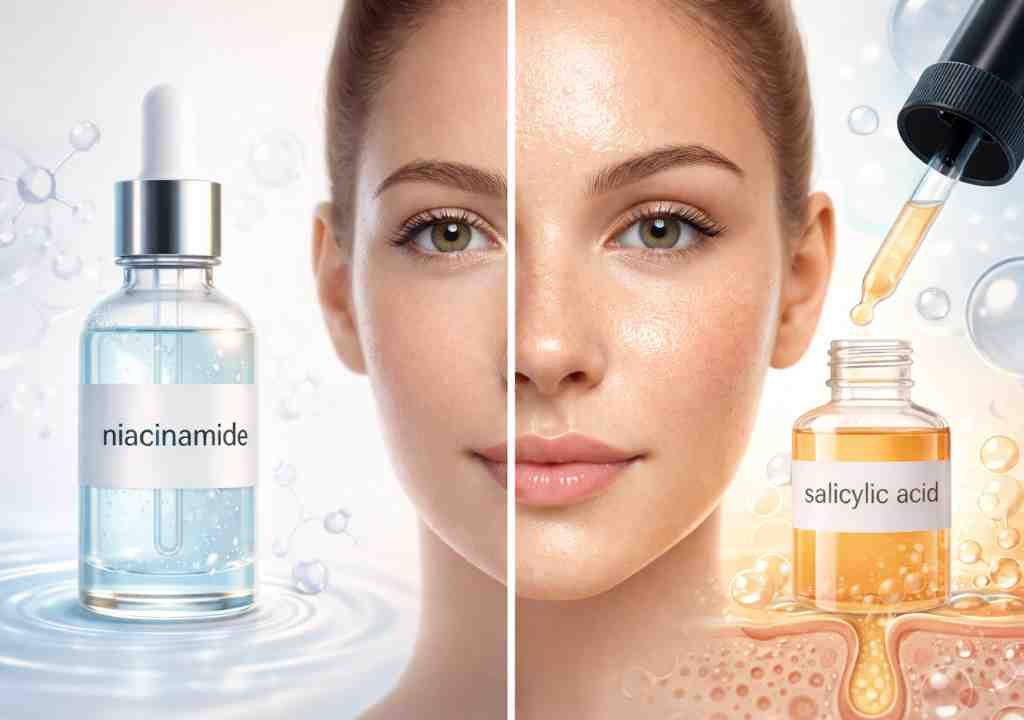
Niacinamide vs Salicylic Acid for Oily Skin represents one of the most debated skincare dilemmas facing anyone struggling with excess sebum, enlarged pores, and persistent breakouts. If you’ve found yourself standing in the skincare aisle trying to decode product labels, or scrolling through Reddit threads at midnight searching for the ultimate solution to your shiny T-zone, you’re not alone. Both niacinamide and salicylic acid have earned their reputations as powerhouse ingredients for oily, acne-prone skin, but they work through entirely different mechanisms to achieve clearer, more balanced skin.
The truth is, understanding the difference between these two ingredients isn’t just about choosing one over the other—it’s about knowing when to use each one, how they complement each other, and which concentration will deliver results without irritating your skin. This comprehensive guide cuts through the marketing hype and delivers science-backed insights to help you make informed decisions about your skincare routine.
Understanding Oily Skin: The Root of Your Skincare Concerns
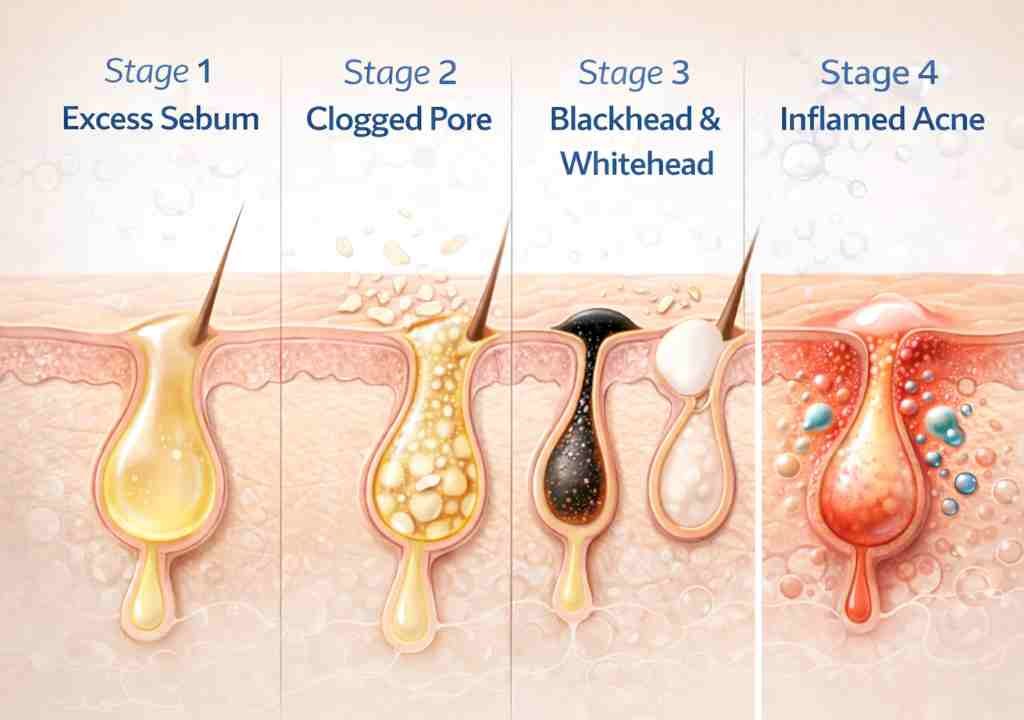
Before diving into the niacinamide vs salicylic acid debate, it’s essential to understand what causes oily skin in the first place. When sebaceous glands in the skin make excessive sebum, our skin appears oily. Sebum is a waxy, oily substance that protects and hydrates the skin. While sebum keeps our skin healthy at ideal levels, overproduction leads to that unwanted greasy appearance and creates the perfect environment for acne development.
Oily skin is often the foundation of acne breakouts. Breakouts occur when dead skin cells get trapped inside a pore. Oil is then unable to discharge and gets accumulated in the pore under the skin with other dirt. This gives way to blackheads or whiteheads and creates a perfect environment for acne bacteria. This propionibacterium acne flourishes and causes inflammation, leading your skin right to pimples.
Understanding this cascade of events helps explain why both niacinamide and salicylic acid have become essential weapons in the fight against oily skin—they simply approach the problem from different angles.
What Is Niacinamide and How Does It Work for Oily Skin?
Niacinamide, also known as nicotinamide or vitamin B3, is a water-soluble vitamin that has become one of the most celebrated ingredients in modern skincare. The skin experts praise niacinamide, it is a little under-the-radar, but it is an exceptionally impressive all-rounder. It has achieved the honor of being labeled one of the safest active ingredients for acne, rosacea, wrinkles, and hyperpigmentation treatments. This crowd-pleaser ingredient is a wonder-vitamin, suitable for almost all skin types.
The Science Behind Niacinamide’s Oil-Control Properties
Niacinamide (vitamin B3) isn’t just another trendy ingredient—it’s involved in over 40 biochemical processes in your skin cells. What makes it particularly brilliant for oily skin is its ability to tackle multiple issues simultaneously.
One of niacinamide’s most impressive capabilities is sebum regulation. Topical 2% niacinamide may be effective in lowering the SER in Japanese individuals and CSL in Caucasian individuals. More specifically, use of 2% topical niacinamide resulted in a significant reduction in sebum excretion rate and pore size in a Japanese cohort and surface sebum levels in a Caucasian study group over four weeks.
Clinical studies show that even at just 2% concentration, niacinamide can significantly reduce sebum production. It’s not just mopping up surface oil—it’s actually telling your sebaceous glands to chill out at the source. Research indicates that it regulates oil production by reducing sebum output by about 20-30%. Less oil means less stretching and clogging of your pores.
Beyond Oil Control: Niacinamide’s Multi-Tasking Benefits

What sets niacinamide apart from many other oil-control ingredients is its ability to address multiple skin concerns simultaneously without compromising skin health:
While it’s controlling oil, niacinamide is also building up your skin barrier by boosting ceramide production. This means your skin stays hydrated and protected, even while producing less oil. Niacinamide Calms and Hydrates: It soothes any potential irritation caused by salicylic acid and restores the skin barrier.
For those dealing with post-acne marks, niacinamide has another trick up its sleeve. It doesn’t destroy pigment-producing cells or harsh chemicals—instead, it interrupts the transfer of melanin from where it’s made to where it shows up on your skin’s surface. Studies show this inhibition ranges from 35-68%, which translates to visibly faded dark spots over time.
Additionally, Niacinamide has significant advantages, including lack of dryness, irritation, and risk for antibiotic resistance. This makes it an excellent choice for people with sensitive skin who still need effective oil control.
Beyond just balancing sebum, Niacinamide is a powerhouse for fading dark spots and hyperpigmentation left behind by old breakouts.
Effective Niacinamide Concentrations for Oily Skin
One common question is: what percentage of niacinamide should you use? The research provides clear guidance on this matter.
Studies have shown that the optimal percentage of niacinamide for maximum effectiveness ranges from 2% to 5%. In fact, a study published in the International Journal of Dermatology found that a 5% niacinamide cream was more effective at improving the appearance of fine lines and wrinkles than a 1% cream.
The concentration of niacinamide in skincare products typically ranges from 2% to 10%, with most products falling between 5% and 10%. Studies show that concentrations as low as 2% can deliver significant benefits, such as improving the skin’s barrier function and reducing inflammation. However, higher concentrations (around 5% to 10%) can provide more visible improvements for concerns like hyperpigmentation and enlarged pores.
For those with oily skin, 5% Niacinamide: A common concentration that works well for most skin types. It can help with improving skin texture, reducing redness, and minimizing pore size. While 10% concentrations exist, most people can tolerate niacinamide well even at 10% twice daily. But if you have a mysterious skin rash or unexplained irritation, it could be time to take a closer look at your niacinamide levels.
What Is Salicylic Acid and How Does It Combat Oily Skin?
While niacinamide works as a gentle regulator and barrier builder, salicylic acid takes a more direct, exfoliating approach to managing oily skin. Salicylic acid is what’s known as a beta-hydroxy acid (or “BHA” for short). Alternately, glycolic acid and lactic acid fall under the category of alpha-hydroxy acids (AHAs). All three of these ingredients work somewhat similarly as chemical exfoliants, helping to promote skin exfoliation and eliminate the buildup of dead skin cells.
Why Salicylic Acid Is Uniquely Effective for Oily Skin
The key distinction that makes salicylic acid particularly powerful for oily skin lies in its chemical properties. However, their main difference is in their solubility. Because salicylic acid is “lipid-soluble”—unlike glycolic and lactic acid—it is able to penetrate clogged pores, which is especially beneficial for those with oily skin.
This beta-hydroxy acid has one major advantage over its alpha-hydroxy cousins: it’s oil-soluble. While water-soluble acids hang out on your skin’s surface, salicylic acid can penetrate the oily environment inside your pores. This oil-solubility allows salicylic acid to work where oily skin problems actually begin—deep inside the pore.
Salicylic acid is an oil-soluble beta hydroxy acid (BHA) that can penetrate into oily pores, where it loosens and removes built-up dead skin cells and excess sebum by dissolving the intercellular “cement” holding cells together. This deep pore-level exfoliation enables salicylic acid to effectively unclog pores and reduce acne lesions such as blackheads and whiteheads, which is why it is widely used in cleansers, toners, and exfoliants.
How Salicylic Acid Unclogs Pores and Prevents Breakouts
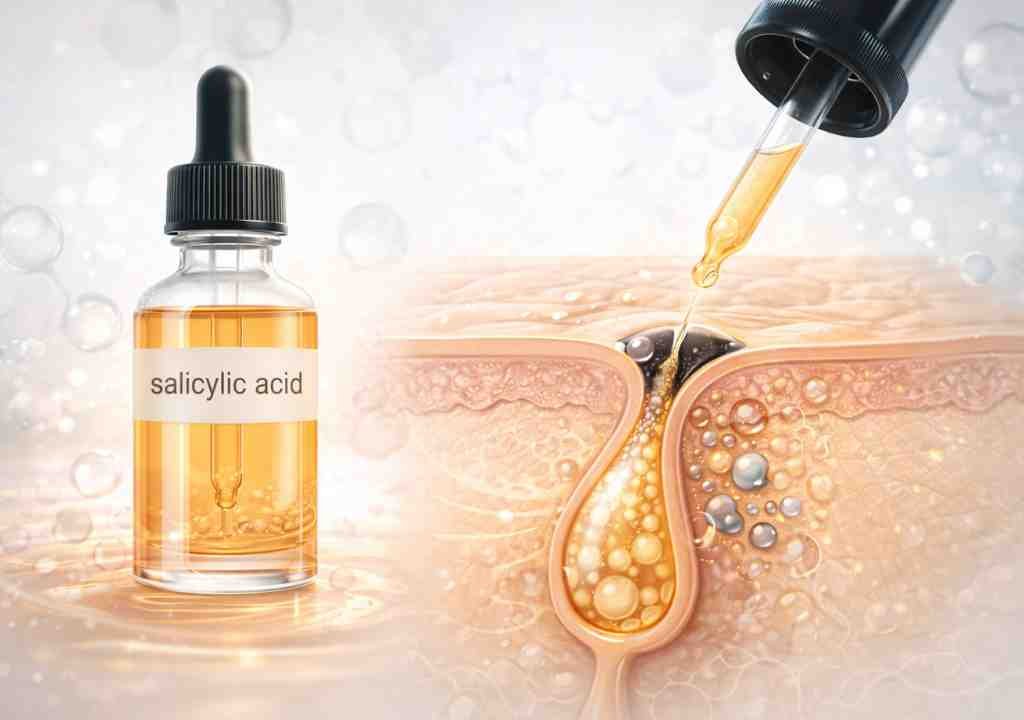
Here’s the technical bit that’s actually pretty cool: salicylic acid works as a desmolytic agent, which means it doesn’t just scrub away dead skin cells—it dissolves the “glue” (desmosomes) that holds them together. This allows for a more controlled, effective exfoliation process that prevents the cellular traffic jams that lead to clogged pores.
The acne zapping ingredient is your best bet for oily skin as it breaks down dead skin cells, penetrates your pores, and clears out dirt. On the other hand, Salicylic Acid is a deep-cleaning hero, working to exfoliate, unclog pores, and keep breakouts at bay.
Reduces sebum secretion making it ideal for oily skin. Helps get rid of redness and inflammation that may accompany acne and other skin concerns. The anti-inflammatory properties of salicylic acid, derived from its relationship to aspirin, provide additional benefits beyond just exfoliation.
Salicylic Acid Concentrations and Application Guidelines
For over-the-counter products, salicylic acid typically ranges from 0.5% to 2%. Introduce the active ingredient gradually into your skincare routine: start with light formulas, with a concentration between 0.5 and 1%. To best benefit from the action of BHA as an anti-acne treatment, a concentration of 2% is more suitable: this is the maximum concentration allowed in cosmetics in Europe.
If you find that 2% BHA is too drying, you might want to pair it with a specialized acne face wash for sensitive skin to keep your barrier intact.
Salicylic acid helps clear out the pores deeply by getting rid of old skin cells and extra oil, which makes it good for oily and acne-prone skin. However, users should be aware of potential side effects. If you have dry, eczema-prone, or sensitive skin, salicylic acid being a drying ingredient is best avoided as it can be harsh and cause irritation. Dry, burning, and overall irritated skin is the most common side effects of salicylic acid and occurs when you first start with the acid, but it usually subsides with time.
Importantly, Salicylic acid makes your skin susceptible to sun damage. You are never to avoid wearing sunscreen and protective clothing. Limit sun exposure as much as you possibly can and keep reapplying sunscreen.
Niacinamide vs Salicylic Acid: Direct Comparison for Oily Skin
Now that we understand how each ingredient works individually, let’s directly compare their effects on oily skin concerns.
Oil Production Control
| Aspect | Niacinamide | Salicylic Acid |
|---|---|---|
| Mechanism | Regulates sebaceous gland activity at the source | Removes excess oil from skin surface and pores |
| Onset of Action | 2-4 weeks for noticeable oil control | Immediate oil-reducing effect |
| Long-term Effects | Sustained sebum regulation | Requires continued use for maintenance |
| Skin Barrier Impact | Strengthens and protects barrier | Can compromise barrier if overused |
Oil Control: Salicylic acid helps regulate oil production in the skin, making it beneficial for individuals with oily or combination skin types. Niacinamide reduces excess oil on the surface of the skin. However, Niacinamide reduces excess sebum on the skin’s surface while salicylic acid regulates oil production from within the skin.
Pore Appearance and Congestion
Oily Skin: Niacinamide regulates oil, while salicylic acid clears pores. Both ingredients address pore concerns but through different mechanisms.
Salicylic acid excels at immediate pore cleansing. Salicylic Acid Clears Pores: It exfoliates and unclogs pores, treating acne and blackheads. Blackheads represent one of salicylic acid’s most dramatic success stories. These stubborn comedones, which can persist for months or even years without treatment, often begin dissolving within weeks of consistent salicylic acid use. The oil-soluble nature of BHA allows it to penetrate the hardened sebum plug and gradually break it down from the inside.
Meanwhile, niacinamide takes a preventative approach. Niacinamide helps to regulate sebum production, ensuring that your skin stays balanced and hydrated without producing too much oil. By controlling oil production, niacinamide can prevent pores from becoming clogged and appearing larger.
Acne Treatment and Prevention
If you have oily skin with frequent acne, salicylic acid is better at treating your breakouts and making your skin less oily. Salicylic acid provides direct antimicrobial action and pore-clearing effects that address active breakouts.
However, A comparative study found that topical niacinamide gel 5% significantly improved acne vulgaris from baseline and resulted in a similar reduction in acne lesions as treatment with 2% clindamycin. Similar studies showed that 4% niacinamide gel is comparable in efficacy to 1% clindamycin for treating acne vulgaris.
When you’ve got angry, red pimples, niacinamide takes the lead. Its anti-inflammatory properties work by inhibiting inflammatory cytokines and blocking the activation of NF-κB, effectively putting out the fire of inflammation. Salicylic acid plays a supporting role here—it can help clear the underlying clog that caused the inflammation in the first place, plus it has its own mild anti-inflammatory effects.
Skin Sensitivity and Tolerance
People with sensitive, dry, red and pigmented skin should look for niacinamide. Unlike retinoids and hydroxy acids, niacinamide is non-irritating.
In contrast, Sensitive skin users should introduce it gradually, as overuse may lead to dryness, peeling, or irritation. The exfoliating nature of salicylic acid makes it more likely to cause irritation in sensitive individuals.
Can You Use Niacinamide and Salicylic Acid Together?
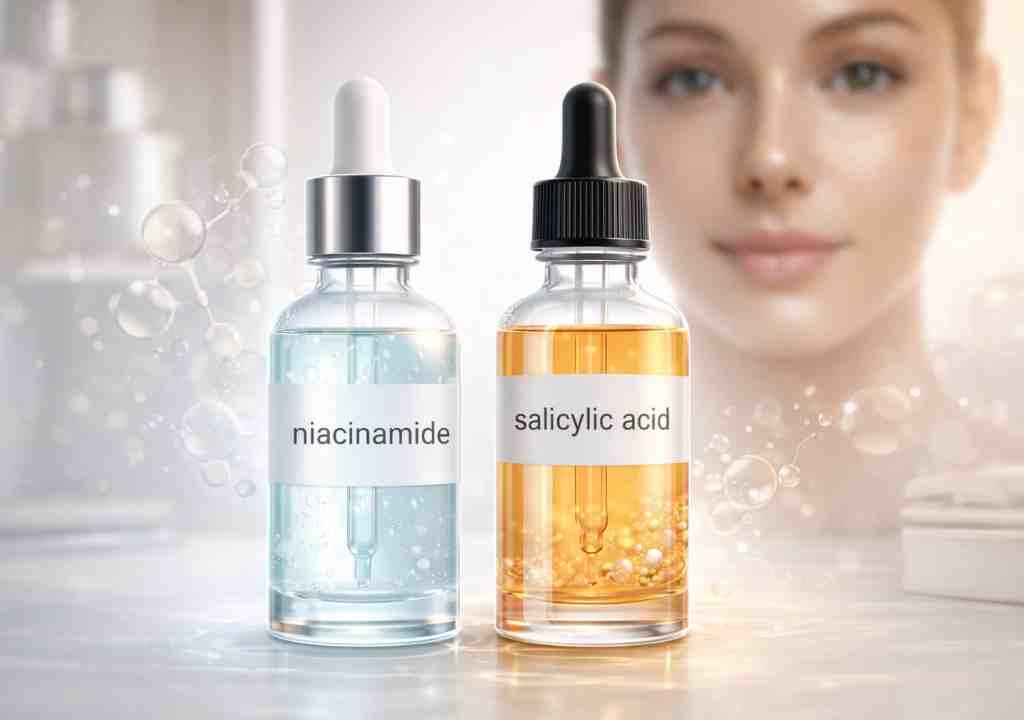
The excellent news for those dealing with oily skin is that you don’t have to choose between these two powerhouse ingredients. Yes, you may combine niacinamide and salicylic acid. Indeed, they complement each other instead of cancelling each other.
There was once a myth that you couldn’t combine acids and niacinamide in the same routine because they would neutralise one another or irritate. However, recent research and real-world experience have proven that when layered correctly—or combined in a well-designed product—they can be beneficial to your skin.
Benefits of Combining Both Ingredients
Acne-Prone Skin: Together, they treat breakouts and reduce inflammation without over-drying the skin. The synergistic benefits include:
Enhanced Acne Treatment: The exfoliating ability of Salicylic Acid and the anti-inflammatory properties of Niacinamide can help reduce acne. Improved Skin Texture: The exfoliating property of salicylic acid, in combination with the moisturising and barrier repair properties of Niacinamide improves skin texture. Balanced Oil Production: Salicylic Acid decreases excess oil on the surface of the skin and Niacinamide helps prevent drying. Reduced Redness and Inflammation: Niacinamide also minimises redness and inflammation, even that caused by Salicylic Acid.
Niacinamide and salicylic acid complement each other really well. The hydrating, skin barrier-strengthening effect of niacinamide counteracts any dryness or irritation associated with salicylic acid. Thus, together, they’re the perfect pair for targeting acne or signs of aging without stripping or drying out the skin.
How to Layer Niacinamide and Salicylic Acid Correctly
While these ingredients work beautifully together, proper application technique matters for optimal results. Mixing together a product containing salicylic acid and one containing niacinamide—or layering one on top of the other at the same time—isn’t generally recommended.
The reason relates to pH levels. That’s mainly because the two are at their most effective at quite different pH (acidity) levels. For optimal absorption and effectiveness, salicylic acid products are formulated with an acidic pH between 3 and 4. However, niacinamide works best at a more neutral pH of around 6. So, mixing the two together or layering one straight on top of the other compromises their penetration ability and performance.
There are several effective approaches to using both ingredients:
Method 1: Sequential Application with Wait Time
Apply salicylic acid first after cleansing, then niacinamide. Salicylic acid works inside pores, while niacinamide strengthens the barrier afterward, ensuring both ingredients perform effectively without interfering.
Apply salicylic acid first, then wait for 30-45 minutes for full absorption and to allow your skin’s pH to return to normal before applying niacinamide. Salicylic acid is all about pore-penetrating ability, so applying it straight after cleansing and before other serums or moisturisers etc makes sense.
Method 2: Time-of-Day Separation
The best approach is to apply salicylic acid and niacinamide at different times of the day, e.g. salicylic acid in your AM routine for cleansing the skin and niacinamide in PM routine for skin repair and rejuvenation.
Alternatively, Another recommendation is to apply salicylic acid and niacinamide on alternate days, still keeping salicylic acid for night-time and niacinamide the mornings.
Method 3: Using Combination Products
Yes, and numerous brands now create products with both ingredients for ease and synergy. These types of products are pH- and concentration-balanced, making it effortless to reap the rewards without worrying about layering. In search of streamlined routines, these hybrid products are a great starting point.
Application Order in a Complete Routine
Here’s a step-by-step guide for incorporating both ingredients:
- Cleanse: Use a gentle cleanser appropriate for oily skin
- Apply Salicylic Acid: Use a salicylic acid toner, serum, or treatment
- Wait: Allow 30-45 minutes if applying both in the same routine (or proceed to step 4 if using time-separation method)
- Apply Niacinamide: Use a niacinamide serum or moisturizer
- Moisturize: If using a separate moisturizer, apply after niacinamide
- Sunscreen: Always apply broad-spectrum SPF 30 or higher in the morning
if you notice your skin becomes sensitive with daily use of both products, consider alternating between salicylic acid one day and niacinamide the next. This strategy helps manage sensitivity while still delivering the benefits of both ingredients.
Choosing Between Niacinamide and Salicylic Acid: Decision Framework
While using both ingredients often provides the best results, certain situations call for prioritizing one over the other.
Choose Niacinamide as Your Primary Ingredient If You Have:
- Sensitive or Reactive Skin: Niacinamide: Works for all skin types—dry, oily, sensitive, or combination. Its gentle nature makes it ideal for daily use, even on reactive skin. At 5%, it soothes and hydrates without irritation.
- Compromised Skin Barrier: If your skin feels tight, dry, or easily irritated, niacinamide’s barrier-strengthening properties should be prioritized
- Post-Inflammatory Hyperpigmentation: The pigmentation-reducing effects make niacinamide ideal for fading acne marks
- Redness-Prone Skin: Niacinamide is your go-to for calming inflammation, boosting hydration, and enhancing skin brightness.
- First-Time Active Ingredient Users: Its gentle nature makes it an excellent starting point
Choose Salicylic Acid as Your Primary Ingredient If You Have:
- Active Breakouts: opt for salicylic acid for acne-specific solutions.
- Visible Blackheads or Whiteheads: The pore-penetrating action of salicylic acid directly addresses comedones
- Rough, Bumpy Texture: The exfoliating properties smooth keratosis pilaris and rough patches
- Significantly Congested Pores: Salicylic acid is the heavy hitter for clearing clogged pores, dissolving blackheads and whiteheads, and giving you that immediate “clean” feeling. It’s oil-soluble, so it can penetrate deep into your pores where the action happens.
- Normal to Oily, Non-Sensitive Skin: If you don’t experience irritation easily, salicylic acid can be used more aggressively
Use Both Ingredients When You Have:
- Persistent Oily Skin with Breakouts: For most people with oily skin, using both strategically gives you the best results.
- Multiple Skin Concerns: When dealing with active acne, scarring, and oil control simultaneously
- Mature Oily Skin: Both ingredients offer anti-aging benefits while controlling oil
- Enlarged Pores with Oiliness: The combination addresses both causes and appearance
Product Selection: What to Look For
Choosing Niacinamide Products
When selecting niacinamide products for oily skin, consider these factors:
Concentration: Niacinamide’s skin benefits are proven with just 2% to 5%. For oily skin specifically, 5% provides excellent results without excessive risk of irritation.
Formulation Type:
- Serums: Provide concentrated doses; ideal for targeted treatment
- Moisturizers: Combine hydration with oil control
- Toners: Lightweight application suitable for oily skin
Supporting Ingredients: Look for formulations that include:
- Zinc: 2% Salicylic Acid, Zinc, and caffeine to effectively diminish active acne, excess oil, and imperfections.
- Hyaluronic Acid: Provides hydration without heaviness
- Ceramides: Enhances barrier repair
Choosing Salicylic Acid Products
For salicylic acid products, consider:
Concentration: Start with 0.5-1% if you’re new to chemical exfoliants. Salicylic acid 2% by Beminimalist is a gentle exfoliant that helps wards off blackheads and regulates your oils, giving you a look you have always desired for. 2% is the standard effective concentration for most users.
Product Type:
- Cleansers: Provide gentle daily exfoliation with rinse-off convenience
- Toners/Liquids: Allow for targeted application and penetration
- Spot Treatments: Concentrated formulas for active breakouts
- Leave-On Exfoliants: Maximum effectiveness for overall skin improvement
Formulation Considerations:
- Avoid alcohol-heavy formulations that can over-dry skin
- Look for soothing ingredients like aloe or green tea
- pH should be between 3-4 for optimal effectiveness
Building Your Oily Skin Routine: Practical Implementation
Beginner Routine: Starting with One Active
If you’re new to active ingredients, start with niacinamide due to its gentler profile:
Morning:
- Gentle cleanser
- Niacinamide serum (5%)
- Oil-free moisturizer
- Broad-spectrum SPF 30+
Evening:
- Gentle cleanser
- Niacinamide serum (5%)
- Oil-free moisturizer
Use this routine for 4-6 weeks before introducing salicylic acid.
Intermediate Routine: Introducing Both Ingredients
Once your skin tolerates niacinamide well, introduce salicylic acid:
Morning:
- Gentle cleanser
- Niacinamide serum (5%)
- Oil-free moisturizer
- Broad-spectrum SPF 30+
Evening:
- Salicylic acid cleanser (0.5-1%) OR gentle cleanser
- Salicylic acid treatment (2%) – 2-3 times per week initially
- Wait 30-45 minutes
- Niacinamide serum (5%)
- Oil-free moisturizer
Advanced Routine: Optimized for Maximum Results
For skin that tolerates both ingredients well:
Morning:
- Gentle cleanser
- Niacinamide serum (5-10%)
- Antioxidant serum (optional)
- Oil-free moisturizer with niacinamide
- Broad-spectrum SPF 50+
Evening:
- Oil cleanser (if wearing makeup/sunscreen)
- Salicylic acid cleanser (2%)
- Salicylic acid treatment (2%) – daily or every other day
- Wait 30-45 minutes
- Niacinamide serum (5-10%)
- Oil-free moisturizer
- Retinoid (optional, 2-3 times per week on nights without salicylic acid)
Common Mistakes to Avoid
Over exfoliation with Salicylic Acid
One of the most common errors is using salicylic acid too frequently or at too high a concentration. Signs of overexfoliation include increased sensitivity, redness, flaking, and paradoxically, increased oil production as your skin tries to compensate for dryness.
Solution: Start with 2-3 times per week and increase only if your skin tolerates it well. Listen to your skin’s feedback.
Niacinamide Overload
One of the biggest issues of overdoing niacinamide isn’t necessarily the one 10% product you may have. Here’s a chemist secret – from a formulation perspective, niacinamide is super duper easy peasy. Unlike your retinoids and vitamin Cs, niacinamide is stable, non-fussy, and goes into most formulas very easily. This is why you’ll find it in almost EVERY skincare product out there. Your toners, cleansers, serums, and moisturizers may all have a potent dose of niacinamide. That’s right – even products that don’t claim niacinamide may be using a potent dose of this beloved active.
Solution: Check ingredient lists on all your products. If niacinamide appears in the top 5 ingredients in 3+ products, you may be getting too much.
Remember, Niacinamide is often hidden in products like non-comedogenic moisturizers for oily skin, so check your labels to avoid over-applying.
Skipping Sunscreen
This cannot be overstated: salicylic acid increases sun sensitivity. It’s worth noting that salicylic acid can increase skin’s sensitivity to the sun, per the FDA. As such, you’ll want to protect your skin every day with broad-spectrum sunscreen when using this ingredient. Look for one with an SPF of at least 15 and reapply every two hours.
Solution: Make broad-spectrum SPF 30+ a non-negotiable part of your morning routine.
Not Adjusting for Seasons
Your skin’s needs change with the weather. In dry winter months, you may need to reduce salicylic acid frequency and increase moisturizing support. In humid summers, you might tolerate more frequent exfoliation.
Solution: Reassess your routine seasonally and adjust product usage accordingly.
Expecting Overnight Results
Both ingredients require consistent use over time to deliver optimal results. Most people start noticing changes in their skin texture and oil production within 2-4 weeks of consistent use. However, significant improvements in pore appearance typically take 8-12 weeks. This timeline makes sense when you consider that your skin needs time to adjust its oil production and build up stronger structural support.
Solution: Commit to at least 8-12 weeks of consistent use before evaluating effectiveness.
Addressing Specific Oily Skin Concerns
For Hormonal Acne
Hormonal acne responds well to the combination approach. Use salicylic acid to keep pores clear and niacinamide to reduce inflammation and post-inflammatory hyperpigmentation. Consider using salicylic acid spot treatments on active breakouts while maintaining niacinamide throughout your entire face for overall regulation.
For Large, Visible Pores
Both ingredients address enlarged pores but through different mechanisms. Salicylic acid clears debris that stretches pores, while niacinamide strengthens the pore walls themselves. Use salicylic acid 3-4 times weekly and niacinamide twice daily for comprehensive pore refinement.
For Shine Control Throughout the Day
If midday shine is your primary concern, niacinamide’s sebum-regulating properties provide the most benefit. Use a 5% niacinamide serum both morning and evening, and consider a niacinamide-containing mattifying primer or powder for touch-ups.
For Combination Skin
Combination Skin: Use salicylic acid on acne-prone areas and niacinamide for hydration and balance. This targeted approach prevents over-treating dry areas while addressing oiliness in the T-zone.
For Acne Scarring and PIH
Niacinamide should be your primary focus here, as it directly addresses pigmentation. Use 5-10% niacinamide twice daily, with salicylic acid 2-3 times weekly to prevent new breakouts that could lead to additional scarring.
Complementary Ingredients and Products
Ingredients That Work Well With Both
Hyaluronic Acid: Provides lightweight hydration without adding oil. Hyaluronic acid provides an excellent follow-up to help counteract any drying effects.
Ceramides: Support barrier function and work synergistically with niacinamide’s barrier-strengthening effects.
Zinc: Offers additional oil control and anti-inflammatory benefits. Works particularly well with niacinamide.
Green Tea Extract: Provides antioxidant protection and additional sebum control.
Azelaic Acid: Can be used on alternate nights from salicylic acid for additional brightening and acne control.
Ingredients to Use Cautiously
Retinoids & Retinol: Can be used with both niacinamide and salicylic acid but require careful introduction. It’s important to understand that ‘Retinoid’ is the umbrella term for the entire Vitamin A family, which includes everything from over-the-counter Retinol to prescription-strength Tretinoin. While these ingredients can be used together, they should typically be introduced separately.
In my experience, they work best on alternating nights; using your Salicylic Acid to deep-clean pores one night and your Retinol to boost cell turnover the next, rather than layering them simultaneously and risking a compromised skin barrier. While niacinamide and salicylic acid both work well together, starting with retinol requires a more cautious approach to avoid irritation.
Vitamin C (Ascorbic Acid): Best used at a different time of day than salicylic acid due to pH conflicts.
Physical Exfoliants: Avoid using scrubs on the same days you use salicylic acid to prevent over-exfoliation.
Benzoyl Peroxide: Can be effective for acne but should be used cautiously with salicylic acid to avoid excessive dryness.
When to See a Dermatologist
While niacinamide and salicylic acid are effective for most cases of oily skin, certain situations warrant professional consultation:
- Severe, cystic acne that doesn’t respond to over-the-counter treatments
- Persistent oiliness despite consistent use of appropriate products for 12+ weeks
- Widespread irritation or allergic reactions to products
- Sudden onset of oily skin in adulthood (may indicate hormonal issues)
- Oily skin accompanied by hair loss or other symptoms
- Suspicion of conditions like seborrheic dermatitis or rosacea
A dermatologist can prescribe stronger formulations, address underlying hormonal factors, and provide professional treatments like chemical peels that complement your at-home routine.
The Science-Backed Verdict
After examining the extensive research and clinical evidence, the answer to “Niacinamide vs Salicylic Acid for Oily Skin” isn’t about choosing a winner—it’s about understanding their complementary roles.
Verdict: Niacinamide is a multi-tasker for overall skin health, while salicylic acid is a targeted acne fighter. Choose niacinamide for versatile, daily-use products; opt for salicylic acid for acne-specific solutions.
For most individuals with oily skin, the optimal approach combines both ingredients strategically:
- Niacinamide serves as your daily maintenance ingredient, regulating sebum production at the source, strengthening your skin barrier, and preventing future damage
- Salicylic Acid acts as your intensive treatment, clearing existing congestion, exfoliating dead cells, and providing immediate pore-cleansing action
But combine them in the same skincare regimen and they can become more than the sum of their parts, addressing a wide range of concerns. Niacinamide and salicylic acid work synergistically, improving blemishes, redness, and uneven skin tone, hydrating skin, and enhancing skin’s moisture barrier function.
The key to success lies in proper implementation: choosing appropriate concentrations, applying them in the correct order, allowing adequate time between applications, and maintaining consistency over the 8-12 week period required to see significant improvements.
Your oily skin journey is uniquely yours. What works for someone else may not work identically for you. Start conservatively, introduce one ingredient at a time, pay attention to your skin’s feedback, and adjust accordingly. With patience and the right approach to niacinamide and salicylic acid, clearer, more balanced skin is entirely achievable.
Frequently Asked Questions: Niacinamide vs Salicylic Acid for Oily Skin
Can I use niacinamide and salicylic acid together in the same skincare routine?
Yes, you can safely use niacinamide and salicylic acid together. Despite old myths suggesting they cancel each other out, modern research confirms they actually complement each other when used correctly. The key is proper application: apply salicylic acid first after cleansing, wait 30-45 minutes for absorption and pH balance restoration, then apply niacinamide. Alternatively, use them at different times of day (salicylic acid in evening, niacinamide in morning) or on alternate days. Together, they provide enhanced oil control, acne treatment, and barrier support without over-drying skin.
Which is better for oily skin: niacinamide or salicylic acid?
Neither ingredient is universally “better”—they serve different purposes for oily skin. Salicylic acid is better for immediately clearing clogged pores, dissolving blackheads, and treating active breakouts due to its oil-soluble, pore-penetrating properties. Niacinamide excels at long-term sebum regulation, barrier strengthening, and reducing inflammation and post-acne marks. For most people with oily skin, using both ingredients strategically provides the best results: salicylic acid for intensive pore cleansing and niacinamide for daily oil regulation and skin health maintenance.
What percentage of niacinamide is most effective for controlling oily skin?
Studies show that 2-5% niacinamide is effective for oily skin, with 5% being the sweet spot that balances efficacy and tolerability. Research demonstrates that even 2% niacinamide significantly reduces sebum production and surface oil after 2-4 weeks of use. While 10% concentrations are available and may provide faster results for stubborn concerns, they increase irritation risk. For oily skin specifically, a 5% niacinamide serum used twice daily provides excellent oil control, pore refinement, and barrier support without excessive risk of side effects.
How often should I use salicylic acid on oily skin?
Start with salicylic acid 2-3 times per week to assess tolerance, then gradually increase to daily use if your skin responds well. For oily, non-sensitive skin, 2% salicylic acid can typically be used once daily (preferably in the evening). However, if you’re new to chemical exfoliants or have sensitive skin, maintain 2-3 times weekly usage. Signs you’re using it too often include increased dryness, redness, flaking, or paradoxical oil increase. Always use broad-spectrum SPF 30+ during the day when using salicylic acid, as it increases sun sensitivity.
How long does it take to see results from niacinamide and salicylic acid for oily skin?
You can expect different timelines for each ingredient. With salicylic acid, you’ll notice immediate oil-reducing effects and cleaner-feeling pores, with blackheads beginning to dissolve within 2-4 weeks. Niacinamide takes longer for visible results: most people notice oil control improvements within 2-4 weeks, but significant changes in pore appearance, texture, and overall skin balance typically require 8-12 weeks of consistent use. For optimal results combining both ingredients, commit to at least 8-12 weeks of regular use before fully evaluating effectiveness.
Can niacinamide and salicylic acid help with enlarged pores on oily skin?
Yes, both ingredients effectively address enlarged pores but through different mechanisms. Salicylic acid penetrates deep into pores to dissolve accumulated oil, dead cells, and debris that stretch pore walls, providing immediate cleansing and gradually reducing pore appearance. Niacinamide reduces pore size by regulating sebum production (reducing oil that stretches pores), strengthening pore structure through collagen stimulation, and improving skin barrier function. Using both together provides comprehensive pore refinement: salicylic acid clears existing congestion while niacinamide prevents future stretching and strengthens skin structure for long-term improvement.
External References & Research
Peer-reviewed journals, academic papers & authoritative sources
- Journal of Cosmetic and Laser Therapy: “The effect of 2% niacinamide on facial sebum production.”
- Clinical, Cosmetic and Investigational Dermatology: “Salicylic acid as a peeling agent: a comprehensive review.”
- International Journal of Dermatology: “Comparison of topical 5% niacinamide gel versus 2% clindamycin gel in the treatment of acne vulgaris.”
- The British Journal of Dermatology: “Niacinamide stimulates the synthesis of transthyretin and ceramide.”